Key Insights into the AI Data Center Boom
- Explosive Growth: The global data center construction market is projected to reach approximately $456 billion by 2030, driven primarily by the insatiable demand from AI workloads.
- Power and Cooling Crisis: AI data centers require unprecedented levels of power and sophisticated cooling solutions like liquid immersion, pushing traditional infrastructure to its limits.
- Unified Management Solutions: Platforms like Archdesk are becoming critical for managing the immense complexity of these projects, offering real-time data, streamlined workflows, and a single source of truth for all stakeholders.
Imagine a world where your digital assistant consumes as much electricity as a small city. This isn't science fiction; it's the reality of artificial intelligence in 2026. The AI revolution isn't just about algorithms and code; it's a colossal, power-hungry entity demanding a physical home – a home that the global construction industry is racing to build at an unprecedented pace.
This isn't just another construction cycle; it's an "investment supercycle" unlike any we've seen before. We're witnessing a dramatic reshaping of infrastructure development, with AI workloads acting as the primary catalyst. The numbers tell a compelling story of a market expanding at breakneck speed, forcing innovation in every aspect of data center design and construction.
The Unstoppable Surge: AI's Demand for Data Centers
The year 2026 marks a pivotal moment in the data center landscape. AI's footprint, once a fraction of global data center capacity, is set to dominate. By 2030, AI workloads are expected to consume half of all data center capacity, representing a monumental shift in how these facilities are designed, built, and operated. This surge translates into staggering market projections and construction pipelines.
Market Valuation and Growth Trajectories
The global data center construction market, valued at approximately $241 billion in 2024, is on a trajectory to exceed $456 billion by 2030, demonstrating a robust compound annual growth rate (CAGR) of around 11.8% from 2025 to 2030. This growth isn't uniform; regions like North America continue to hold a significant share, while Asia-Pacific is emerging as a rapidly expanding market. This translates into tangible construction: nearly 100 GW of new data center capacity is projected to come online globally between 2026 and 2030, effectively doubling the world's current capacity.
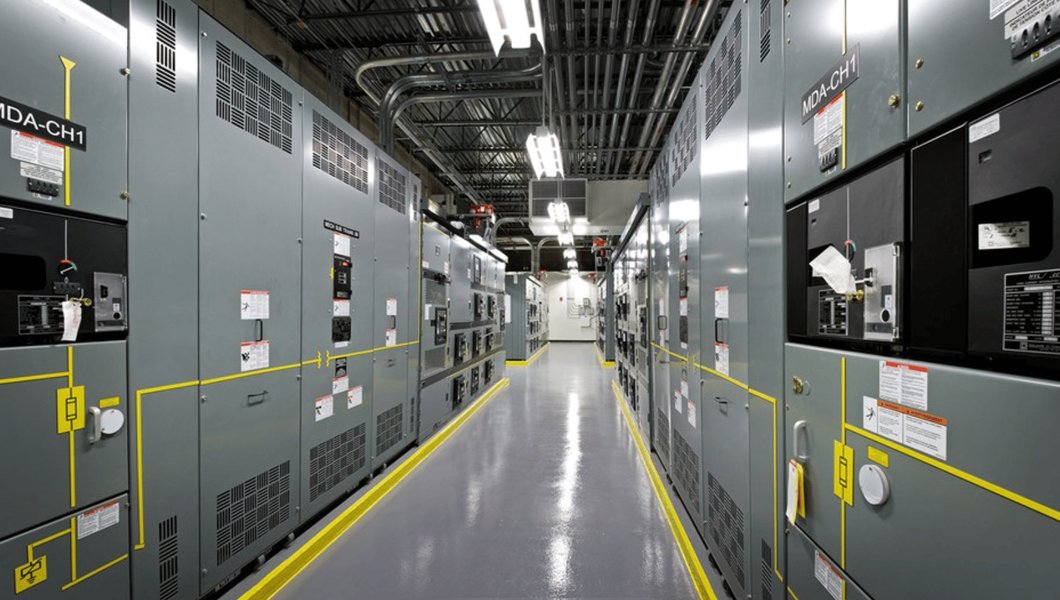
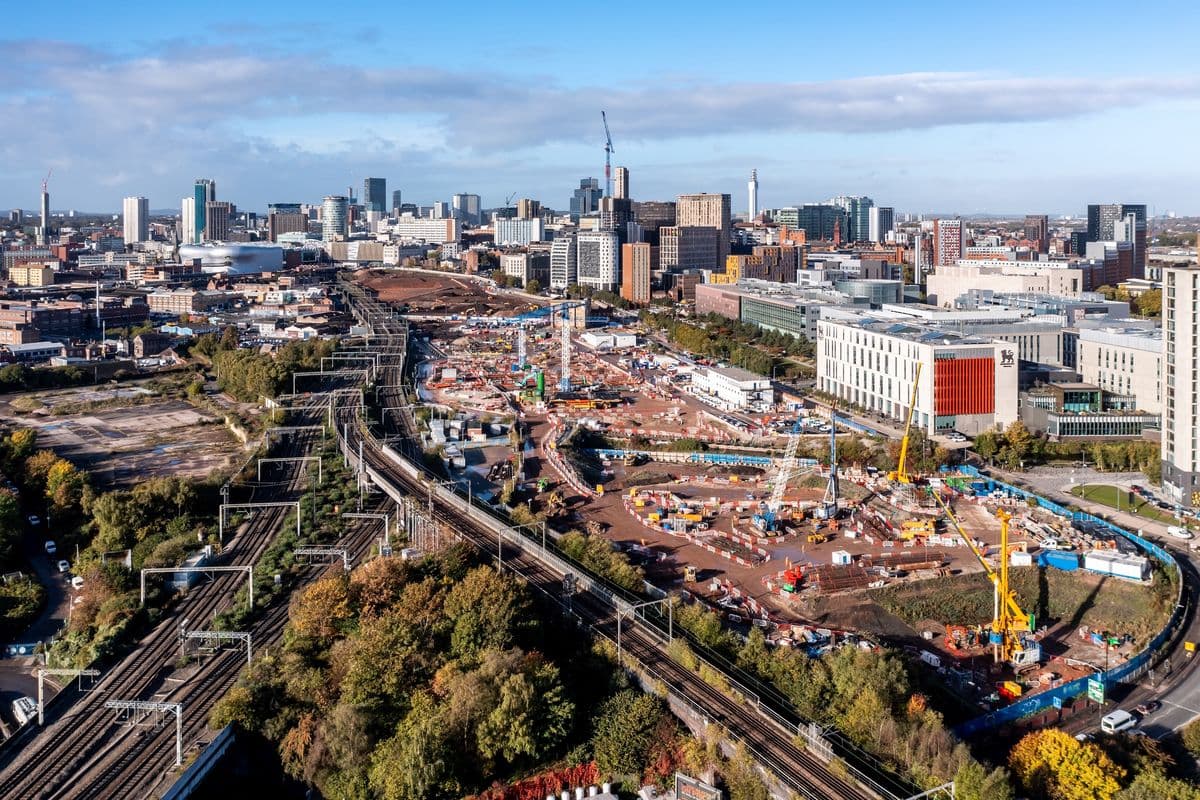
Building the future: A visual representation of the massive data center construction efforts underway.
The Power Problem: Fueling the AI Engine
The computational intensity of AI workloads demands an equally intense power supply. Goldman Sachs Research forecasts that global power demand from data centers will surge by a jaw-dropping 165% by 2030 compared to 2023 levels. By 2026, AI workloads alone are expected to consume approximately 44 GW of power, nearing the 38 GW consumed by all non-AI workloads combined. This isn't just a challenge; it's a redefinition of site selection, with access to gigawatts of electricity becoming the primary criterion over traditional factors like fiber connectivity.
In the U.S. alone, the pipeline of planned data centers represents a potential 140 GW of new load, a 20% increase to the nation's entire current peak demand. This demand is leading to significant grid pressure, with interconnection processes taking years in core regions. Developers are increasingly exploring private power solutions, including combinations of solar, storage, and gas peakers, and even considering small modular reactors (SMRs) to secure reliable energy. The operational expenditure (OpEx) reality is stark: cooling can account for 30-50% of a facility's energy consumption, making Power Usage Effectiveness (PUE) a board-level concern.
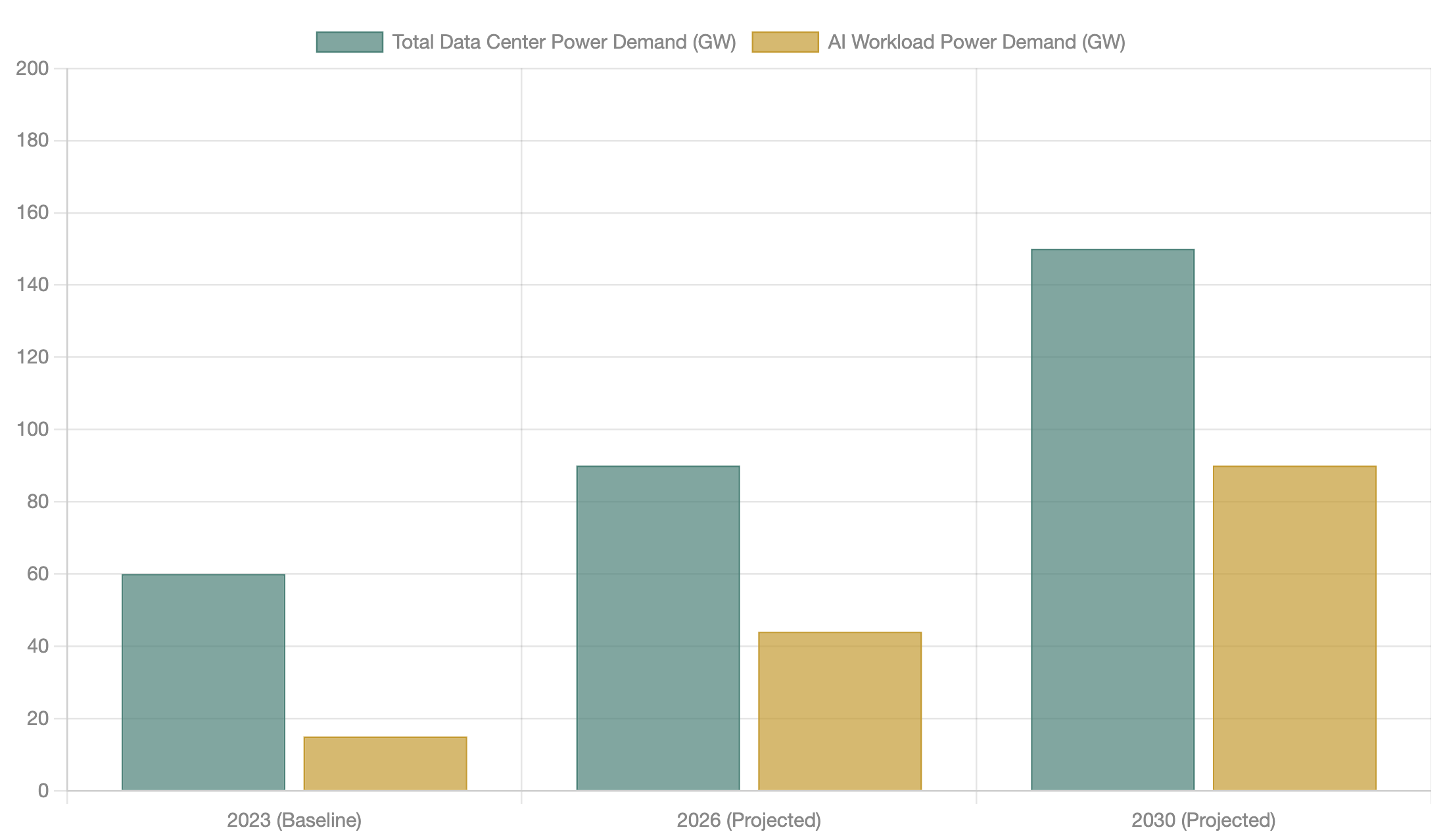
This bar chart illustrates the projected increase in total data center power demand and the significant portion attributed to AI workloads from 2023 to 2030, highlighting the escalating energy requirements.
Cooling Challenges: From Air Conditioners to Immersion Baths
The raw power consumption of AI servers translates directly into immense heat generation. Traditional air cooling, effective up to around 20 kW per rack, is rapidly becoming obsolete. AI servers, packed with GPUs, are pushing rack densities to 30 kW, 50 kW, or even higher. This requires a paradigm shift in thermal management. By 2026, liquid cooling—including direct-to-chip and full immersion systems where servers are literally submerged in dielectric fluid—is transitioning from a "nice-to-have" to a standard requirement for AI-heavy facilities.
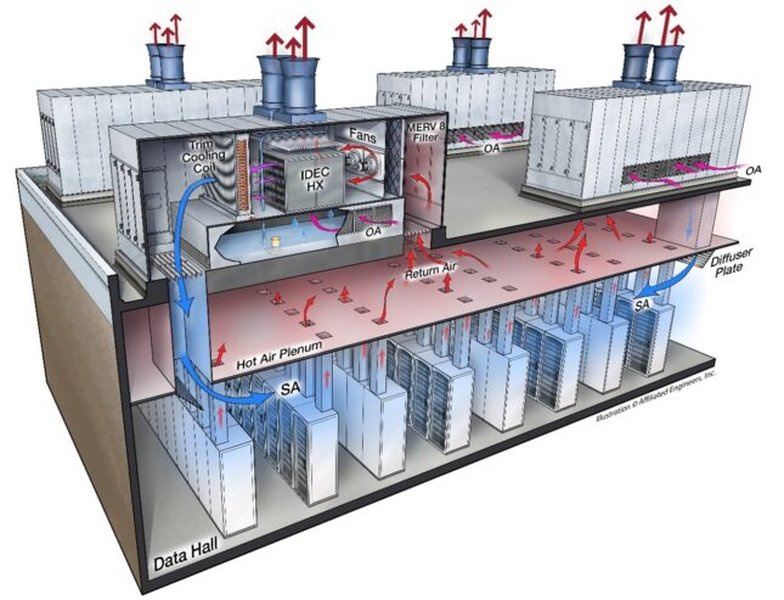
The future of cooling: Advanced liquid cooling solutions are becoming standard for high-density AI racks.
The recommended temperature range for data center equipment typically falls between 18°C and 27°C (64.4°F to 80.6°F). Maintaining these temperatures for high-density AI hardware necessitates complex MEP (mechanical, electrical, and plumbing) designs that construction teams must integrate. Modern AI facilities increasingly adopt hybrid cooling systems, combining air and liquid solutions for optimal efficiency. Innovations like closed-loop water systems and waste heat recovery are also gaining traction, driven by both efficiency demands and environmental scrutiny.
Archdesk: The Unsung Hero in AI Data Center Construction
Building these sophisticated, power-guzzling behemoths is anything but simple. These projects are characterized by immense complexity, tight deadlines, and zero tolerance for error. This is where robust construction management software becomes not just helpful, but absolutely indispensable. Archdesk, for instance, is stepping up as a crucial partner for construction companies navigating the intricate demands of building AI data centers.
The Power of a Unified Data Platform
The construction industry often grapples with fragmented data, where information resides in disparate systems—spreadsheets for procurement, specialized software for scheduling, and yet another for accounting. In the context of a $500 million AI data center, such fragmentation is a recipe for disaster. A delay in a custom cooling unit or a critical power component can derail an entire project, costing millions. Archdesk tackles this head-on by acting as a central source of truth.
It integrates critical functions like estimating, procurement, scheduling, document management, and real-time cost control into a single, cohesive platform. This unified approach ensures that everyone, from the project manager to the on-site engineer, operates from the same, real-time data set. This "golden thread of data" is crucial for maintaining control over complex projects with thousands of high-value components and long lead times.
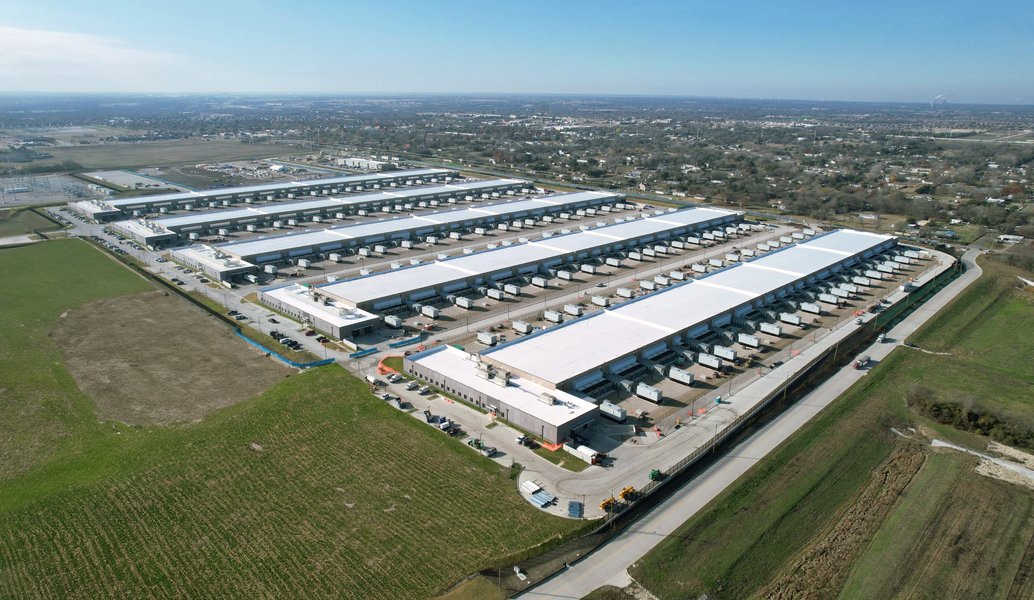
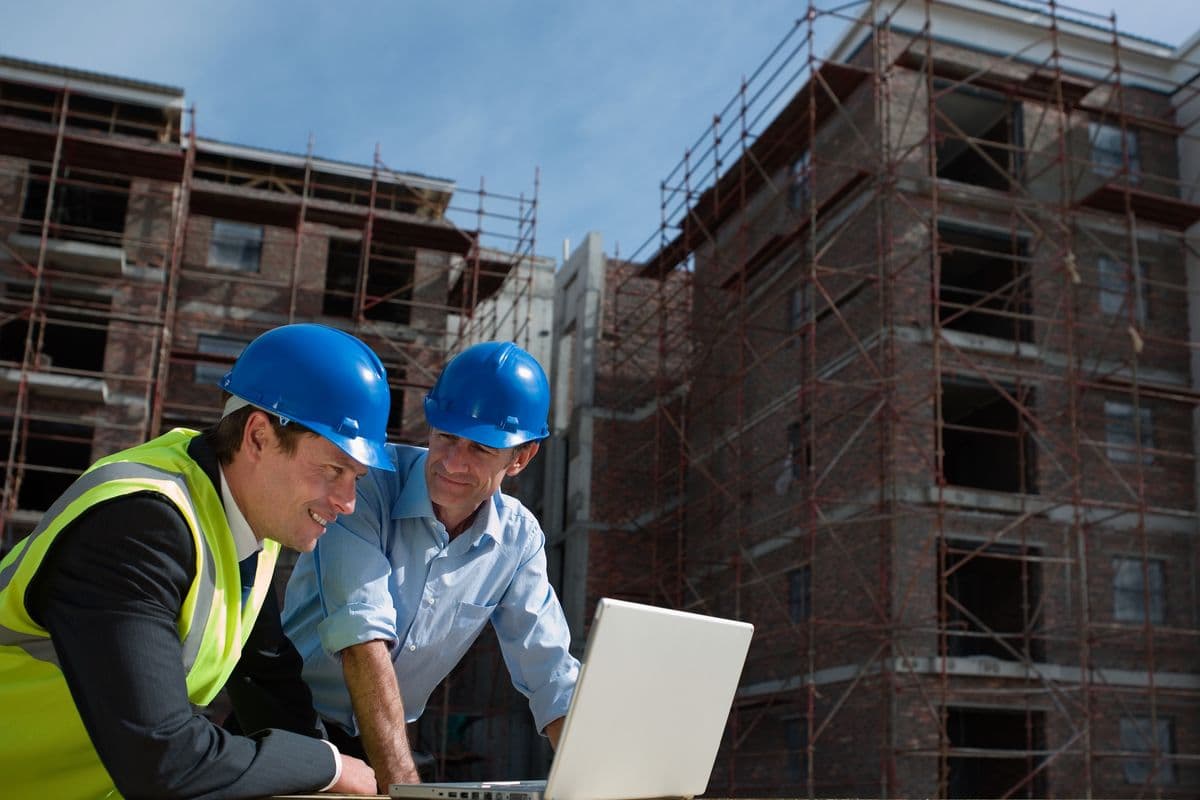
Orchestrating complexity: The scale of modern data center construction demands meticulous management.
Real-Time Insights for Agile Decision-Making
In the fast-paced world of AI data center construction, decisions need to be made rapidly and based on accurate, up-to-the-minute information. Archdesk provides live dashboards that offer real-time insights into key project metrics. Did the cost of a crucial power substation just overrun? Is a critical permit delayed? Archdesk surfaces these issues instantly, enabling project managers to make data-driven decisions and mitigate risks before they escalate. This proactive approach is vital when navigating the high-stakes environment where delays can have significant financial and operational repercussions.
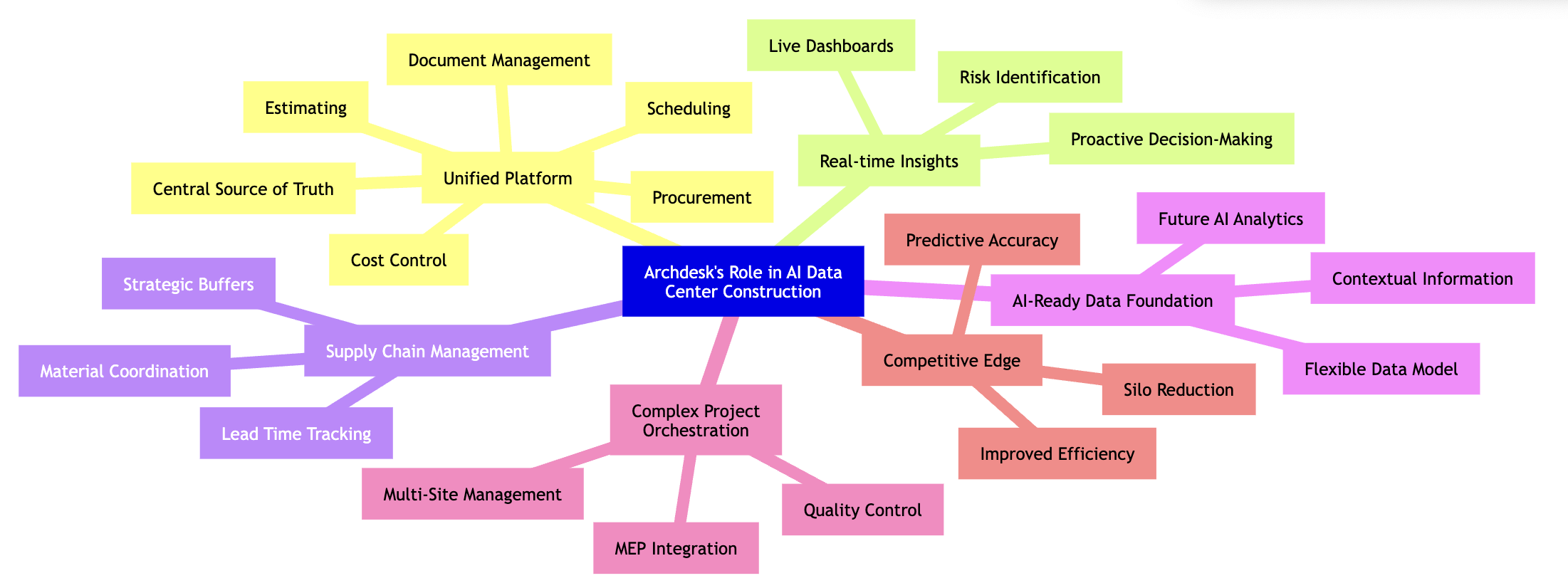
This mindmap illustrates how Archdesk acts as a comprehensive solution for managing the complexities of AI data center construction, highlighting its core functionalities and benefits.
Taming the Supply Chain Beast
These projects are often plagued by long lead times for specialized components like switchgear, chillers, and liquid-cooling skids. Archdesk helps construction teams build strategic buffers into their schedules and track materials with precision. This prevents a seemingly minor issue, like a missing cable tray, from bringing a multi-billion dollar project to a grinding halt. By providing clear visibility into the supply chain, Archdesk empowers project managers to foresee potential bottlenecks and adjust plans accordingly.
Comparison with Competitors
While the construction software landscape is competitive, with established players like Procore, Autodesk Construction Cloud, and Fieldwire offering robust solutions, Archdesk carves its niche by focusing on a consolidated, data-first platform. Procore and Autodesk Construction Cloud provide comprehensive ecosystems, and Fieldwire excels in field collaboration. However, Archdesk's strength lies in its ability to collapse silos and provide an integrated "construction-operations data spine" specifically designed for the demands of complex, MEP-heavy projects like AI data centers. It aims to reduce "swivel-chair time" between different point tools and enhance predictive accuracy, often integrating seamlessly with existing BIM/CDE tools rather than forcing a complete system overhaul.
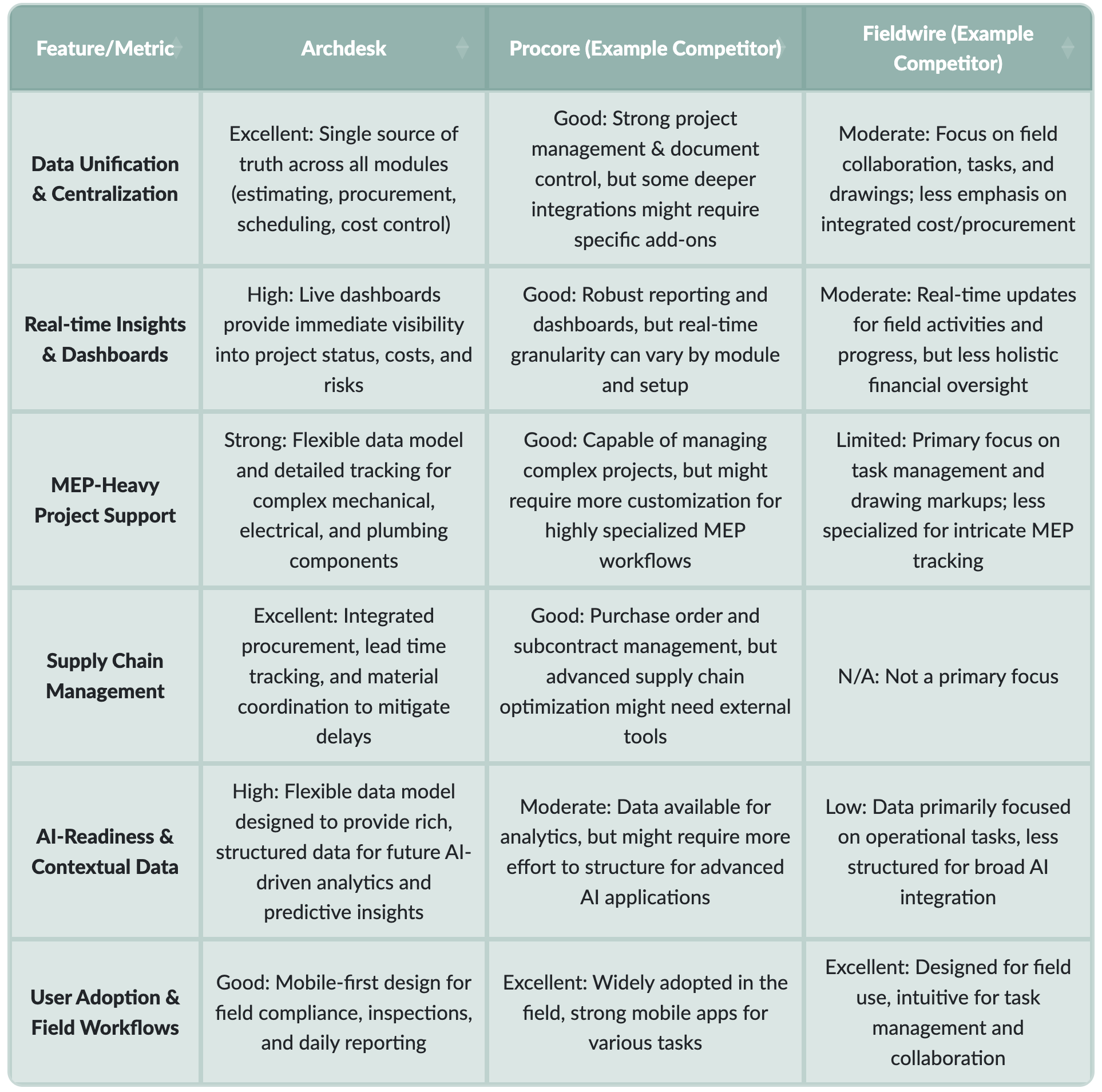
This table provides a comparative overview of Archdesk's strengths in supporting complex AI data center construction projects against typical offerings from competitors.
The Road Ahead: Building AI's Future
The construction of AI data centers in 2026 and beyond is not merely about erecting buildings; it's about engineering the very foundation upon which the future of artificial intelligence will operate. This means navigating extreme power demands, implementing cutting-edge cooling technologies, and meticulously managing every single component of a complex supply chain. The challenges are significant, but so are the innovations emerging to meet them.
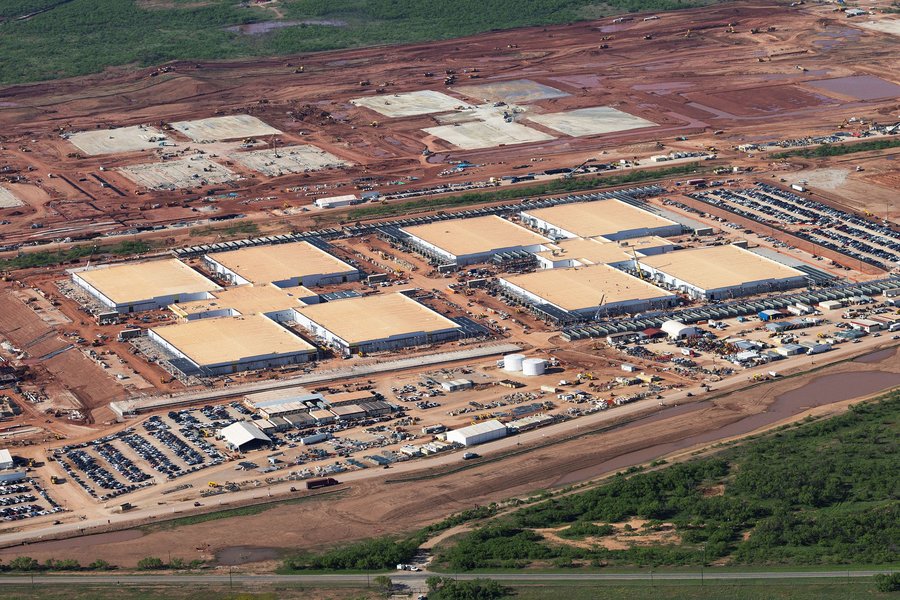
A glimpse into the future: Advanced data centers are the new cathedrals of the digital age.
The sheer scale and technical sophistication of these projects underscore the critical role of advanced construction management solutions. Platforms that can unify fragmented data, provide real-time insights, and empower agile decision-making are no longer a luxury but a necessity. They are the quiet enablers behind the scenes, ensuring that the physical infrastructure for AI keeps pace with the relentless march of technological progress.
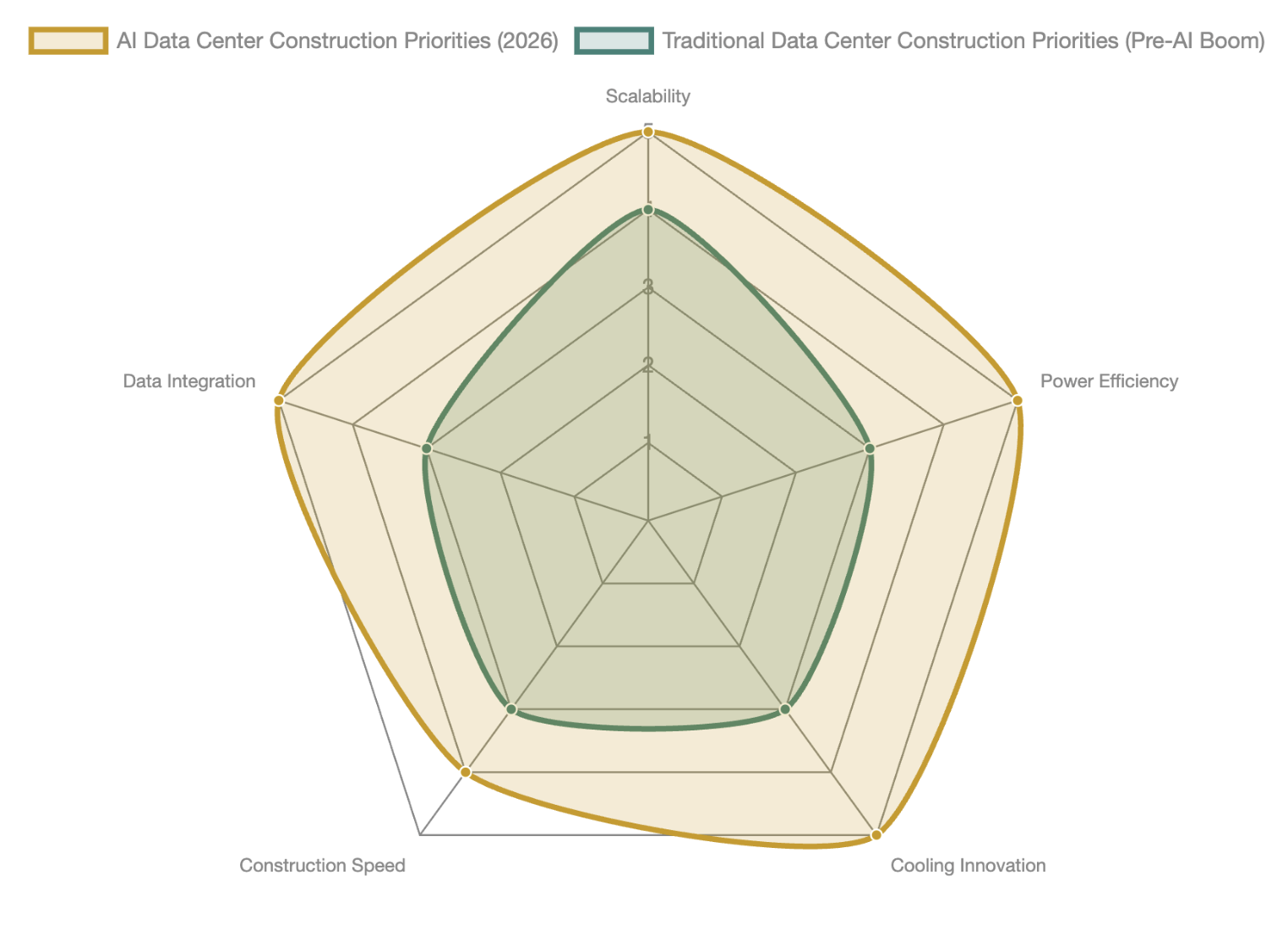
This radar chart illustrates the evolving priorities in data center construction, contrasting the critical demands of AI-driven projects in 2026 with traditional data center builds. Higher scores indicate greater importance.
Frequently Asked Questions (FAQ)
What is driving the current data center construction boom?
The insatiable demand for Artificial Intelligence (AI) workloads is the primary driver. AI requires immense computational power, leading to a surge in the construction of specialized data centers to house these powerful systems.
How much power do AI data centers consume compared to traditional ones?
AI data centers consume significantly more power. While traditional racks might use 5-10 kW, AI racks with GPUs can push consumption to 30 kW, 50 kW, or even higher. Globally, AI workloads are expected to consume a massive 44 GW of power by 2026.
What are the main challenges in building AI data centers?
The two biggest challenges are securing massive, reliable power supplies and implementing advanced cooling solutions. The high heat generated by AI servers necessitates a move beyond traditional air cooling to liquid cooling and immersion systems. Additionally, managing the complex supply chain and project timelines is a significant hurdle.
How does Archdesk help construction companies build AI data centers?
Archdesk acts as a unified platform, integrating estimating, procurement, scheduling, document management, and cost control into a single source of truth. It provides real-time insights through live dashboards, helps manage complex supply chains, and offers a flexible data model ideal for supporting AI-driven analytics in construction.
What is the projected market size for data center construction by 2030?
The global data center construction market is projected to grow from approximately $241 billion in 2024 to over $456 billion by 2030, reflecting a substantial increase driven by AI demand.
Conclusion
The year 2026 stands as a testament to humanity's relentless pursuit of technological advancement, manifesting in the concrete and steel of AI data centers. These colossal structures are not just buildings; they are the powerhouses and cooling plants of the digital age, enabling the artificial intelligence that is rapidly reshaping our world. The demand is unprecedented, the challenges are immense, but the innovation in construction methods and management software, exemplified by platforms like Archdesk, is rising to meet them. By providing a unified data environment, real-time visibility, and streamlined workflows, these tools are ensuring that the physical infrastructure of AI can be built efficiently and effectively, paving the way for future breakthroughs.
References
How Fast Can You Really Build a $500M Data Center?
Data center power and cooling strategies for increasing ...
How to Calculate Data Center Cooling Needs
AI in Construction Project Management | Archdesk Blog
2026 Predictions: AI Sparks Data Center Power Revolution
This article is part of our AI in construction hub, alongside our guides to AI in project management, scheduling and document control.