Archdesk vs Oracle Unifier
The Best Alternative to Oracle Unifier in 2026Enterprise-grade controls, without the enterprise scaffolding
See Archdesk on a project like yours.
Get StartedOracle Unifier earned its place running the world's biggest capital programs, and it shows its age the same way: consultant-led deployments, a uDesigner specialist for every workflow change, and a licensing bill only Oracle can decode. Archdesk is what that system looks like rebuilt for the cloud era. The same discipline, budgets, commitments, change control, approvals and audit trails, plus the scheduling, field records and document control Unifier leaves to other products. Configured by your own team, priced so you don't need a business case committee.
Get Started
Book a quick demo and see Archdesk in action.

Archdesk as an Oracle Unifier Alternative, in Short
Archdesk is a construction management platform that teams choose as an Oracle Unifier alternative when they want Unifier's project controls discipline without its scaffolding: the system integrators, the uDesigner specialists, the P6 and BI products around the edge, and the enterprise agreement holding it all together. One subscription covers cost control, change management, approvals and audit trails alongside estimating, scheduling, procurement, resource planning, site records and reporting, configured and maintained by your own team.
Comparing the wider field? See every Archdesk head-to-head on the alternatives comparison hub.
Last reviewed: 10 July 2026. Oracle Unifier information on this page is based on publicly available documentation and customer feedback as of this date.
30+
modules in one subscription
0
consultants needed to change a workflow
2 models
user-based or unlimited users
Key Advantages of Archdesk vs Oracle Unifier
Where Archdesk outperforms Unifier across controls, delivery and the field, while keeping the governance an enterprise deployment demands.

The Same Controls Discipline
Budgets, cost codes, commitments, change control, approvals and audit trails: the project controls Unifier is known for, native in modern cloud software.
Configured by Your Team
A no-code engine replaces uDesigner and the consultants who operate it. Your administrators change workflows, forms and approvals themselves, the same day the process changes.
Live Fast, Not in Fiscal Years
Guided implementation instead of a system integrator engagement. No business process design phase measured in quarters before anyone logs in.
Connected to the Field
Site diaries, timesheets, QA/QC and approvals on mobile, landing on the right cost codes the same day. Unifier’s controls stop at the office door.
Pricing You Can Read
One subscription with user-based or unlimited-user plans, never tied to construction volume. Not an Oracle enterprise agreement that takes a procurement team to decode.
Controls, Delivery and Documents Together
Scheduling, resource planning and document control live in the same system as the cost data, instead of P6, BI tooling and integrations stitched around Unifier.

Why Switch from Oracle Unifier to Archdesk?
The six reasons teams give most often when they move, side by side: what the day looks like around Unifier, and what changes in Archdesk.
Every change is a consulting engagement
With Unifier
Business processes, forms and workflows are built in uDesigner, which takes trained specialists. A new approval step or field means a request, a quote and a wait.
With Archdesk
Your own administrators configure workflows, forms, fields and automations through a no-code engine. Process changes ship the day you decide on them.
Deployments measured in quarters
With Unifier
Unifier rollouts run through system integrators: months of business process design, configuration and testing before the first project goes live.
With Archdesk
Guided implementation gets your team working on real projects quickly, with configuration and training running alongside your live operations.
Built for the office, blind to the field
With Unifier
Data enters Unifier through forms filled in at desks. Site progress, timesheets and quality records live elsewhere and arrive late, if they arrive at all.
With Archdesk
Site diaries, timesheets, QA/QC and health and safety forms are captured on mobile and update budgets and forecasts the same day.
An interface your team works around
With Unifier
The UI predates modern web software, training is a project of its own, and adoption outside the project controls team is a constant battle.
With Archdesk
A modern interface people use without a manual, from the commercial director to the site supervisor, so the data actually gets entered.
Licensing only Oracle understands
With Unifier
Enterprise agreements, module-based licensing, hosting and consulting fees stack into a total cost of ownership the license line only hints at.
With Archdesk
One subscription, user-based or unlimited users, never tied to construction volume. The number on the contract is the number you pay.
A product family where one platform should be
With Unifier
Controls in Unifier, scheduling in P6, reporting in Oracle Analytics, and integrations built and maintained by consultants to hold it together.
With Archdesk
Estimating to closeout in one platform: controls, scheduling, procurement, resources, documents and dashboards on one data model.
What Makes Archdesk a Better Oracle Unifier Alternative
Project Controls Without the Scaffolding
Unifier's core strength is real: cost sheets, funding, commitments, change control and audited approvals at enterprise scale. Archdesk delivers the same discipline natively: budgets and cost codes tied to live delivery, commitments and change orders that update forecasts automatically, and approval chains with full audit trails.
The difference is what surrounds it. In Archdesk there is no integrator to schedule, no specialist to book, and no separate product to license before the controls work end to end.
Configuration Your Own Team Owns
In Unifier, business processes are built in uDesigner, a proprietary design environment that takes trained specialists to operate. In practice that means every new form, approval step or workflow change goes through consultants, with the cost and calendar that implies.
Archdesk replaces that with a no-code engine your administrators use directly. When your operating model changes, the system changes with it, the same day, under your own governance.
Scheduling and Delivery in the Same System
Unifier deployments almost always run alongside Primavera P6, so schedules and costs live in different products connected by integrations someone has to maintain. In Archdesk, schedules, progress and resource plans share a data model with the budgets they affect: a schedule slip shows up in the forecast, not as a surprise at month-end.
Field Records That Feed the Controls
Project controls are only as good as the data behind them, and Unifier's data enters through forms filled in at desks. Archdesk captures site diaries, timesheets, QA/QC and health and safety records on mobile, tied to the right project and cost code, so the cost sheet reflects what happened on site today rather than what the office typed in last week.
Document Control Tied to the Work
Unifier's document manager is mature, but it is primarily a repository. Archdesk ties documents, versions and approvals into the same workflows that move budgets and delivery, so drawings, contracts and certificates sit next to the decisions they support, with one source of truth across phases.
Reporting Without a BI Project
Unifier reporting typically means Oracle Analytics or BI Publisher, separate tooling with its own specialists. Archdesk includes configurable dashboards, KPIs and portfolio analytics in the platform, with drilldowns from portfolio trends to individual cost lines, and open exports when you want your own BI on top.
A Total Cost of Ownership You Can Calculate
The license is the smallest line in a Unifier budget once integrators, uDesigner work, P6, BI tooling and hosting are counted. Archdesk is one subscription, user-based or unlimited users, never tied to construction volume. Finance teams can plan multi-year budgets from a single number.
Archdesk vs Oracle Unifier: Side-by-Side Comparison
How the two platforms compare across the areas that decide the switch: what each one does, and what that means for your operations and your margin.
| Category | Archdesk | Oracle Unifier |
|---|---|---|
| Cost Controls | Budgets, cost codes, commitments, change orders and forecast-to-complete tied to live delivery. Real-time margin control and faster month-end, fed by what happens on site. | Strong cost sheets, cash flow and funding management, the core of the product. Controls are only as current as the office-entered data behind them. |
| Configuration & Workflows | No-code workflows, forms, fields, approvals and automations owned by your admins. Process changes ship same day, without external specialists. | Powerful business process engine built in uDesigner. Changes require trained specialists, typically consultants on retainer. |
| Implementation | Guided onboarding, data import support and role-based training. A quick, structured path to live projects. | System integrator-led rollout with a business process design phase. Deployments commonly run for quarters before go-live. |
| Pricing & Licensing | One subscription, user-based or unlimited users. Predictable operating cost and multi-year budget planning. | Oracle enterprise agreements with module-based licensing. True TCO includes hosting, consulting and integration costs. |
| Scheduling | Portfolio-aware schedules connected to resources, procurement and cost. A slip on site shows up in the forecast, not at month-end. | Scheduling handled in Primavera P6 alongside Unifier. A second product, license and integration to maintain. |
| Field & Mobile | Site diaries, timesheets, QA/QC, health and safety forms and approvals on mobile. Field records update commercial data the same day. | Office-centric data entry through configured forms. Field data arrives late or lives in other tools. |
| Document Management | Integrated documents, versioning and approvals tied to workflows and cost data. One source of truth across teams and project phases. | Mature document manager with folder structures and permissions. Strong on storage, less connected to delivery and field records. |
| Procurement | RFQs, vendor management, purchase orders, goods receipt and three-way matching. Controlled spend and vendor performance visibility. | Commitments and contract management within business processes. Full procurement cycle often runs in the ERP or external tools. |
| Resource Management | Labor, equipment and materials with capacity, conflicts and utilization. Higher utilization and controlled delivery costs. | No native resource management; resourcing sits in P6 or spreadsheets. Limited portfolio-level capacity visibility. |
| Analytics & Reporting | Configurable dashboards, KPIs, drilldowns and portfolio analytics built in. Faster decisions without a separate BI project. | Reporting through Oracle Analytics and BI Publisher. Custom reports become specialized work on separate tooling. |
| Change Management | Change orders tied to budgets, forecasts and approvals. Early variance detection and margin protection. | Change management through configured business processes. Works well once built, but changing the process needs specialists. |
| Compliance & Audit | Role-based permissions, controlled approvals and full audit trails. Enterprise governance your own team maintains. | Robust permissions and audit logs, a genuine strength. Governance maintenance depends on the same consultant bottleneck. |
| Integrations | Accounting, ERP, BIM and common construction tools. Connected financials and operations with less tool sprawl. | Oracle ecosystem plus consultant-built interfaces. Integrations are projects with ongoing maintenance cost. |
| Data Ownership & Export | Open exports and BI-ready data structures. Easy analytics and external reporting. | Exports and APIs within the Oracle stack. Getting data out cleanly often needs technical help. |
Oracle Unifier capabilities summarized from public documentation and user feedback as of July 2026. Unifier remains a capable enterprise project controls system; this comparison focuses on the ownership, adoption and cost differences that drive switching decisions.

Seamless Switch to Archdesk
Our experienced team runs the transition from Oracle Unifier to Archdesk in three steps, with minimal disruption to your operations and no system integrator required.
Data Migration Support
Our specialists move your projects, cost sheets, budgets, commitments, business process records and documents out of Unifier, mapped and checked so nothing critical is lost.
Configuration & Training
We configure workflows and approvals to match your governance model and train commercial, operations and site teams by role, so day one feels familiar and controlled.
Go Live Quickly
Your team starts running real projects in Archdesk fast, with our team alongside you through the first cost cycles, approvals and reporting periods.
Frequently Asked Questions: Oracle Unifier Alternative
Is Archdesk a full replacement for Oracle Unifier?
Yes. Archdesk covers the project controls Unifier is known for: budgets, cost codes, commitments, change control, funding visibility, configurable approval workflows and full audit trails. It then goes further than Unifier into estimating, scheduling, procurement, resource planning, site records and mobile field workflows, all in one subscription.
Is Oracle Unifier the same as Primavera P6 or Oracle Primavera Cloud?
No. Oracle Primavera Unifier is the project controls and cost management platform, Primavera P6 is the scheduling engine usually run alongside it, and Oracle Primavera Cloud is the newer product Oracle is steering customers toward. This page compares Archdesk with Unifier, but the same points apply if you run Unifier together with P6: Archdesk covers controls and scheduling in one system.
Do we need consultants to run Archdesk?
No. Archdesk is configured through a no-code engine, so your own administrators change workflows, forms, fields, approvals and automations directly. Our team guides the initial implementation, but there is no equivalent of a uDesigner specialist or a system integrator on retainer.
Can Archdesk handle enterprise-scale portfolios and capital programs?
Yes. Archdesk runs multi-project portfolios with role-based permissions, controlled approvals, audit trails and portfolio-level dashboards across programs, regions and entities. Governance does not depend on custom scripting: it is configured, visible and auditable.
How long does migration from Oracle Unifier take?
A fraction of a typical Unifier deployment. The exact timeline depends on your scope and data, but guided implementation, data import support and role-based training keep the transition short. There is no system integrator phase and no months of business process design before anyone logs in.
How does Archdesk pricing compare to Oracle Unifier licensing?
Unifier is typically sold through Oracle enterprise agreements, with module-based licensing, hosting and consulting that make the real cost hard to see up front. Archdesk is one subscription with user-based or unlimited-user pricing, never tied to construction volume, so the number on the contract is the number you pay.
Does Archdesk integrate with our ERP, accounting and scheduling tools?
Yes. Archdesk integrates with common ERP and accounting systems, BIM tools and other construction software. Our team maps your data flows during implementation so finance, operations and reporting stay connected after the switch.
Can Archdesk match Unifier’s approvals, governance and audit trails?
Yes. Controlled approval chains, role-based permissions and full audit trails are native in Archdesk. The difference is who maintains them: your team configures and adjusts governance through no-code tools instead of routing every change through specialists.
Trusted by construction companies of every size, worldwide





















One system, from first estimate to final payment
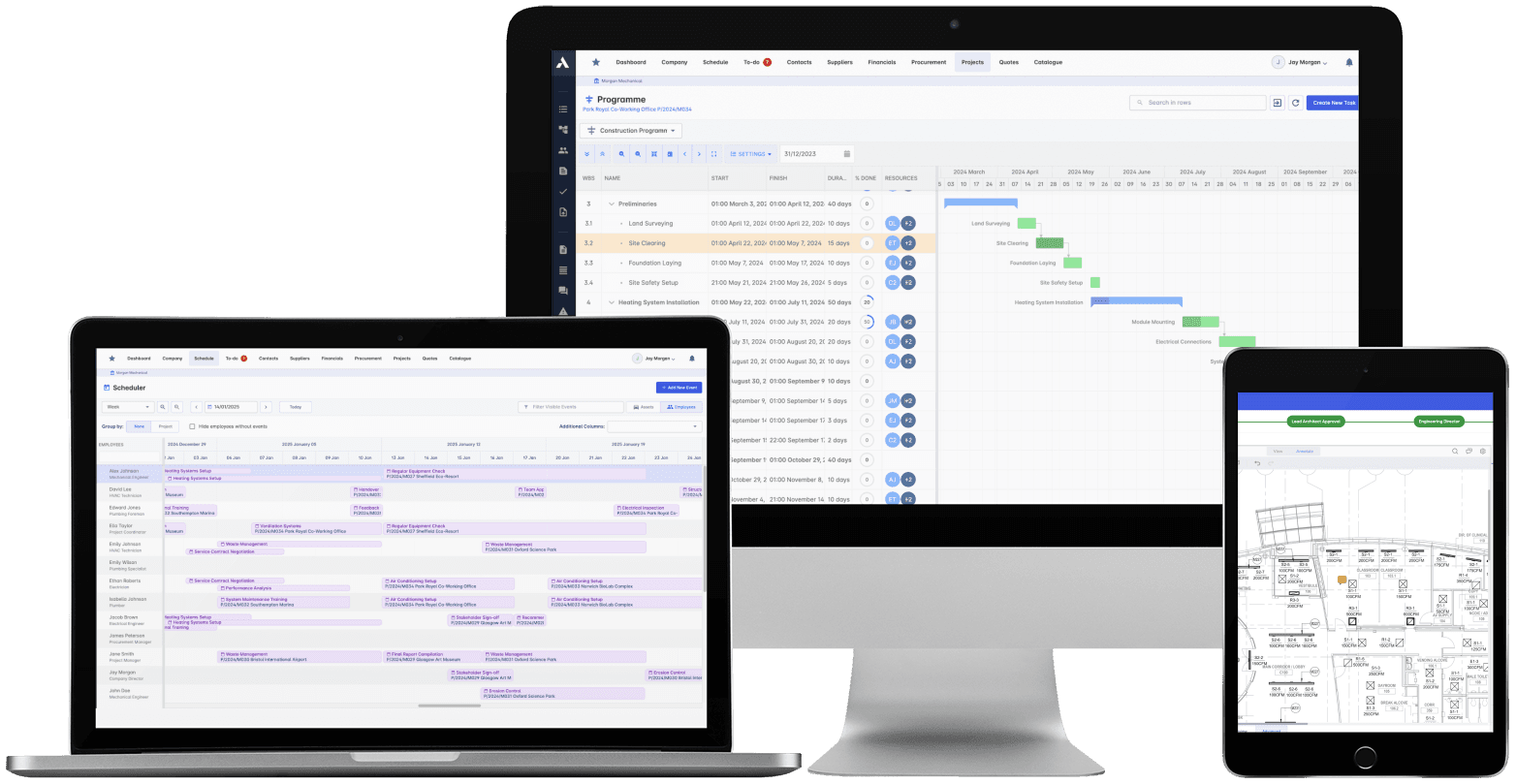
Construction Project Management
The schedule, the progress and the money in one system. When a task slips you see what it costs, and when scope changes you see what it does to the schedule. 'On track' means the Gantt chart and the bank account.
Explore Project ManagementRelated solutions
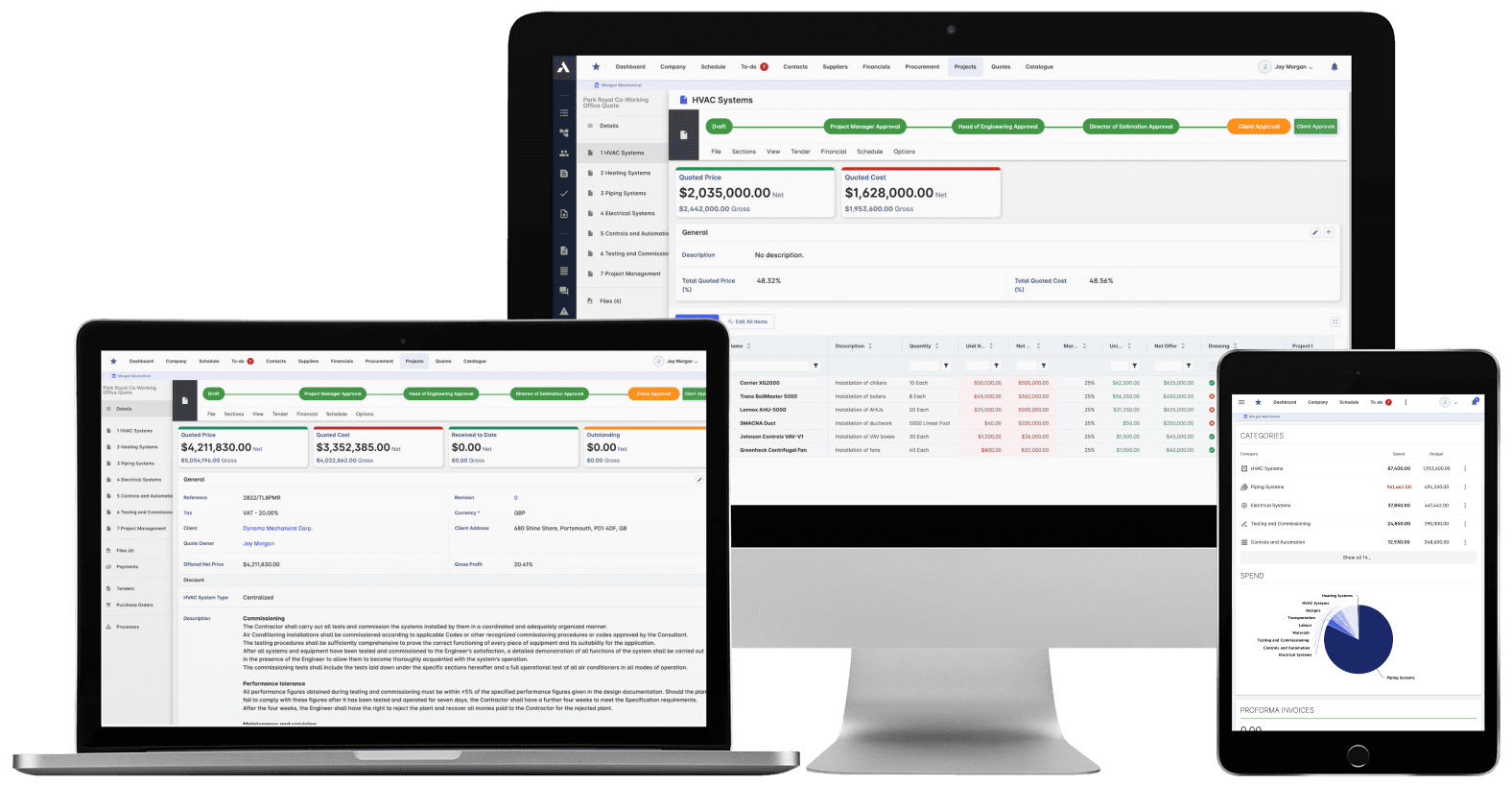
Construction Job Costing
What you priced is what you track. The winning estimate becomes the budget, actuals land against it line by line, and what jobs really cost feeds the next bid.
Explore Job CostingRelated solutions
Construction Procurement
Buy-out without the gaps: RFQs from your BOQ lines, bids back comparable, exclusions visible before award. Then every PO and subcontract lands on the budget the moment it's raised.
Explore Procurement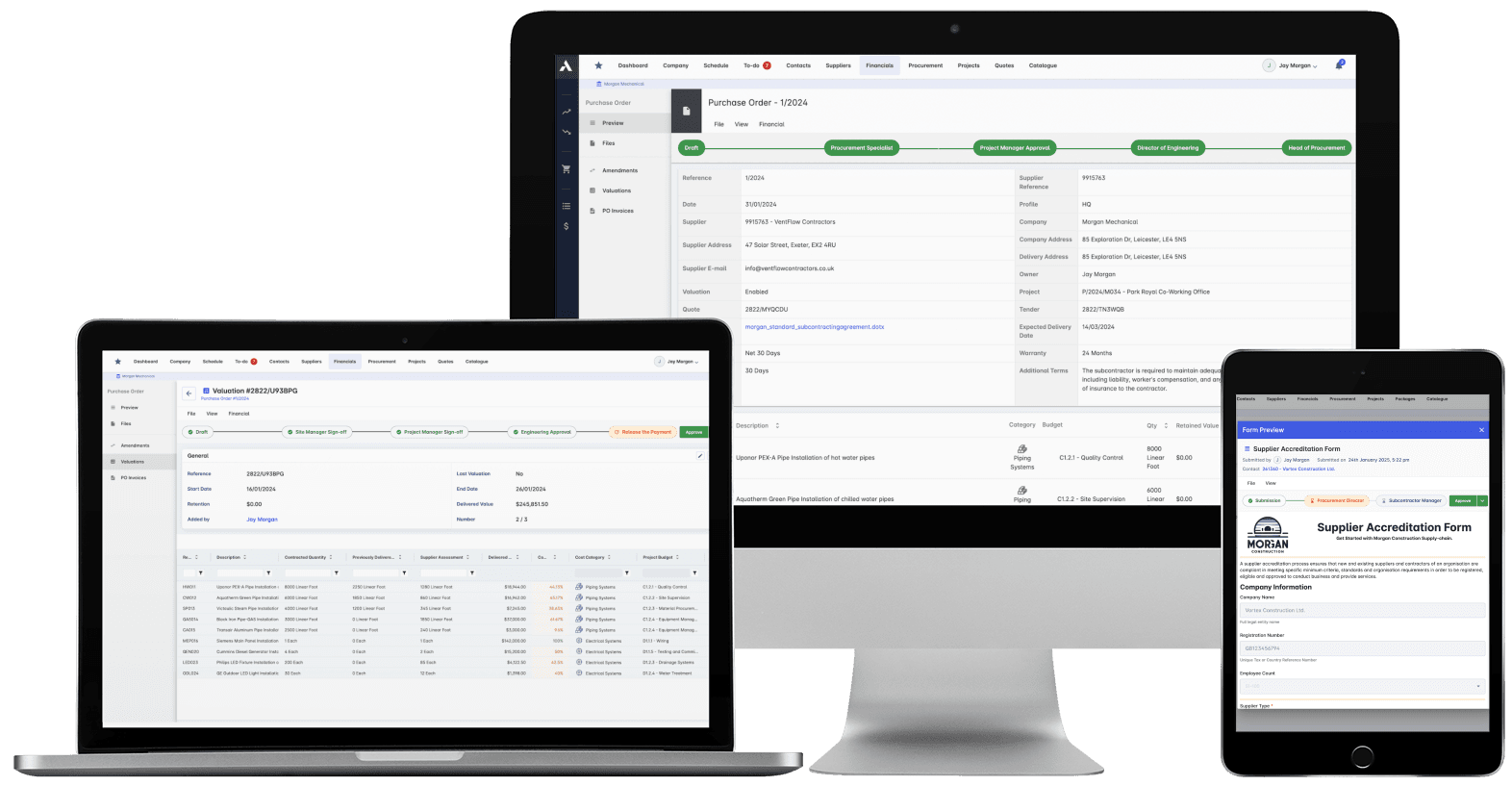
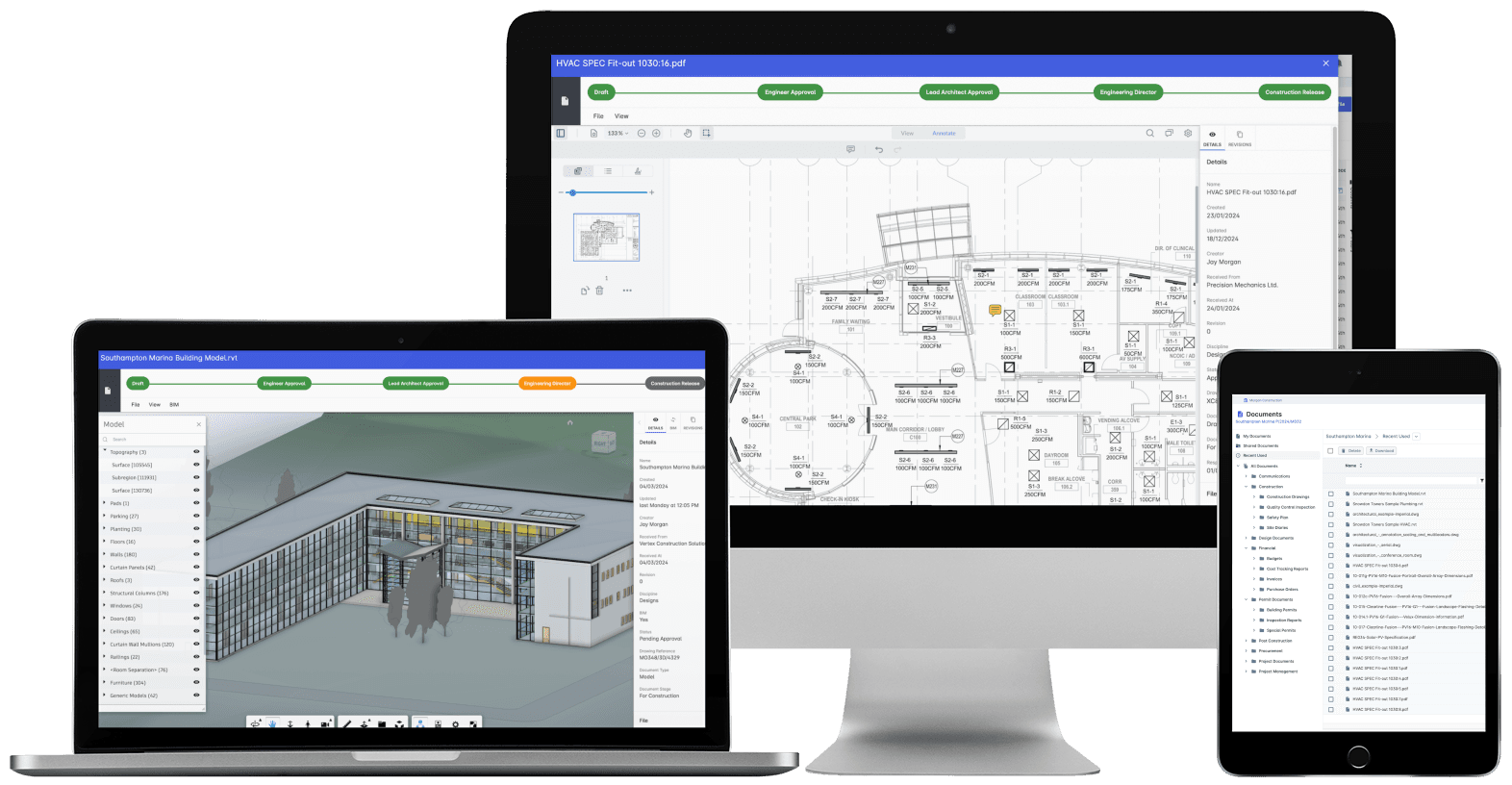
Construction Document Management
Nobody builds from a superseded drawing. Revision control, approvals and distribution with proof of who received what, when. The record that wins the dispute instead of losing it.
Explore Document ManagementRelated solutions
Construction Scheduling
The schedule connected to what it depends on: long-lead deliveries on the tasks they gate, crews planned across every live job, slippage shown with its cost.
Explore Scheduling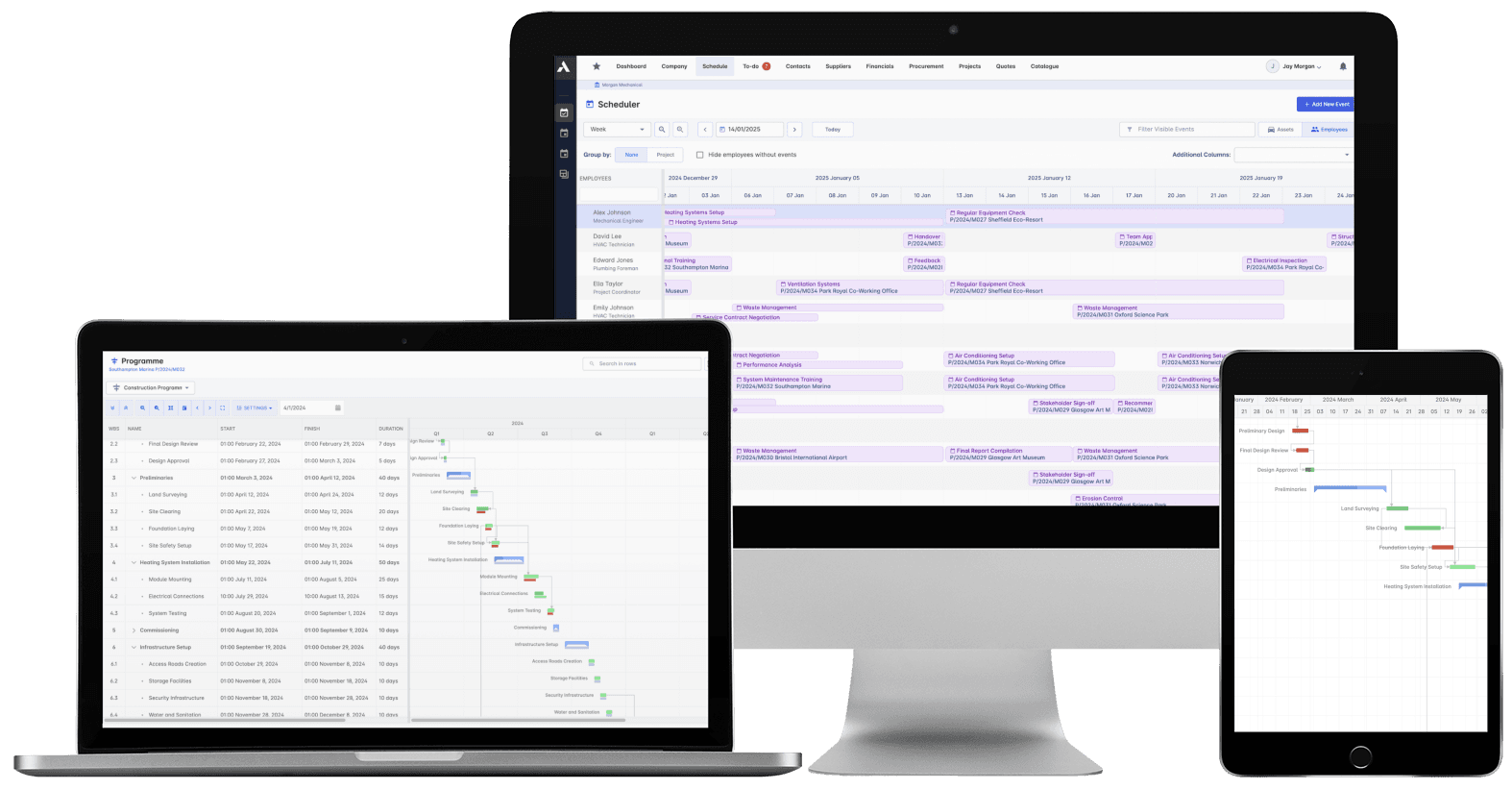
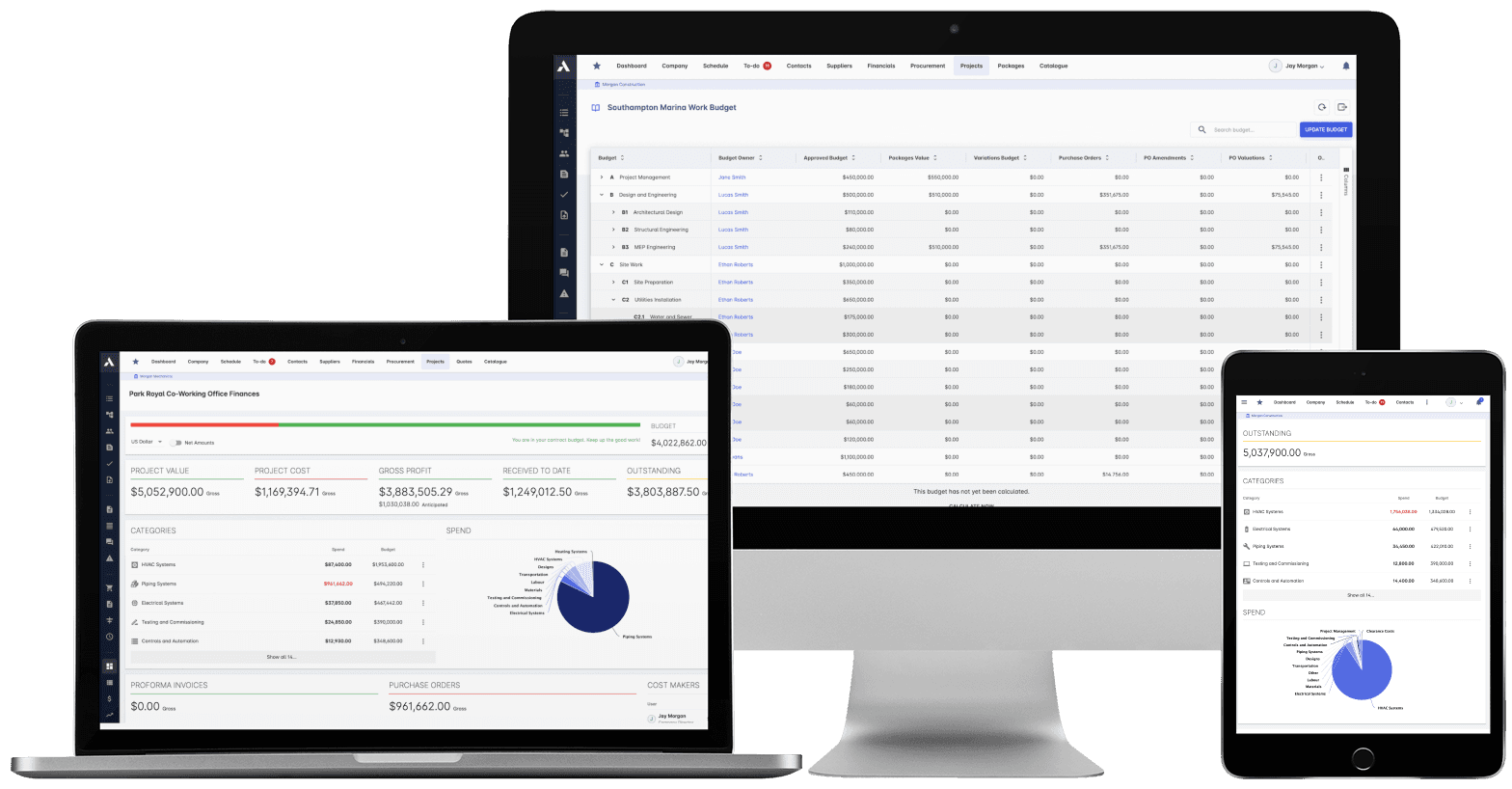
Construction Cost Controlling
Committed at the PO, earned as work is delivered, invoiced months later. See all three stages against every budget line, so variance is a decision you make, not a number you explain.
Explore Cost ControllingRelated solutions
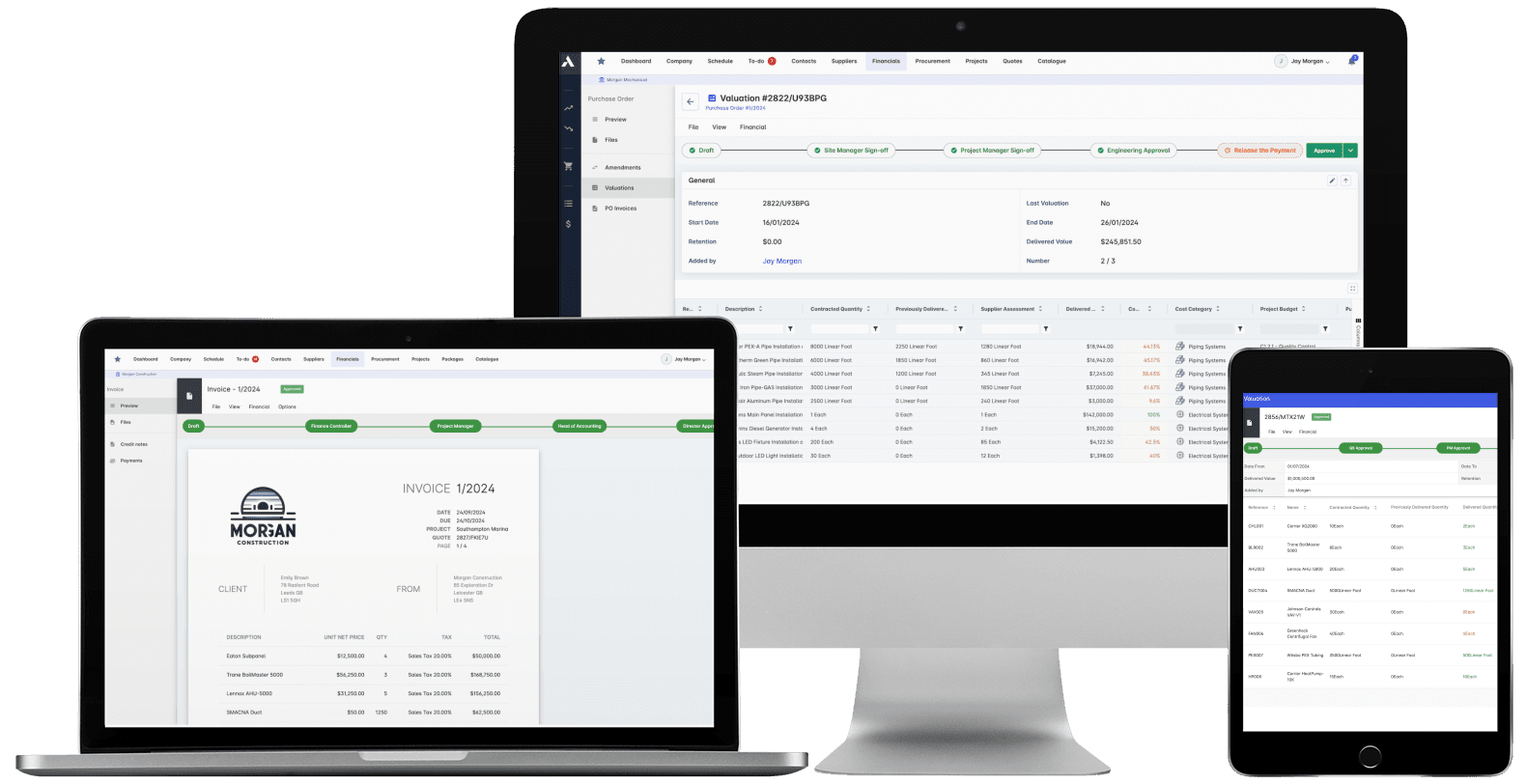
Construction Financials
Certify subcontractor pay applications down, build client applications up, from the same records. Invoices, payment notices and retainage released on time, with the audit trail attached.
Explore FinancialsRelated solutions
Construction Live Data
Every project's position, live, from the data that ran the work. Cost, schedule and cash agree with each other because they're the same records. There's nothing to assemble and nothing to reconcile.
Explore Live Data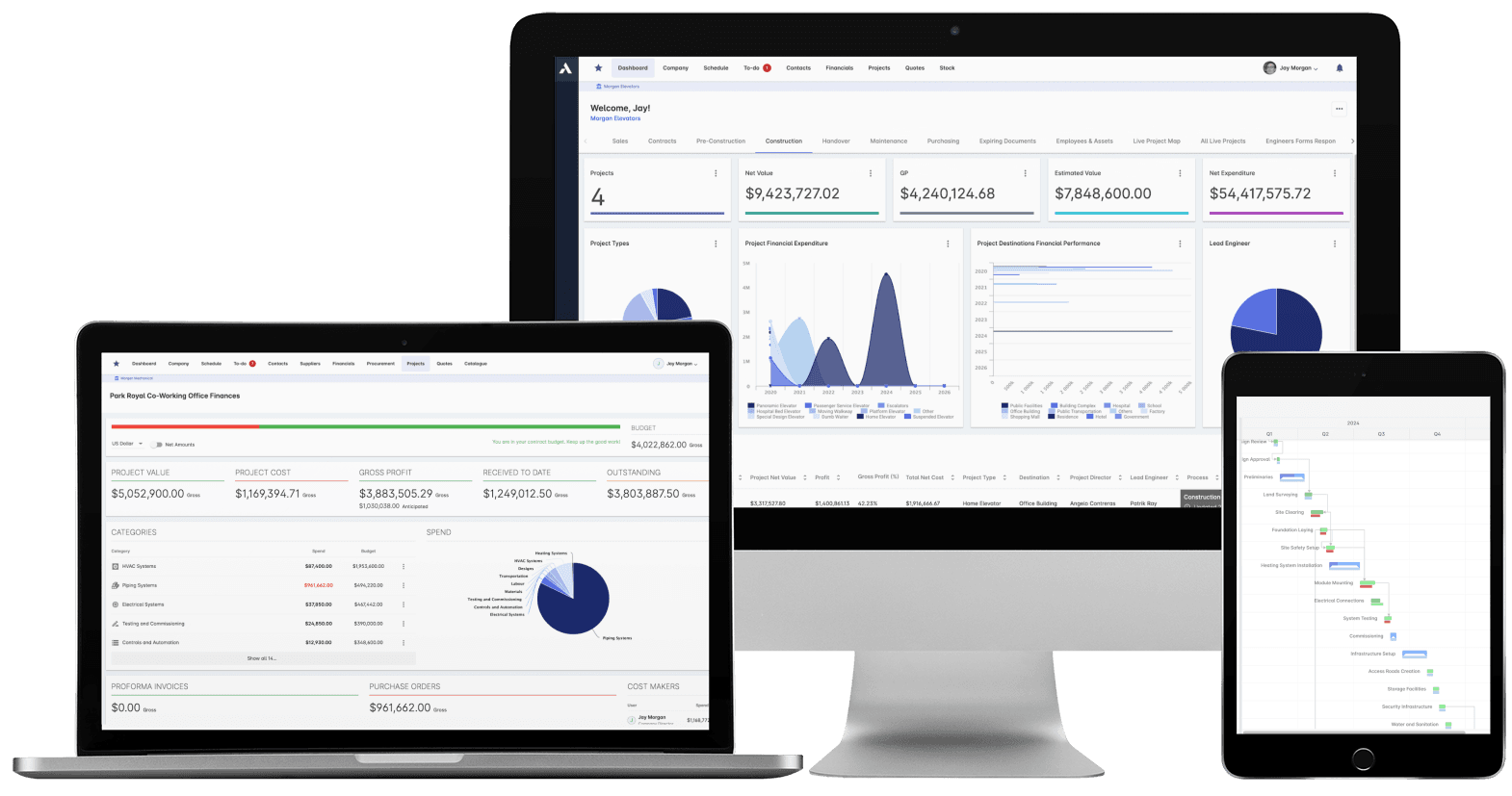
See your next project on Archdesk
Book a demo and walk through a fully worked example project: one platform running everything from winning the work to closing it out.
Book a Demo