Variation Management Software for Irish Contractors
Variations priced, instructed and in the account from day one.Price every variation against its cost lines, put the client sign-off on the record before the work starts, and let the approved change carry into the budget, the application for payment and the CVR. Scope moves; the commercial position keeps up.
Trusted by construction companies of every size, worldwide























Scope movement in the forecast, not discovered at the final account
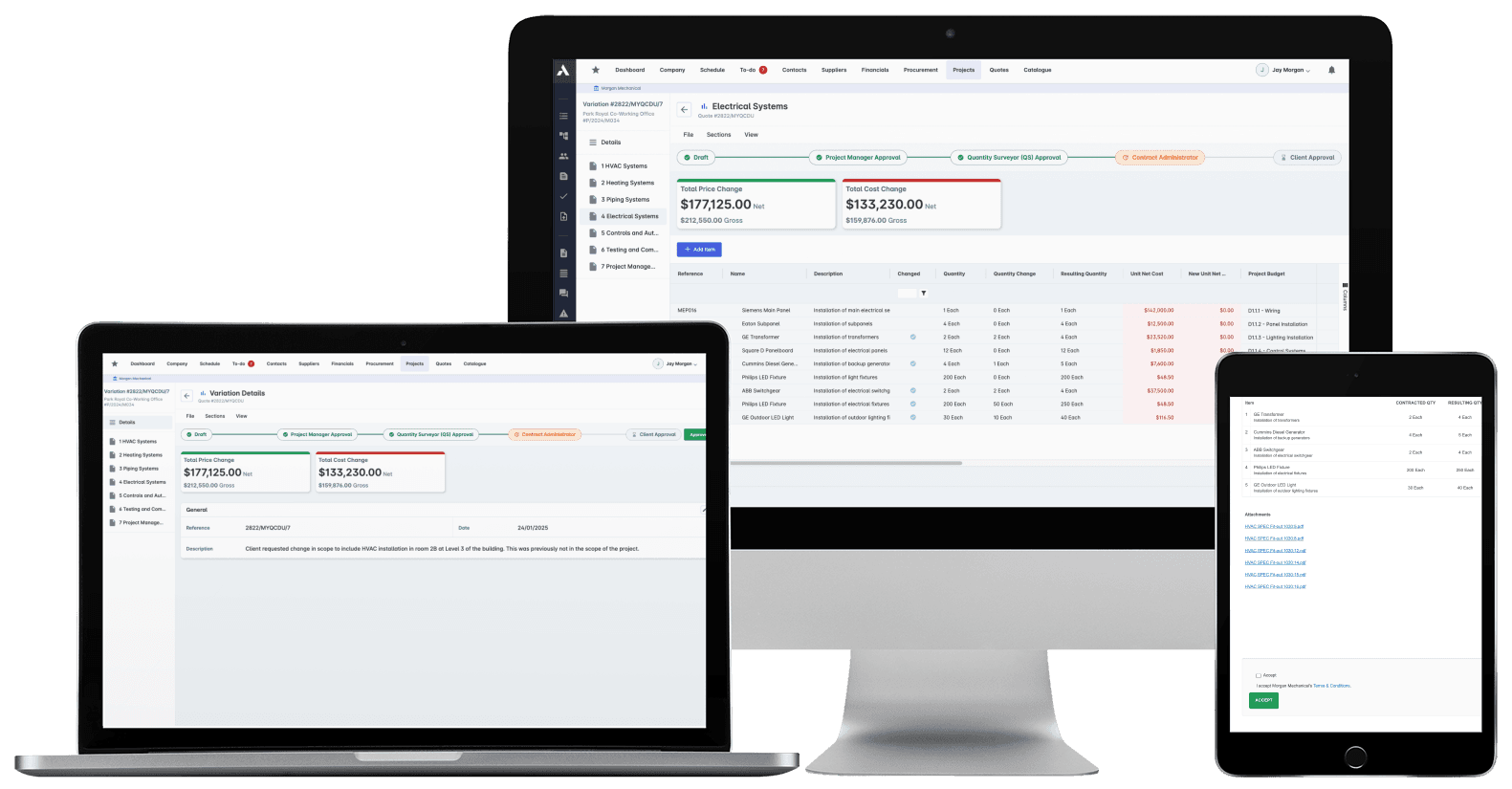
Variation management software for Irish contractors has to hold the commercial line while the scope moves: every variation priced against its cost lines before approval, instructed by the client on the record, and carried into the account once signed. Archdesk shows the price and the cost of each change side by side, routes it through approval to the client, then adjusts the budget and carries the variation into the application for payment. The CVR (cost value reconciliation) is produced from the same records, so the forecast reflects every approved variation from the day it is instructed.

Margin impact visible before sign-off
Price and cost sit side by side on every variation, additions and omissions alike, so what the change does to margin is known before the client signs.
Approved changes reach the valuation on their own
An approved variation adjusts the budget and carries into the application for payment and certification, tracked from instruction to the final account.
A clear instruction, not a verbal agreement
Sign-off is captured online at the end of the approval chain, with the client last. Work starts on a written instruction, and the record holds if the account is ever argued.
The same disputes stop repeating
Analytics across the portfolio show which variations recur and why, so pricing improves and the same disputes stop coming back.
The work delivered and the work billed stay in step
Every variation is on the record, in the numbers and in the application for payment, and the CVR reads the same records. When the scope moves, the margin position moves with it, visibly.

Financial Control
Every variation is tracked financially from pricing to final payment. The budget adjusts when the change is approved, so the final account holds no surprises.
Every variation order priced
Budget adjustments tracked on approval
Payment certification built in
Costs coded to the right lines
Approved variations carried into the final account
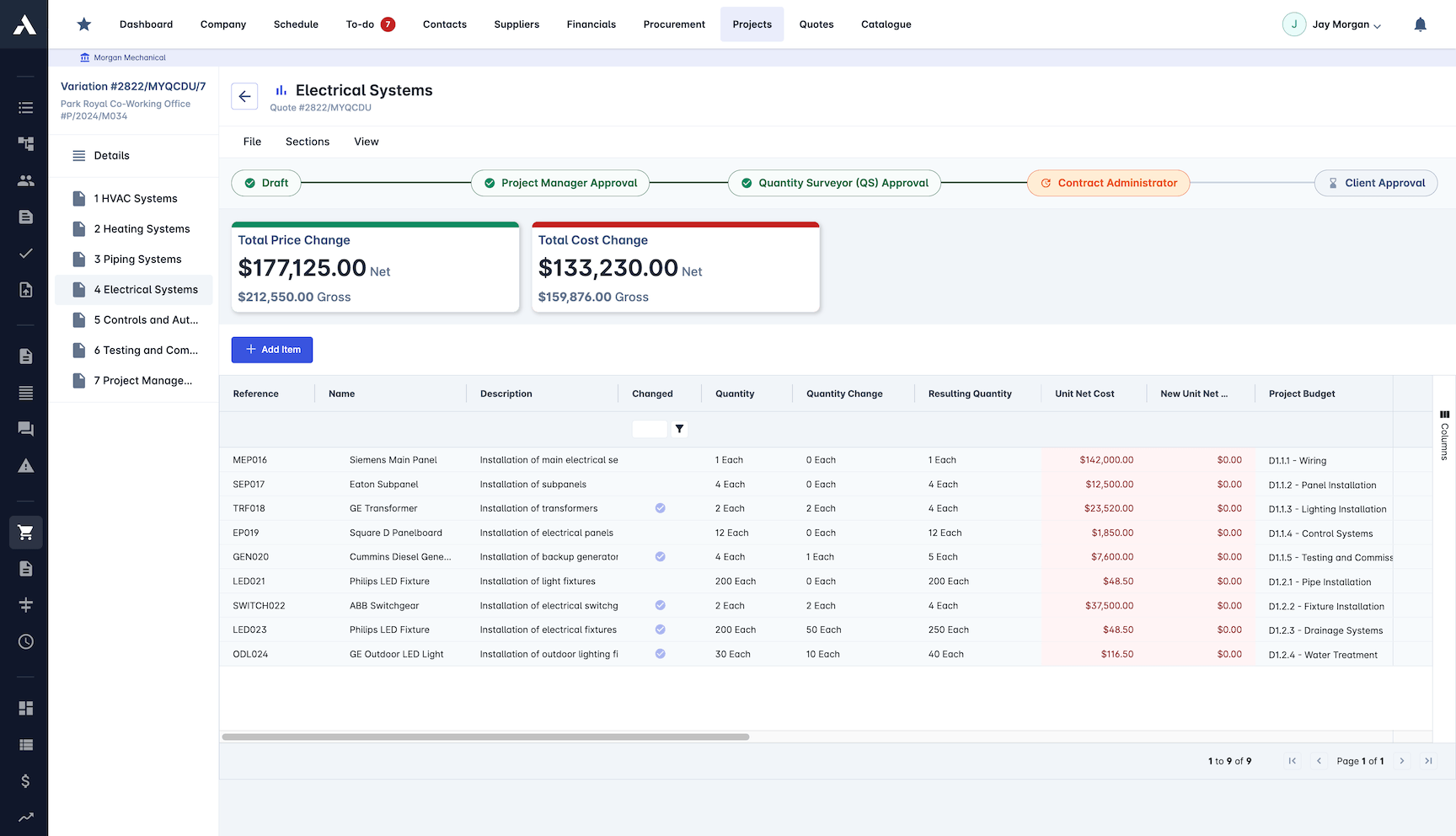
Approval Management
Route every variation through the right reviewers, ending with the client. Sign-off is captured online, so work starts on an instruction, not a nod on site.
Multi-level approval workflows
Client sign-off captured online
Notifications sent at every step
Variation instructions tracked on the record
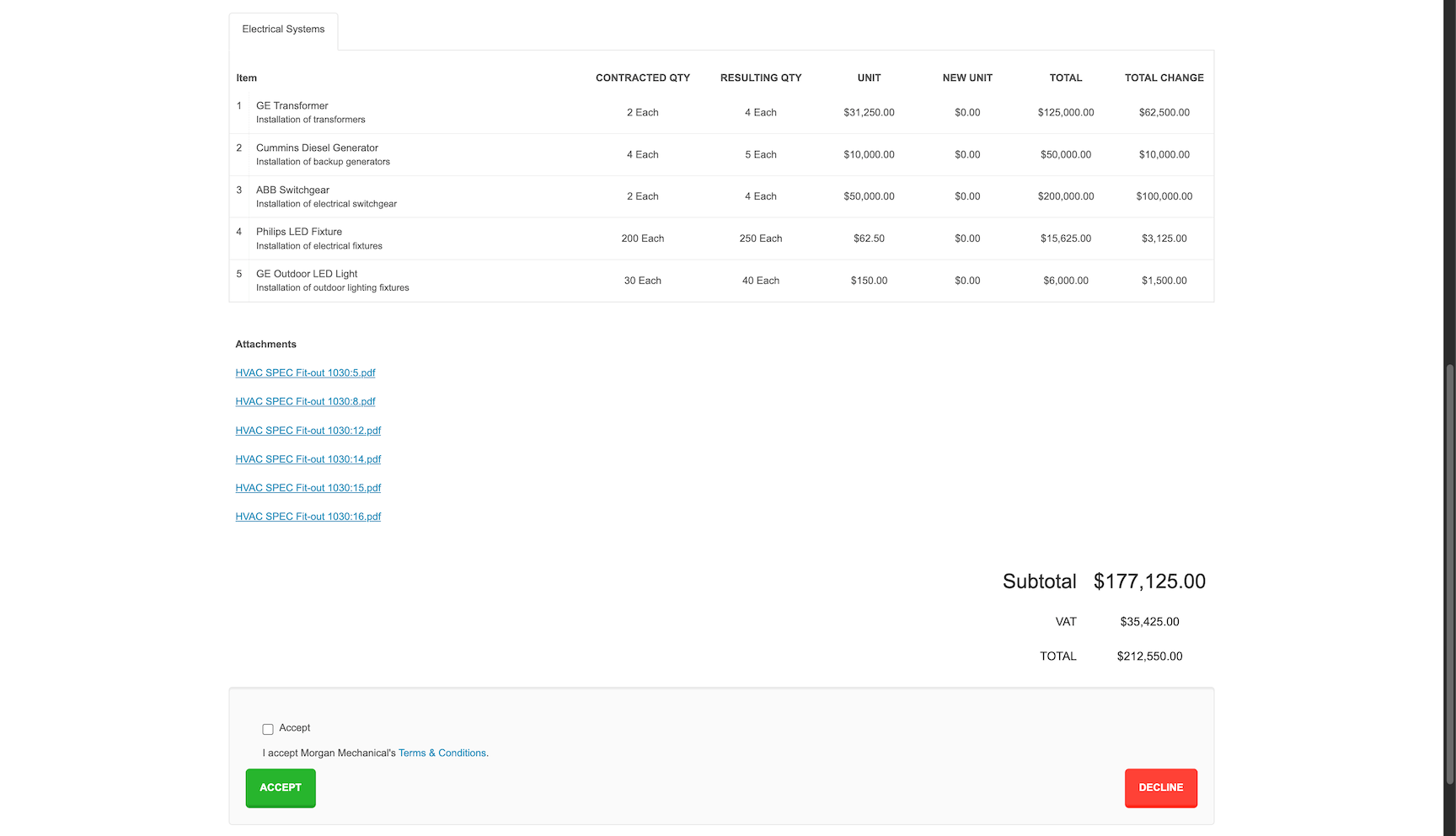
Variation Creation
Raise every variation as a change to the scope of works, whether it adds work or removes it. Cost impact and supporting documentation attach at creation, not after the fact.
Variations raised against the scope of works
Cost impact calculated on creation
Scope increased or reduced on the record
Client approval built into the process
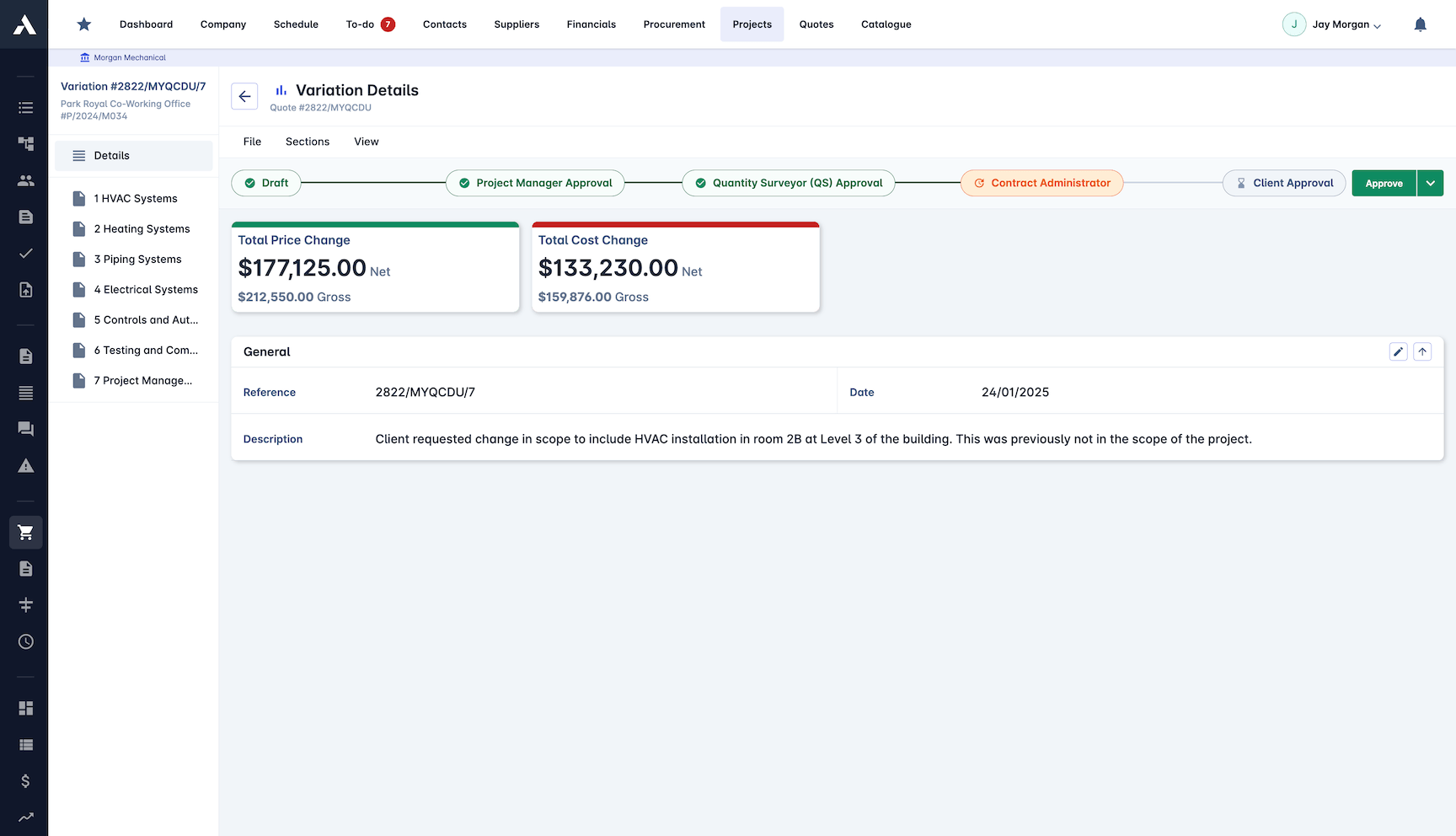
Variation Analytics
See what variations do to margins across the whole portfolio. Trends and root causes surface in the data, so pricing sharpens and disputes stop repeating.
Variation trends across projects
Root causes identified in the data
Claims analysis reporting
Portfolio-wide variation insights
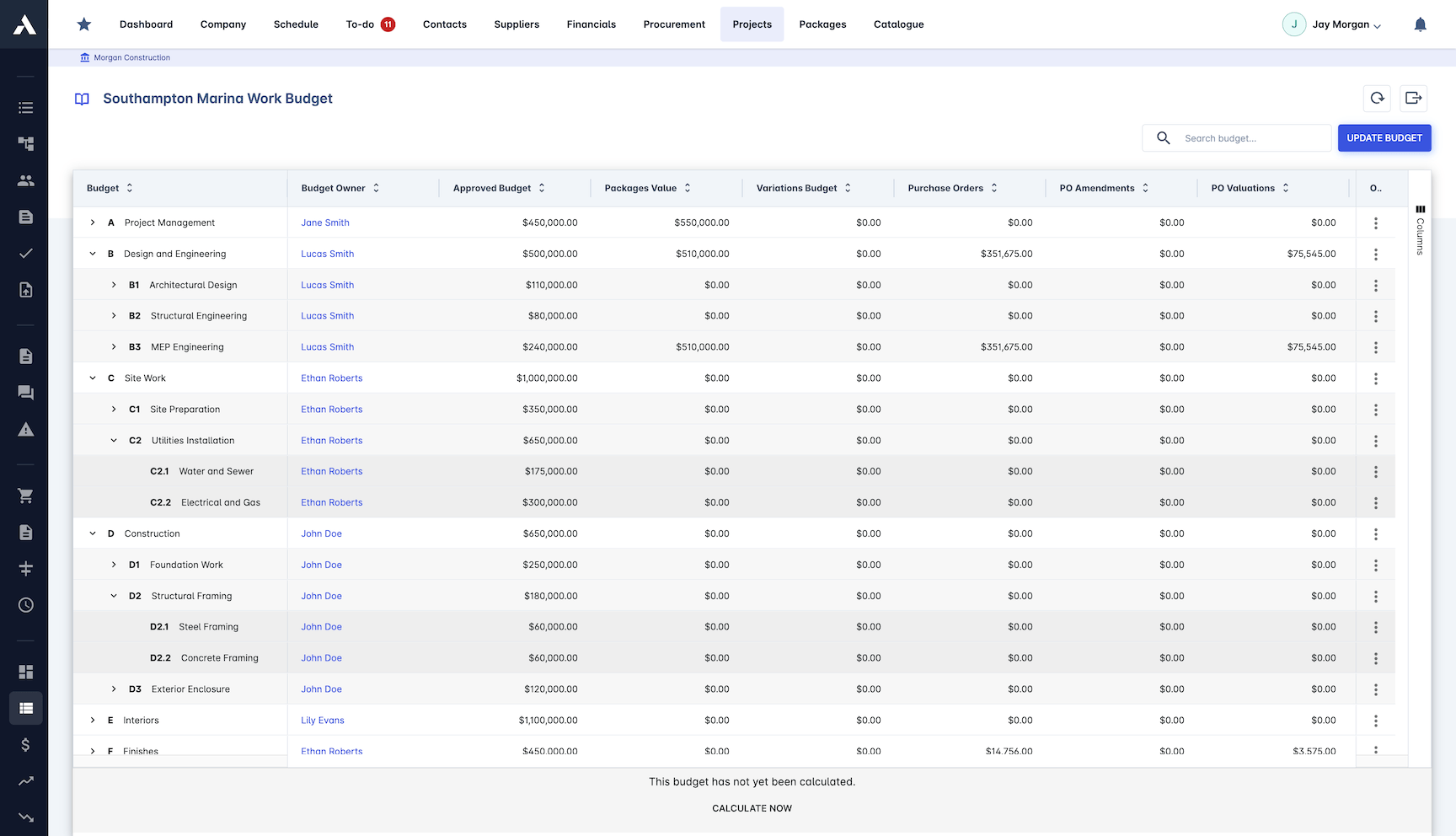
Frequently Asked Questions: Variations & Variations
What does construction variation software do?
It puts every scope change on the record before the work is done. Archdesk prices each variation with its price and its cost side by side, routes it through approval all the way to the client, then flows the approved change into the budget and the next valuation automatically.
How does Archdesk handle variations that reduce the scope of works?
Variations are raised against the scope of works whether they add work or remove it. The cost impact is calculated at creation with supporting documentation attached, so a scope reduction is recorded and priced the same way as extra work.
When does the client approve a variation?
Before anyone builds it. Approval workflows route the variation through the right reviewers and end with the client, whose sign-off is captured online. Work starts on a recorded instruction rather than a verbal agreement on site, so there is a paper trail nobody can argue with.
What happens to a variation after it is approved?
The budget adjusts on approval and the variation flows into payment certification and the next valuation automatically. Each change is tracked financially from pricing to final payment, and approved variations are carried into the final account.
Can you see what variations do to margins across projects?
Yes. Variation analytics surface trends, root causes and claims exposure across the whole portfolio, so recurring disputes show up in the data and pricing sharpens with every project.
How are variations priced before approval?
Each variation is priced against its cost lines when it is raised, with price and cost side by side and supporting documentation attached. Nothing is submitted for sign-off until its effect on the budget and the margin is on the record.
Do applications for payment pick up approved variations?
Yes. Applications for payment run in the platform against the same records the variations sit on, so approved changes carry into the next application and through certification without re-keying.
Where does retention fit when variations change a subcontract?
Retention is tracked per subcontract alongside the commercial record, so when a variation moves the subcontract value, the retention balance and its release timing stay visible with the same numbers.
Does the CVR reflect variations across every job?
Yes. The CVR (cost value reconciliation) is produced from the same live records the variations are priced and approved on, at project and portfolio level, so the whole order book reads one consistent set of numbers.
Comparing options? See the top construction change order software compared.
Explore Related Solutions
Everything below runs in the same system, working from the same live data.
Estimation
Accurate project cost estimation
Tender Management
Streamline your bidding process and win more jobs
Client Proposals
Create professional client facing proposals
BIM Integration
3D take-off estimation
Job Costing
True cost per job, live against the estimate
Project Cost Controls
Monitor and compare your actuals with the estimate
Discover more
Explore the full range of solutions and find the right fit for your business.
See your next project on Archdesk
Book a demo and walk through a fully worked example project: one platform running everything from winning the work to closing it out.
Book a Demo