
Archdesk for CFOs
Numbers you can stand behindWIP, forecasts and cash built from live project records, not collected spreadsheets.
A look at Archdesk from the CFO's seat: where the numbers come from, how the project side and the ledger stay in step, and straight answers to the questions finance leaders ask before they commit.
Trusted by construction companies of every size, worldwide


























We know where the month goes
Construction finance runs on numbers the projects produce, and in most companies those numbers arrive late, inconsistent and already out of date. Archdesk fixes the source, not the symptom. Side by side:
One version of the numbers, produced where the work happens, flowing into the books without re-keying.
Not just faster reporting. Financial control by design.
Archdesk carries the financial discipline of thousands of contractors: the structures, controls and habits that keep construction money honest are built into how the system works. Reporting follows the International Business Communication Standards (IBCS), and results consolidate across every company in your group.
Controls that enforce themselves
Delegated authorities, approval workflows and budget checks run inside the system. Spend that has not been through the process does not become a commitment, on any job, under any PM.


The ledger stays yours
Archdesk integrates with accounting systems like Xero, Sage and QuickBooks, and ERPs like NetSuite. The project side and the books agree without a reconciliation industry.
An audit trail as standard
Every commitment, approval and change keeps its history. Due diligence and audits start from records, not reconstruction.
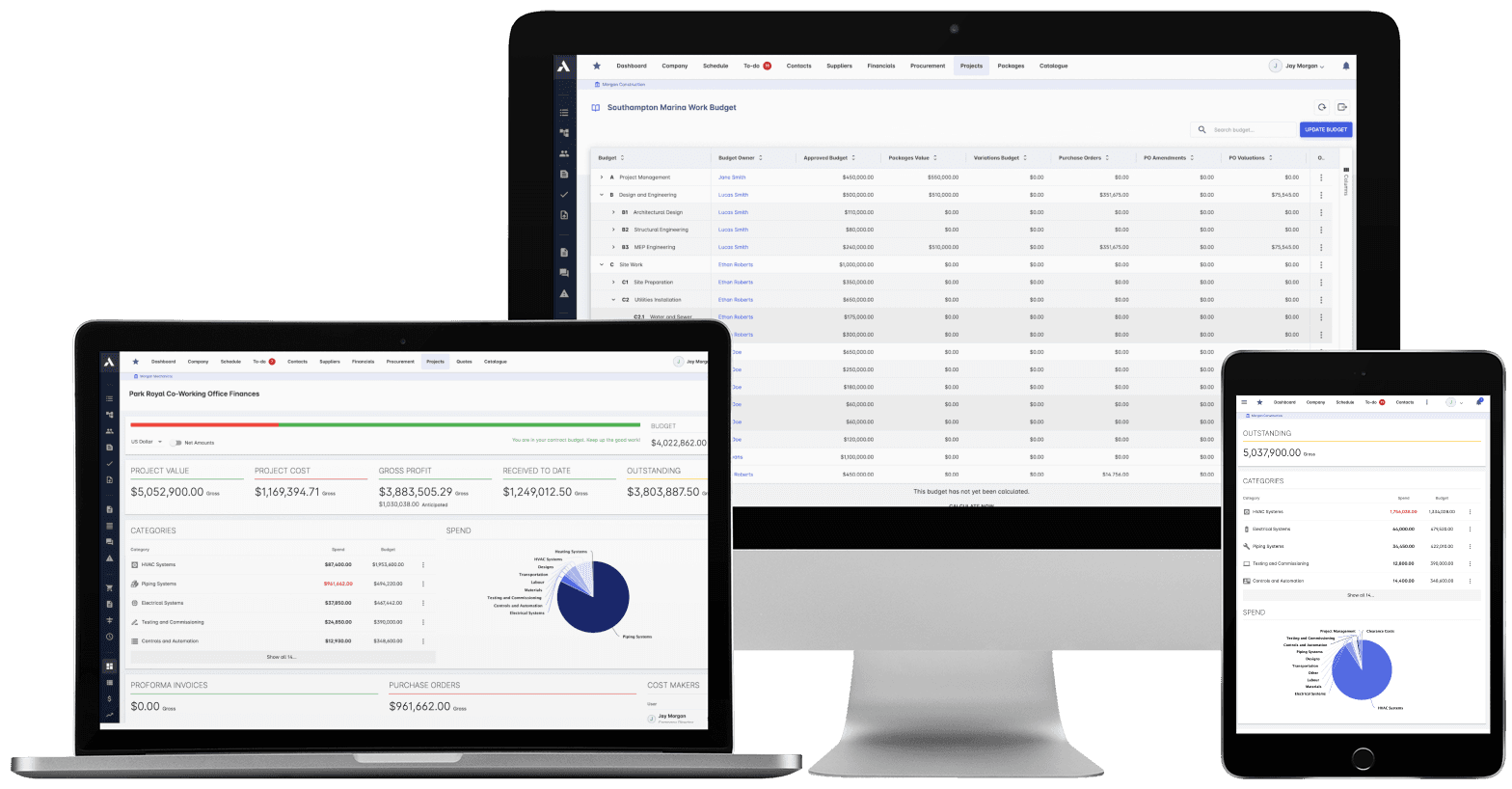
Project financials in Archdesk: value, cost, margin and cash, per job and rolled up.
Where CFOs spend their time in Archdesk
Questions CFOs ask us
Where do Archdesk's numbers actually come from?
From the records that run the work: purchase orders, subcontracts, timesheets, pay applications and invoices, captured as they happen on every job. Reporting is a view over live operational data, not a separate submission process.
How does Archdesk sit alongside our ERP or accounting system?
Your ledger stays the system of record for accounts. Archdesk runs the project side and integrates with accounting systems including Xero (as a certified partner), Sage and QuickBooks, and with ERPs such as NetSuite, mapped to your chart of accounts, so purchase orders, invoices and statuses flow both ways without re-keying.
Can we consolidate across a group of companies?
Yes. Archdesk supports multi-company groups: each entity keeps its own ledger, chart mapping and accounting integration, while projects and financials roll up into consolidated group reporting alongside the per-company views.
What standard does the reporting follow?
Dashboards and reports follow the International Business Communication Standards (IBCS), so the pack reads the same way month after month: consistent notation, comparable charts, and no time lost decoding formats before the conversation about the numbers can start.
Can we enforce our delegation of authority?
Yes. Approval workflows are configured to your rules: who commits spend, at what threshold, with whose sign-off, per company or per project. The workflow is the same on every job, which is what makes the numbers comparable.
How reliable are the forecasts?
Forecast final cost is built from budget, committed cost and recorded progress in the same structure on every project. It is as reliable as its inputs, and because the inputs are the working records rather than monthly summaries, drift shows up early instead of at final billing. Earned value metrics, including CPI and SPI, track alongside at project and portfolio level.
What about revenue recognition and WIP?
Work-in-progress reporting draws on certified pay applications and cost positions per project, with unbilled revenue and over- and under-billing visible per job, giving finance a consistent basis for revenue recognition conversations instead of a folder of PM spreadsheets.
What does implementation demand from my team?
The heavy lifting, structures, integrations and templates, is done with the Archdesk team during onboarding. Finance defines the chart mapping and approval rules once; after that the system enforces them.
See numbers built from the work itself
In the demo we walk you through a fully worked project portfolio in Archdesk from the CFO's seat: WIP, forecasts, cash and the accounting integration. Book a demo and see.
Book a Demo