Cost Control Software for Irish Contractors
Committed. Certified. Invoiced. Margin is made in the first two.Commitments, valuations, crew hours and variations reconciled against budget the day they happen, not at month end. Irish contractors get live CVR (cost value reconciliation), retention tracked per subcontract and applications for payment on the same records, so the commercial position is always the current one.
Trusted by construction companies of every size, worldwide


















Overruns are stopped at the commitment, not discovered at the final account
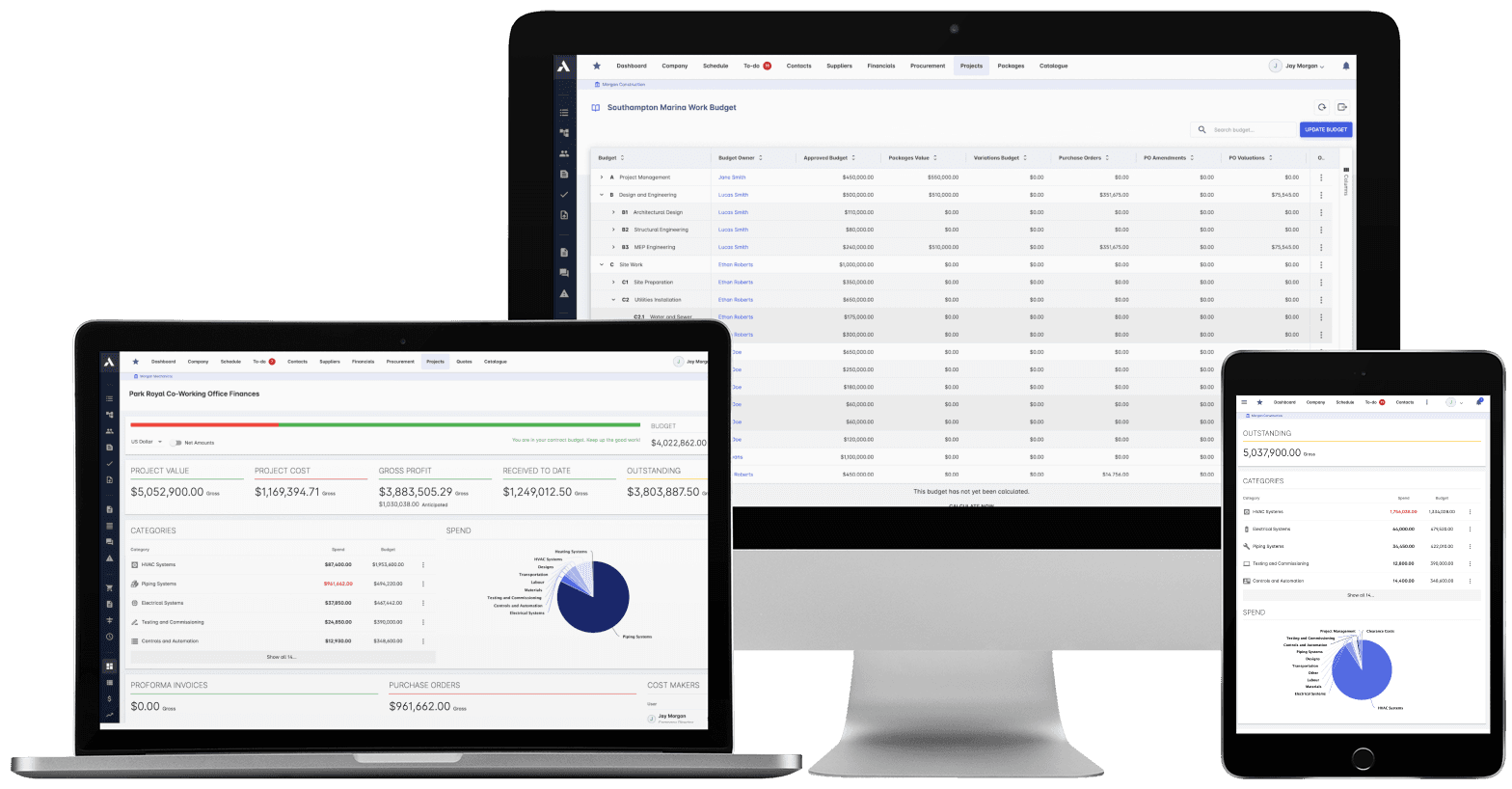
Cost control software for Irish contractors has to hold the line in the same three places margin leaks: commitments raised long before the invoice, valuations that lag the work on site, and retention left untracked until release is overdue. Archdesk captures purchase orders, subcontracts and contract values the day they are committed, codes them automatically, and values delivered work against them continuously. The CVR (cost value reconciliation) is produced from those live records at project and portfolio level, with applications for payment, retention and committed cost carried on the same figures, one set of numbers from first valuation to final account.

The true position, months before the invoices
Certified valuations feed earned value and cost to complete the day they land, with CPI, SPI and unbilled revenue alongside any KPI the commercial team defines, per project and across the portfolio.
Margin protected during delivery
Budget against actual runs at cost code level with variance alerts, so margin projections follow the certified position rather than waiting on the ledger.
Nothing gets spent without a signature
Applications for payment, payment certification and retention go through multi-level approvals with custom logic, including NEC contracts.
Changes priced before they land
Variations are priced against their cost lines before approval, so scope movement enters the forecast the day it is raised.
Control lives at committed and certified, not invoiced
Once the invoice is in, the money is gone. Archdesk reconciles commitments, hours and delivered value against budget every day, so the CVR presented at review is produced from the live record, not rebuilt in a spreadsheet.

Cost Reporting & Analytics
Reports come straight from the live numbers: CVRs, cost and schedule variances, unbilled revenue, progress payments and performance metrics for every stakeholder, with nothing to rebuild at month-end.
CVR, cost and schedule variance reports
Unbilled revenue and progress payment reports
Custom report builder
Real-time dashboards at project and portfolio level
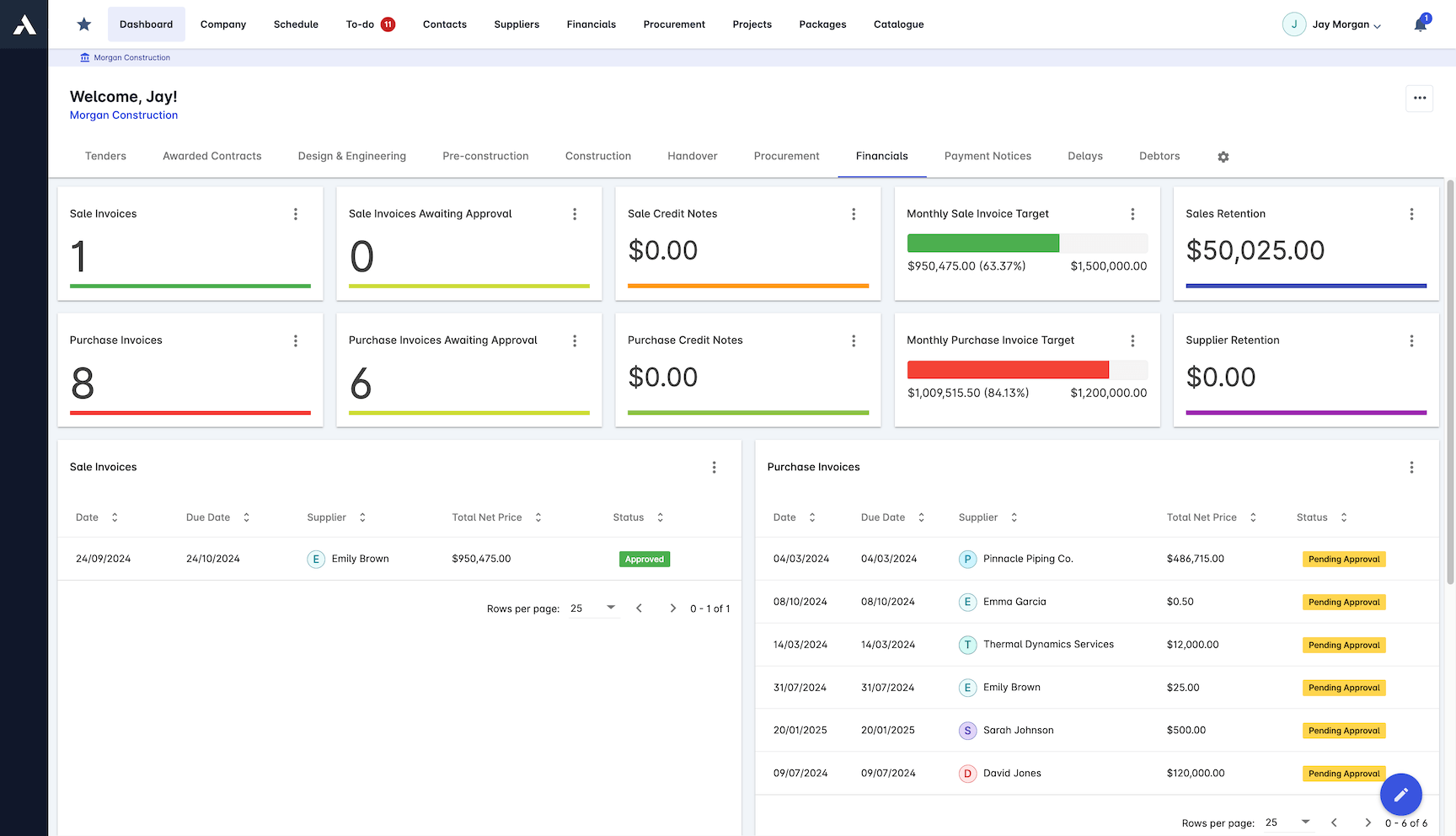
Financial Control
Invoices, payments, retention and commitments go through approval before they hit the numbers, so nothing is spent unseen.
Invoice management and payment certification
Retention tracking
Commitment monitoring
Multi-level approvals with custom logic
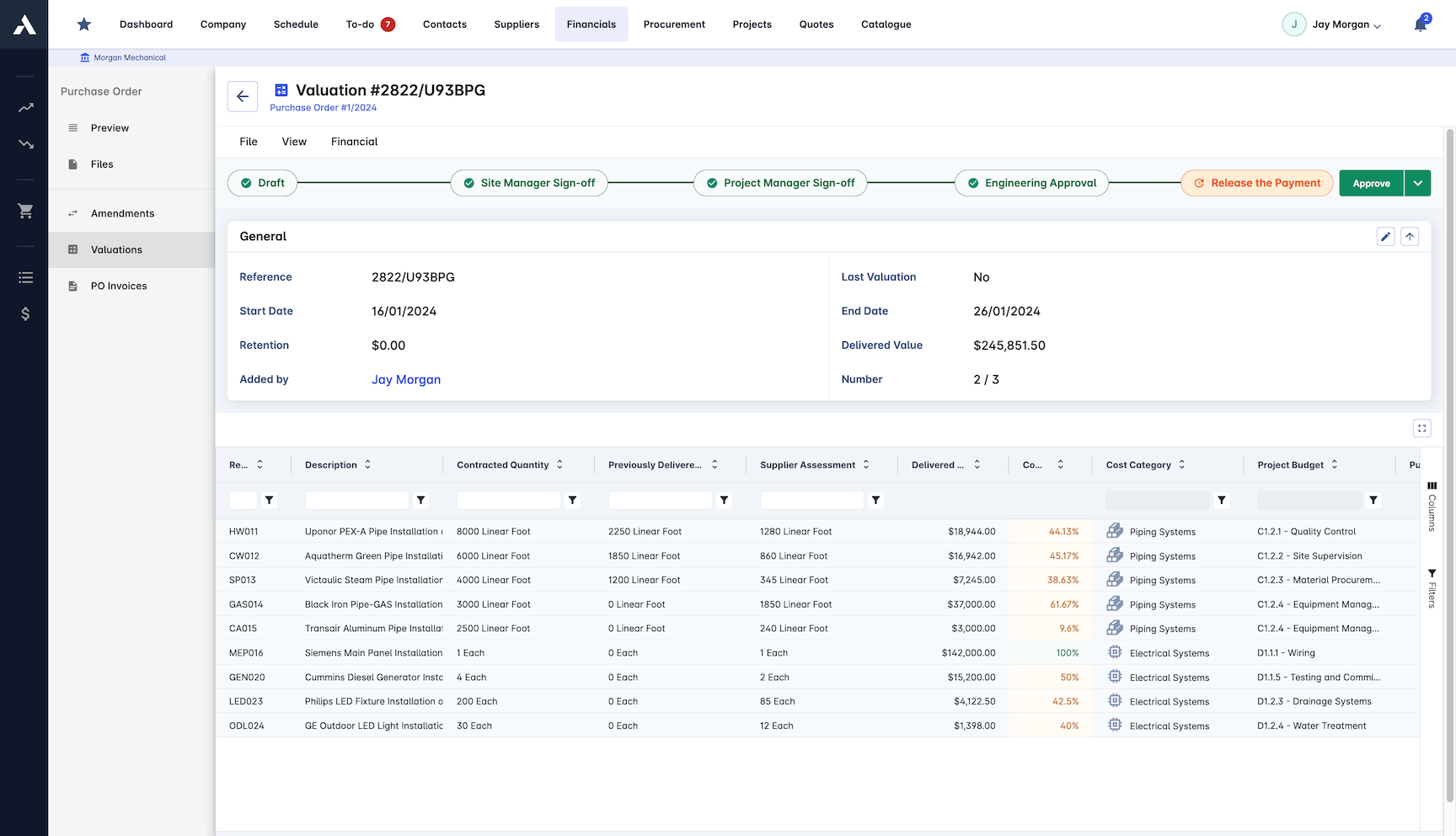
Cost Forecasting
Earned value and cost-to-complete keep the forecast live, so the outcome is managed during delivery rather than reported after it. CPI and SPI are computed from the same records, so performance indices are always current, for each project and across the portfolio.
Earned Value Management with CPI and SPI
Cost-to-complete forecasting
Cash flow projections
Trend analysis and custom-defined KPIs
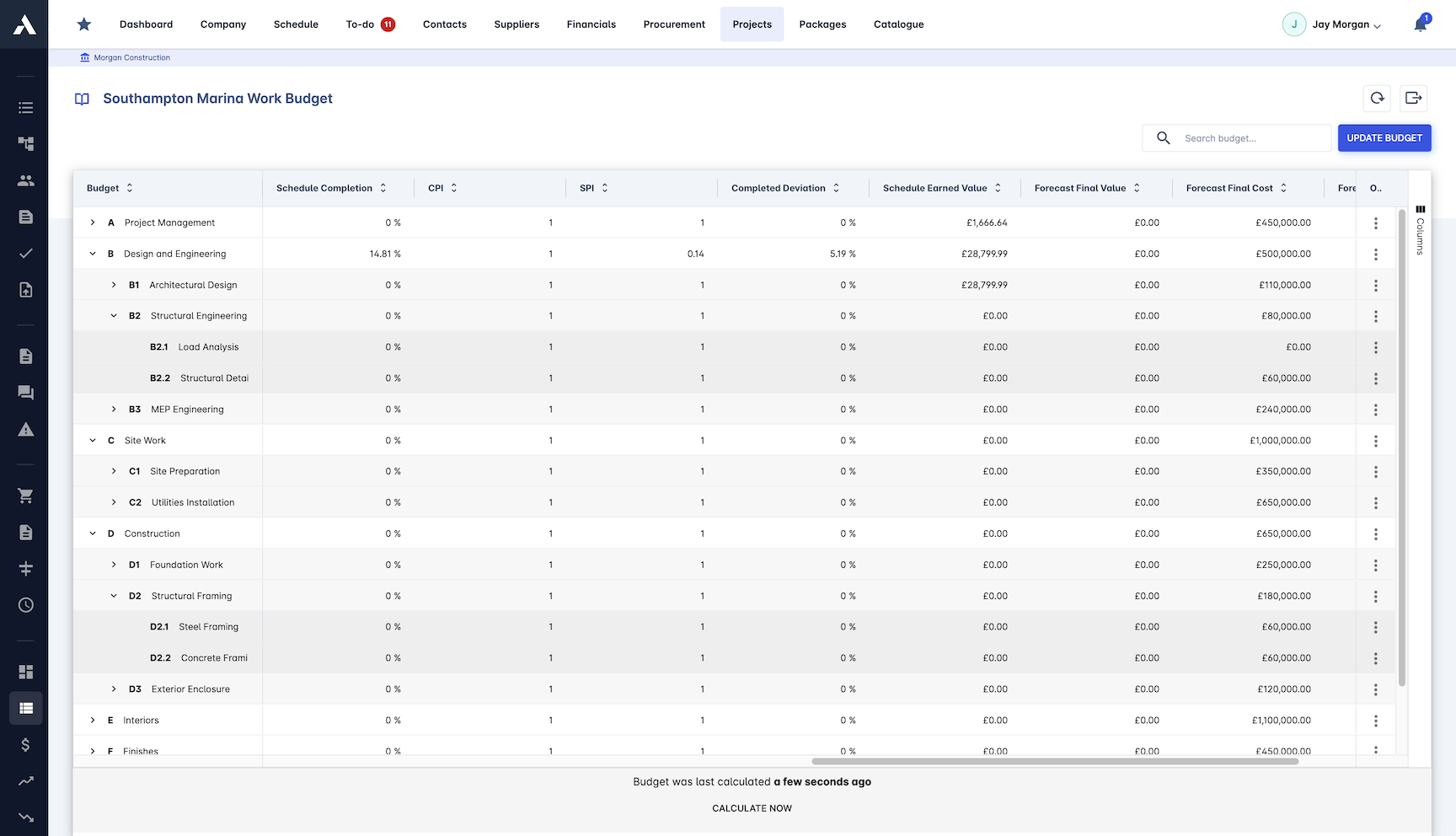
Real-time Job Costing
Every cost lands on its job the day it happens: labour, materials, equipment and subcontractors. Nobody waits for the ledger to find out where the project stands.
Live job cost dashboard
Automated cost code allocation
Purchase order monitoring
Subcontractor payments and payment notices
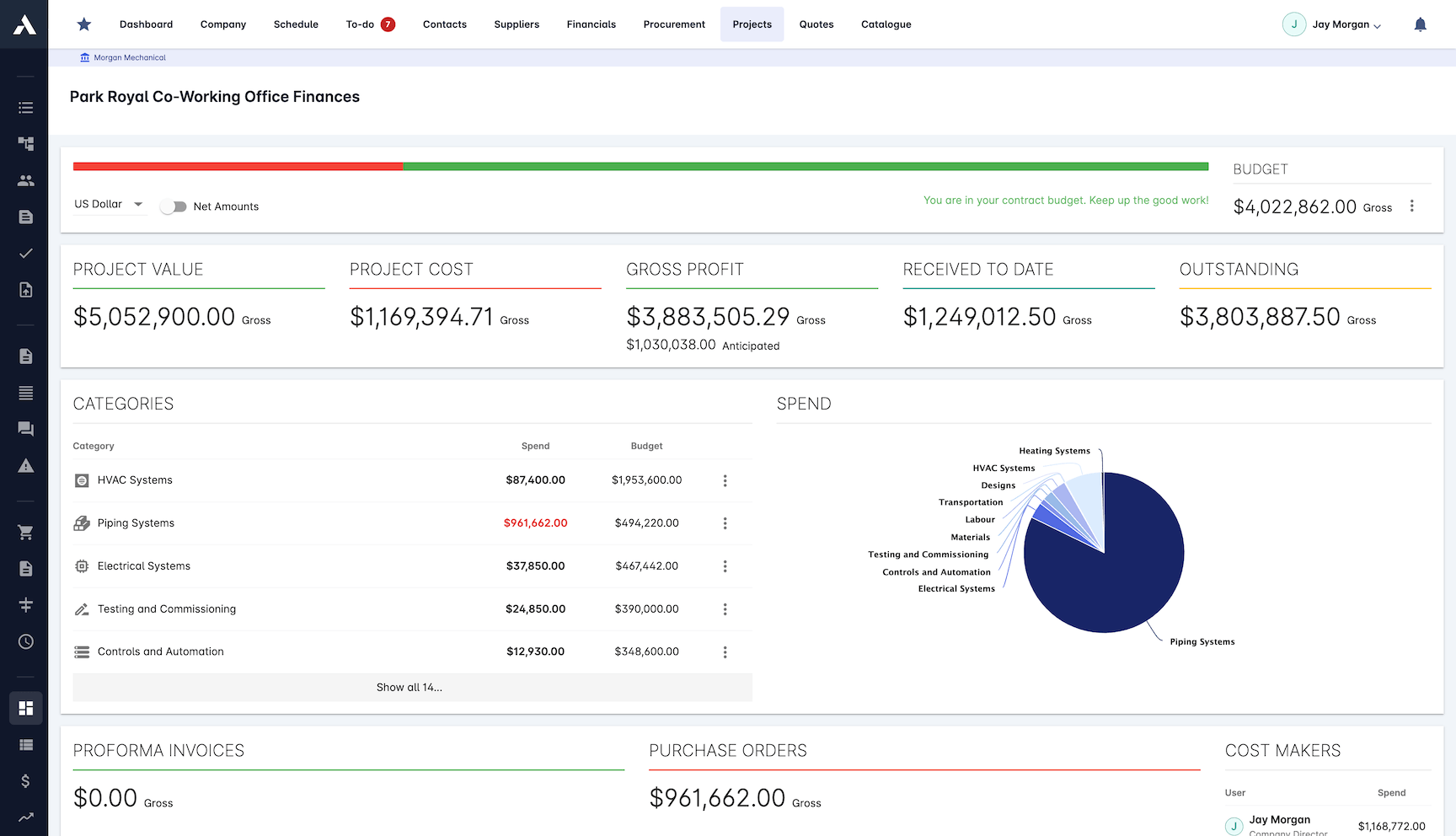
Budget Control
Budget against actual on every cost code, with variations showing their impact the day they are raised, not at the final account.
Budget vs actual analysis
Variation impact tracking
Cost code management
Commitment tracking
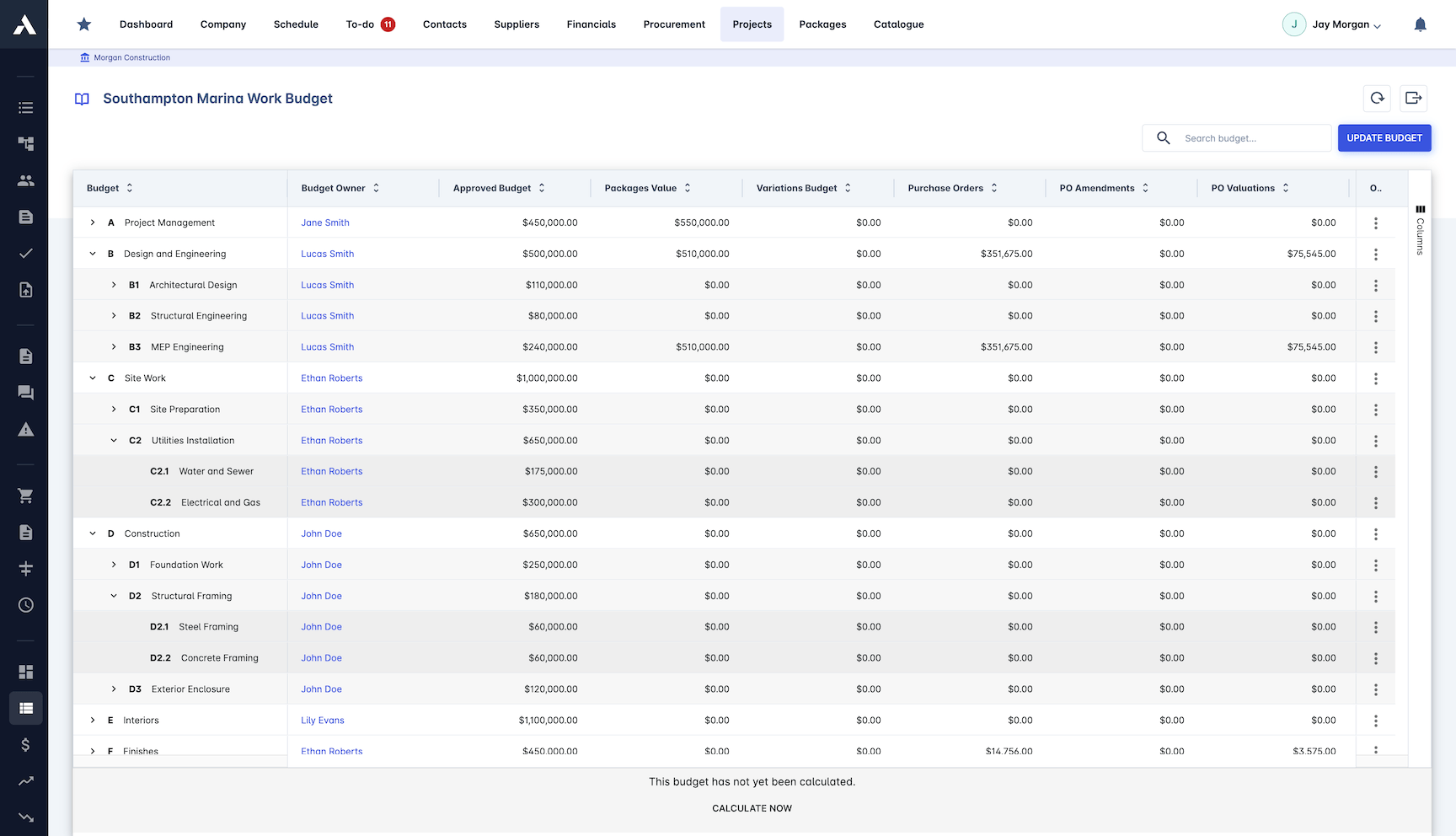
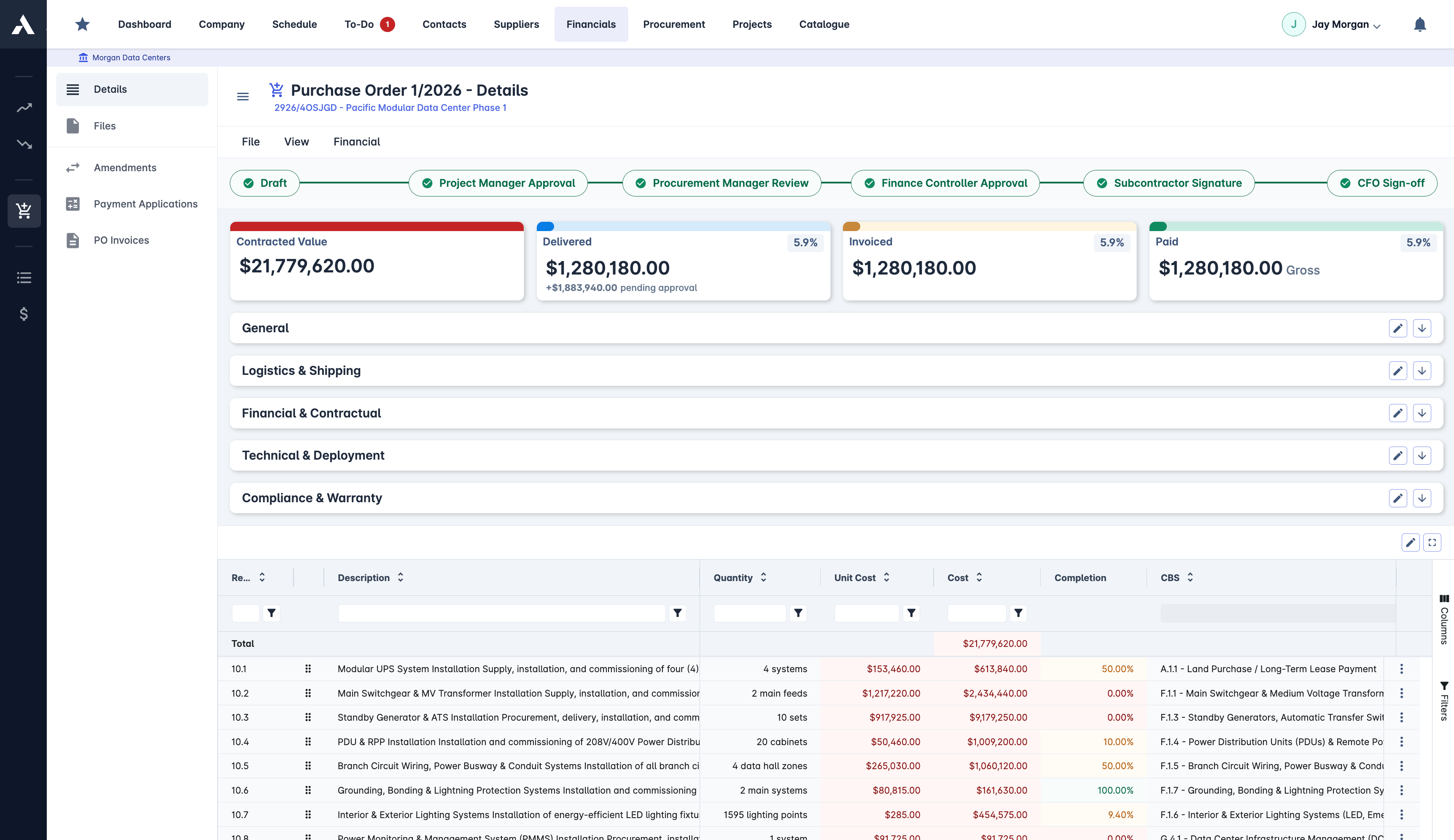
Procurement Control
Every purchase order, supplier payment and subcontract tracked from order to delivery, with contract values monitored against what has been committed.
Purchase orders across purchasing modes
Materials, supplier and subcontractor cost control
Contract value monitoring
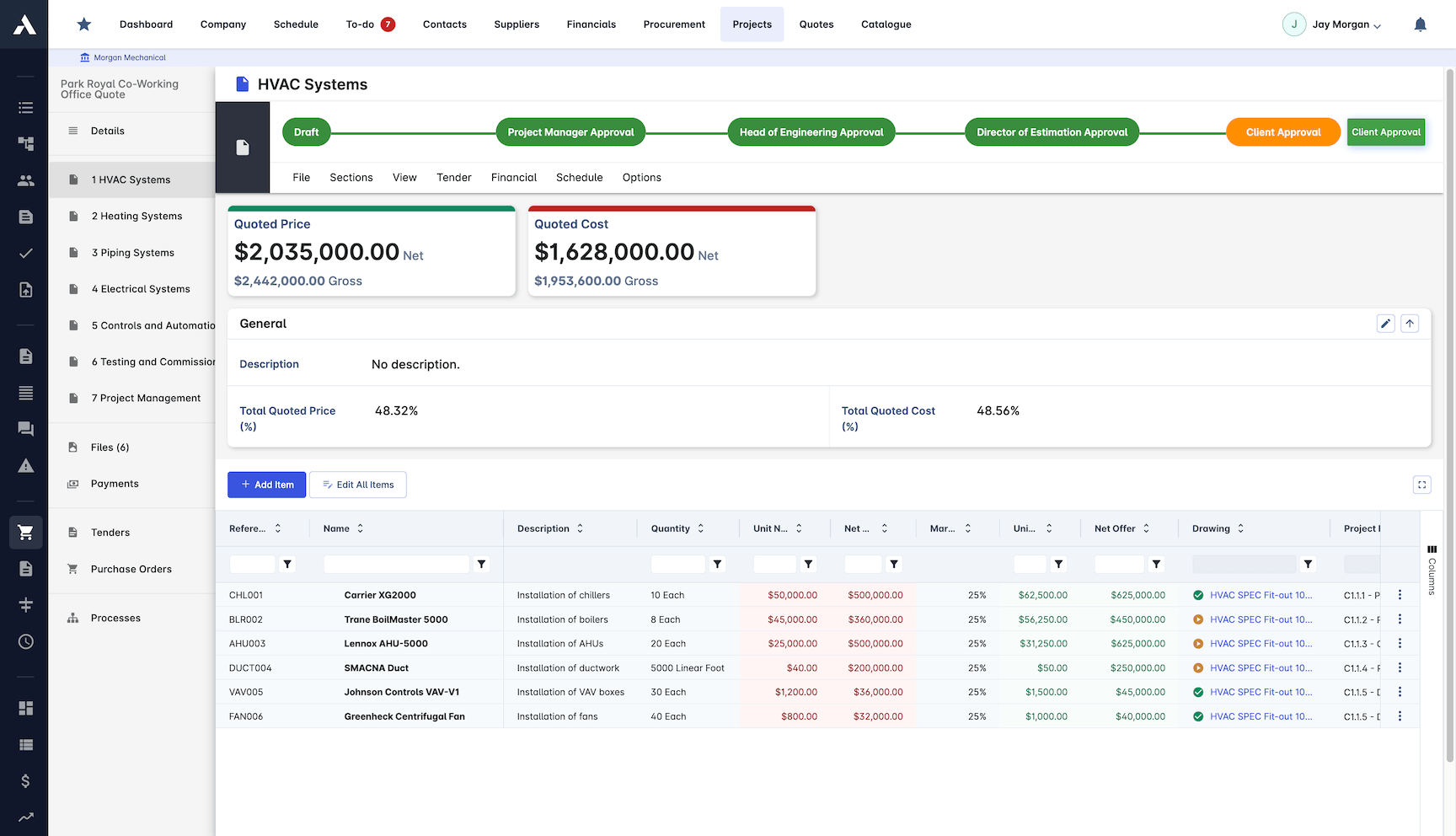
Estimate vs. Actuals Analysis
The estimate you won with sits beside the cost you are actually carrying, at cost code level, with variances flagged as they open up.
Side-by-side estimate comparison
Cost code level variance alerts
Profit projection updates
Historical performance tracking
Cost value reconciliation, defined
Cost value reconciliation (CVR) is the comparison of the costs a construction project has incurred against the value of the work it has delivered, showing the true margin position while the project is still running. The cost side counts what has been committed and spent: subcontracts, purchase orders, labour, materials and general conditions. The value side counts what the work done is worth under the contract: the internal valuation position and certified sums. The gap between the two is the project's real profit or loss to date, and the movement of that gap month to month is the earliest warning a contractor gets that a job is drifting.
| CVR component | What it counts | Where it lives in Archdesk |
|---|---|---|
| Cost | Committed and actual cost: subcontracts, purchase orders, labour, materials, general conditions | Commitments and job costing, coded to cost codes the day they happen |
| Value | Work delivered under the contract: valuations and certified sums | Valuations and certified sums, tied to the same budget lines |
| Reconciliation | Cost against value: profit or loss to date, variance and its month-to-month movement | CVR reports with CPI, SPI, unbilled revenue and custom KPIs, at project and portfolio level |
Plenty of pages define CVR. The difference here is that Archdesk delivers it: the CVR is a report the platform produces from live records, at project level for the commercial team and rolled up across the portfolio for the board, not a template you fill in from three other systems.
The CVR, produced instead of assembled
The monthly CVR (cost value reconciliation) is where cost control gets tested. Most teams assemble it: exports from accounts, a billing spreadsheet, a commitments list someone keeps by hand. Archdesk produces it instead, straight from the live commitment, valuation and cost records the project already runs on, with cost and schedule variances, unbilled revenue and CPI and SPI from the same numbers. It works at project level for the commercial team and rolls up to portfolio level for the board, and because the records are current daily, the CVR stops being a month-end reconstruction of what already happened.
Comparing options? See the best construction cost control software compared.
This page is about live cost control: actuals against the estimate, and the CVR. Setting and managing the budget is construction budgeting, and what each job really costs against the priced numbers is construction job costing.
Frequently Asked Questions: Construction Cost Control
What is cost control in construction?
Cost control is managing the money while it can still be influenced: recording every commitment the day it is made, valuing work as it is delivered, and reconciling both against budget continuously. By the time an invoice arrives the money is already spent, so control happens at committed and earned, not invoiced.
How does Archdesk track committed cost?
Purchase orders, subcontracts and contract values post to their cost codes at the point of commitment. The gap between committed and invoiced stays visible per line, so the true cost position is known months before the invoices arrive.
Does Archdesk support earned value management?
Yes. Delivered value is tracked against commitments and budget, feeding earned value, cost-to-complete forecasting, CPI and SPI, computed from the same live records at project level and across the portfolio, alongside any custom KPI you define.
How does the monthly CVR get produced?
The CVR (cost value reconciliation) comes straight from the live commitment, valuation and cost records, produced rather than assembled. Cost and schedule variances, unbilled revenue and progress payment reports build from the same numbers, with nothing rebuilt at month-end.
How are variations kept out of the base budget?
Variation impact tracking puts every variation against its cost lines when it is raised, so scope movement is approved, priced and in the forecast rather than discovered at the final account. Approvals run through multi-level workflows.
How does Archdesk handle retention?
Retention is tracked per subcontract with the rest of the commercial record, so balances and release timing stay visible beside the numbers the CVR is produced from, on both new work and jobs deep in the defects period.
Do applications for payment run inside Archdesk?
Yes. Applications for payment run against the same cost codes the budget and the CVR read from, with payment certification through multi-level approvals, so the certified position and the cost position always agree.
Does Archdesk integrate with the accounting systems Irish contractors use?
Yes. Archdesk is a certified Xero partner and integrates with Sage, so the commercial record and the ledger stay in step without re-keying.
Is the CVR available across every live job?
Yes. CVR (cost value reconciliation) runs at project and portfolio level from the same records, so the whole order book reads from one set of live numbers.
Explore Related Solutions
Everything below runs in the same system, working from the same live data.
Estimation
Accurate project cost estimation
Tender Management
Streamline your bidding process and win more jobs
Variation Management
Handle project changes efficiently and accurately
Client Proposals
Create professional client facing proposals
BIM Integration
3D take-off estimation
Job Costing
True cost per job, live against the estimate
Discover more
Explore the full range of solutions and find the right fit for your business.
See your next project on Archdesk
Book a demo and walk through a fully worked example project: one platform running everything from winning the work to closing it out.
Book a Demo