Archdesk for Quantity Surveyors
Get paid for what was builtInterim valuations from records, variations on the record, final accounts without the fight.
A look at Archdesk from the QS seat: where your applications come from, what happens to unpriced change, and straight answers to the questions commercial teams ask first.
Trusted by construction companies of every size, worldwide

























We know where the money leaks
Most commercial loss is not one bad deal. It is unpriced change, unsupported applications and evidence that was never captured. Archdesk builds your paper trail while the job runs. Side by side:
Commercial protection without commercial theatre: the evidence exists because the work was recorded, not because someone reconstructed it.
Not just tidier paperwork. Commercial muscle.
Archdesk carries the commercial habits of thousands of contractors who learned, sometimes expensively, what protects margin: capture change early, substantiate everything, track retention to the end.
Change captured at the source
Site instructions and scope movement are recorded where they happen, priced against the budget, and routed for approval. The variation file builds during the job, not during the dispute.


Applications from evidence
Measured work, approved variations and supporting records assemble into payment applications you can defend line by line.
Nothing left on the table
Retentions tracked to release, subcontractor liabilities netted against certificates, the final account already reconciled.
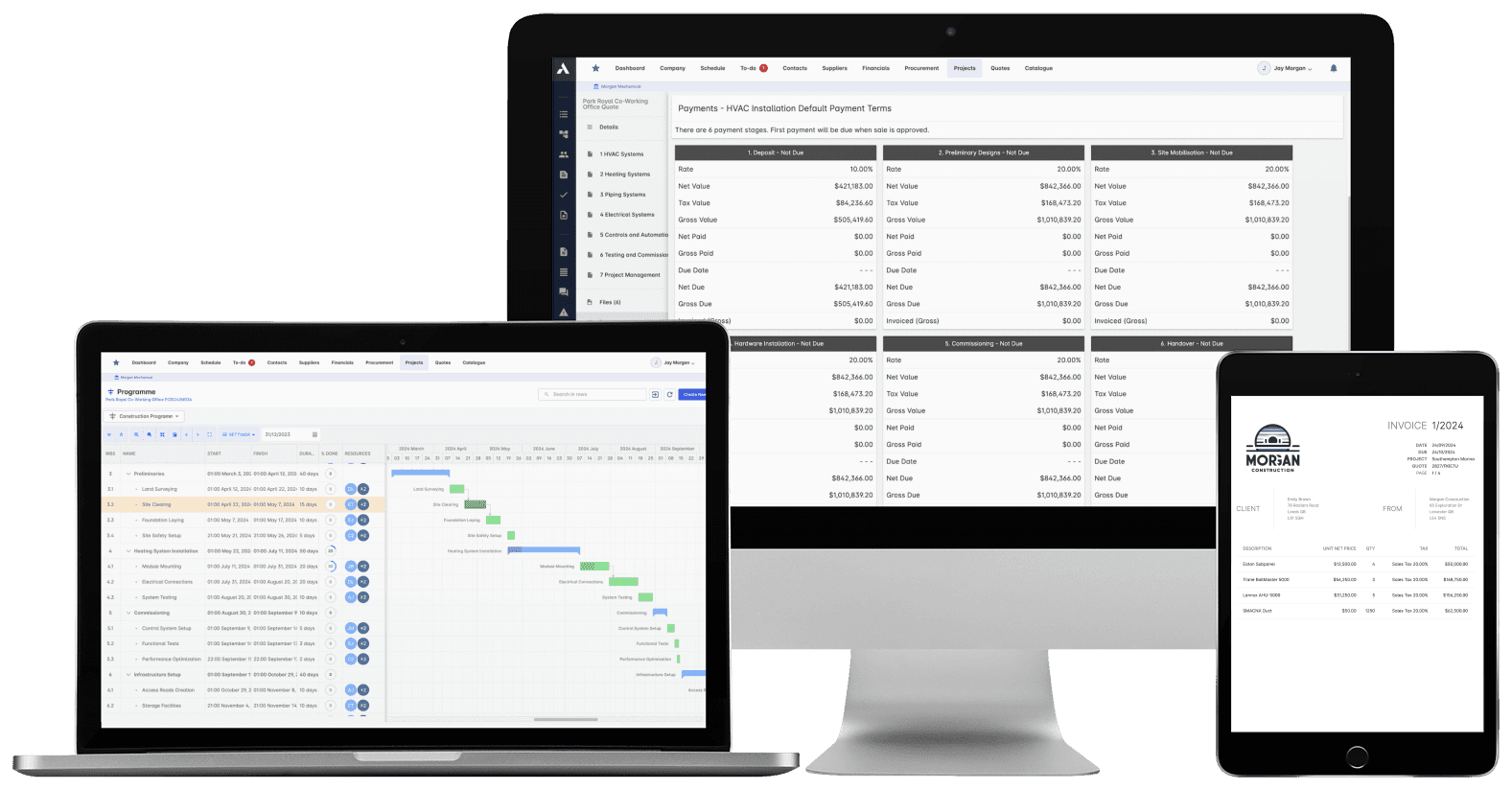
Payments in Archdesk: applications, certificates and retentions, traced to the record.
Where QSs spend their time in Archdesk
Questions quantity surveyors ask us
How do interim valuations and payment applications work in Archdesk?
Applications are built from the project record: measured progress, approved variations, and the supporting site records behind them. Each line traces to its evidence, which changes the tone of the certification conversation.
How does Archdesk handle variations?
Change is captured with its instruction and evidence, priced against the budget, routed for approval, and tracked from instruction through application to the final account. Unapproved work stops slipping through as free scope.
Can I run subcontractor accounts through it as well?
Yes. Subcontract packages, their valuations, certificates, payment notices, retentions and payment records run in the same system, so the upstream and downstream positions reconcile against each other instead of living in separate spreadsheets.
Does Archdesk produce a CVR (cost value reconciliation)?
Yes. Value and cost sit against the same project structure, so the CVR comes from live records: certified value, committed cost, actuals and forecast final cost, with cost and schedule variances alongside, per project and across the portfolio.
How are retentions tracked?
Per contract, through to release dates, on both sides of the ledger. The money that quietly gets forgotten in spreadsheets stays visible until it is collected.
Does site actually give me the records I need?
Site records land daily because they are captured as part of the site's own work: forms, progress, photos from phones. You draw from the same records the delivery team runs on, which is why they exist.
What happens at the final account?
The history is already assembled: every variation with its approval, every application, every certificate, in order. Closing becomes a reconciliation of known records, not an archaeology project on both sides.
See an application that defends itself
In the demo we walk you through a fully worked project in Archdesk from the QS seat: valuations, variations, retentions and the final account. Book a demo and see.
Book a Demo