WIP & CVR Reporting Software for Irish Contractors
One set of records behind the valuation, the CVR and the WIP.Percent-complete from actual cost against forecast final, revenue from the live contract value with variations in, over and under-billing by job. Irish commercial teams read the WIP and the CVR from the same records that ran the work, so the monthly position is produced, not assembled.
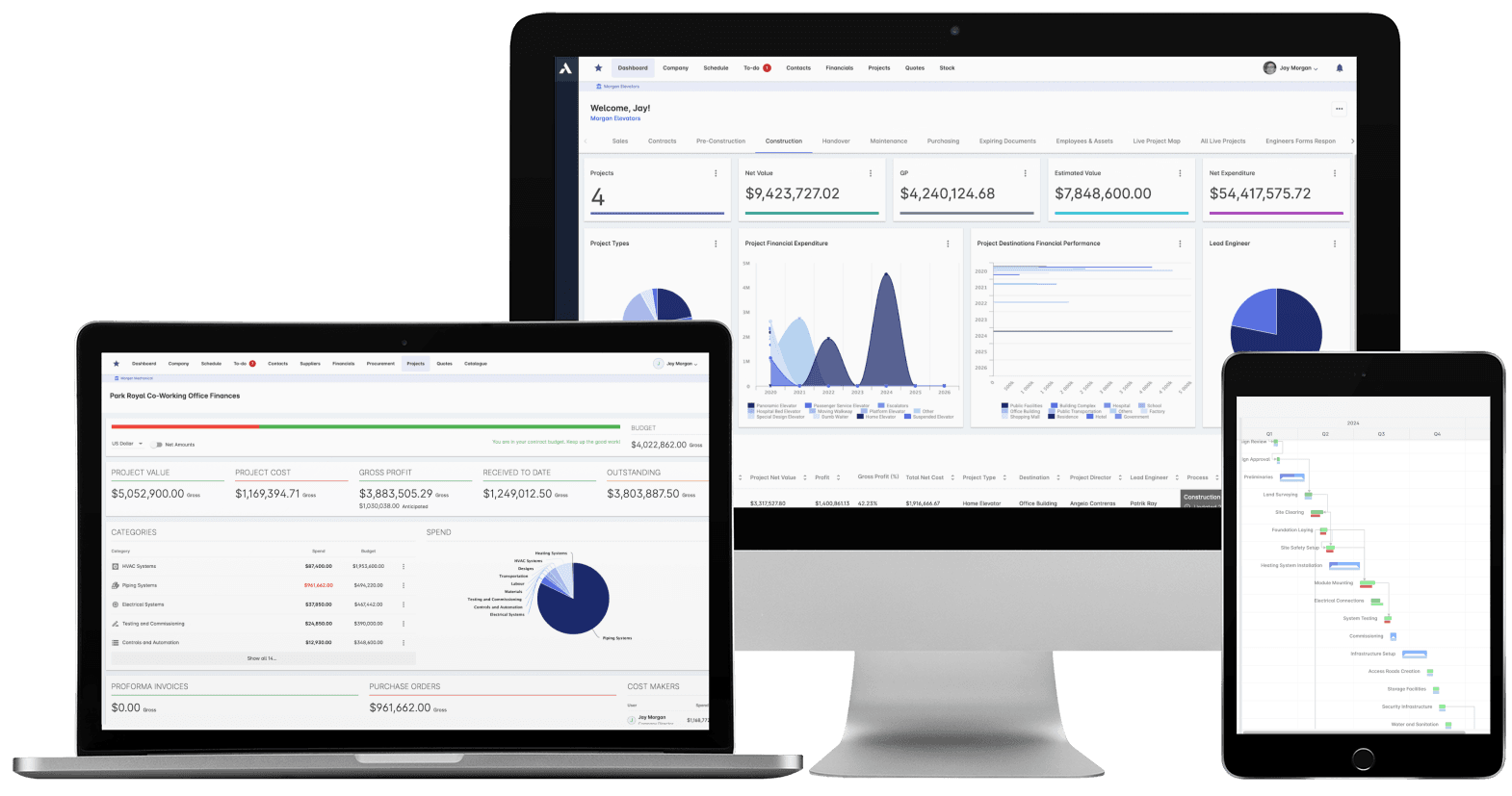
Trusted by construction companies of every size, worldwide


























The WIP reads from the records, not from a spreadsheet round-robin
Irish contractors already run the month around the valuation and the CVR; the WIP schedule is the same story told to finance. Archdesk produces all of it from one set of live records: committed and actual cost against forecast final, certified valuations, and contract value with approved variations included. Over and under-billing surface by project across the portfolio, retention sits per subcontract beside the numbers it belongs to, and applications for payment run on the same cost codes, so the figure finance books at month end is the figure the commercial team certified.

Valuations, CVR and the accounts in step
Applications for payment, payment certification and revenue recognition run from the same numbers as the WIP, so finance and commercial never argue over whose figure is right.
Profit fade caught while it is a conversation
Cost-to-complete and margin projections move with the live records, with overrun alerts and trend identification, so profit fade is raised at the commercial review while there is still time to act on it.
Over and under-billing by project
The billing position is visible job by job across the portfolio, with accrue and prepay calculations handled in the report itself, alongside portfolio cashflow.
Percent-complete from cost, not opinion
Progress is read from actual cost against forecast final and certified valuations, the basis the CVR already uses, rather than estimates gathered by email.
Every figure substantiates back to a record
When finance or the auditor queries a line, the answer is a drill-down: certified valuations, commitments, actual cost, retention balances and approved variations, all held in the one system.

WIP Reporting
The WIP schedule and the monthly CVR generate from live project data, in the format each stakeholder needs, across the whole portfolio. Nothing is rebuilt in a spreadsheet.
CVR (cost value reconciliation) reports
Over and under-billing by project
Custom templates and executive dashboards
Accrue and prepay calculation
Portfolio cashflow reporting
Stakeholder-specific reporting
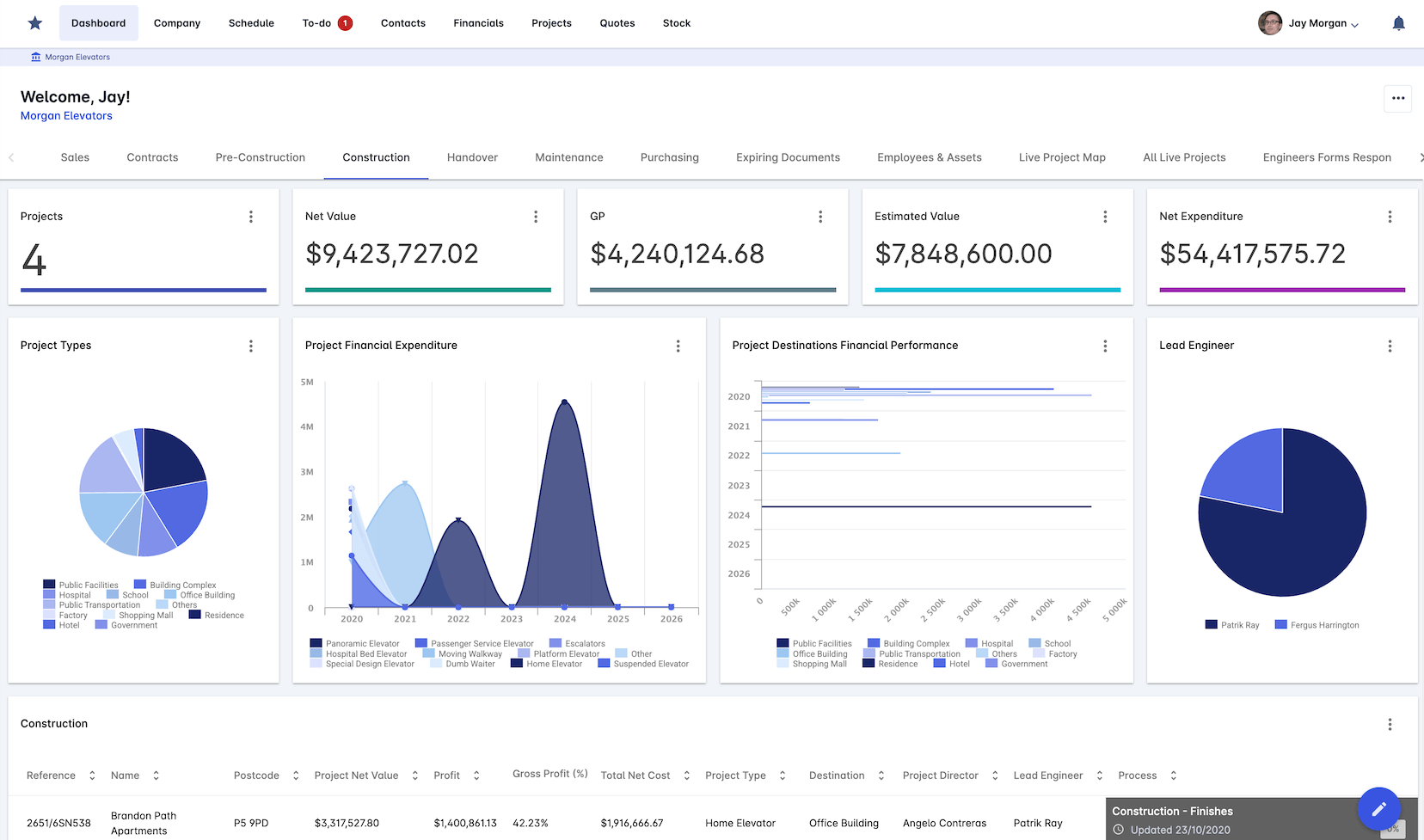
Financial Analysis
Cost-to-complete and profit projections run from live data, so the position you report to the accounts is the position the project actually holds.
Cost-to-complete forecasting
Profit and loss projection
Cash flow analysis
Revenue recognition tracking
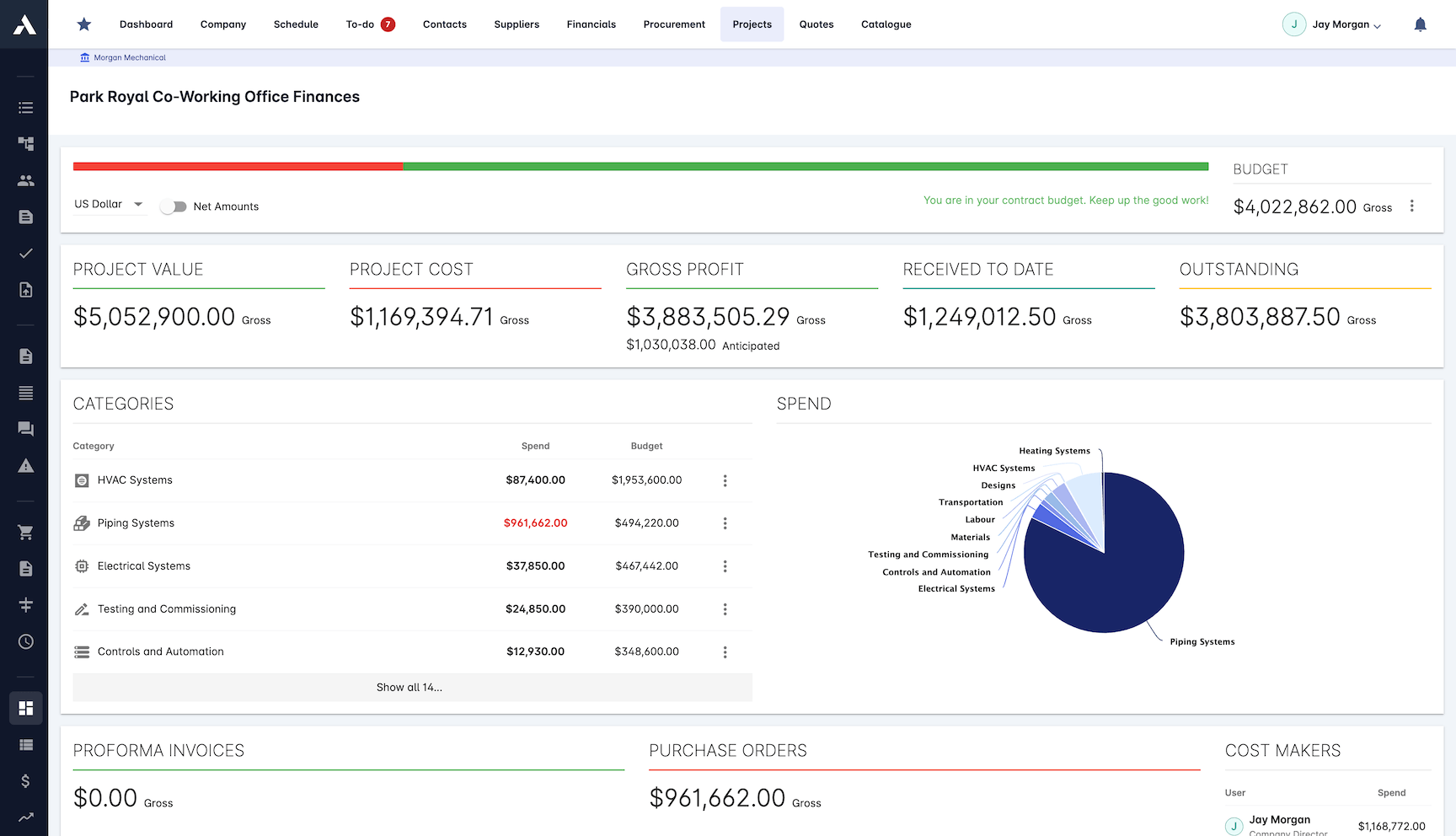
Progress Claims
Claims generate with the supporting evidence attached, so certification and payment follow the records instead of chasing them.
Automated claim generation
Supporting evidence tracking
Payment certification
Retention management
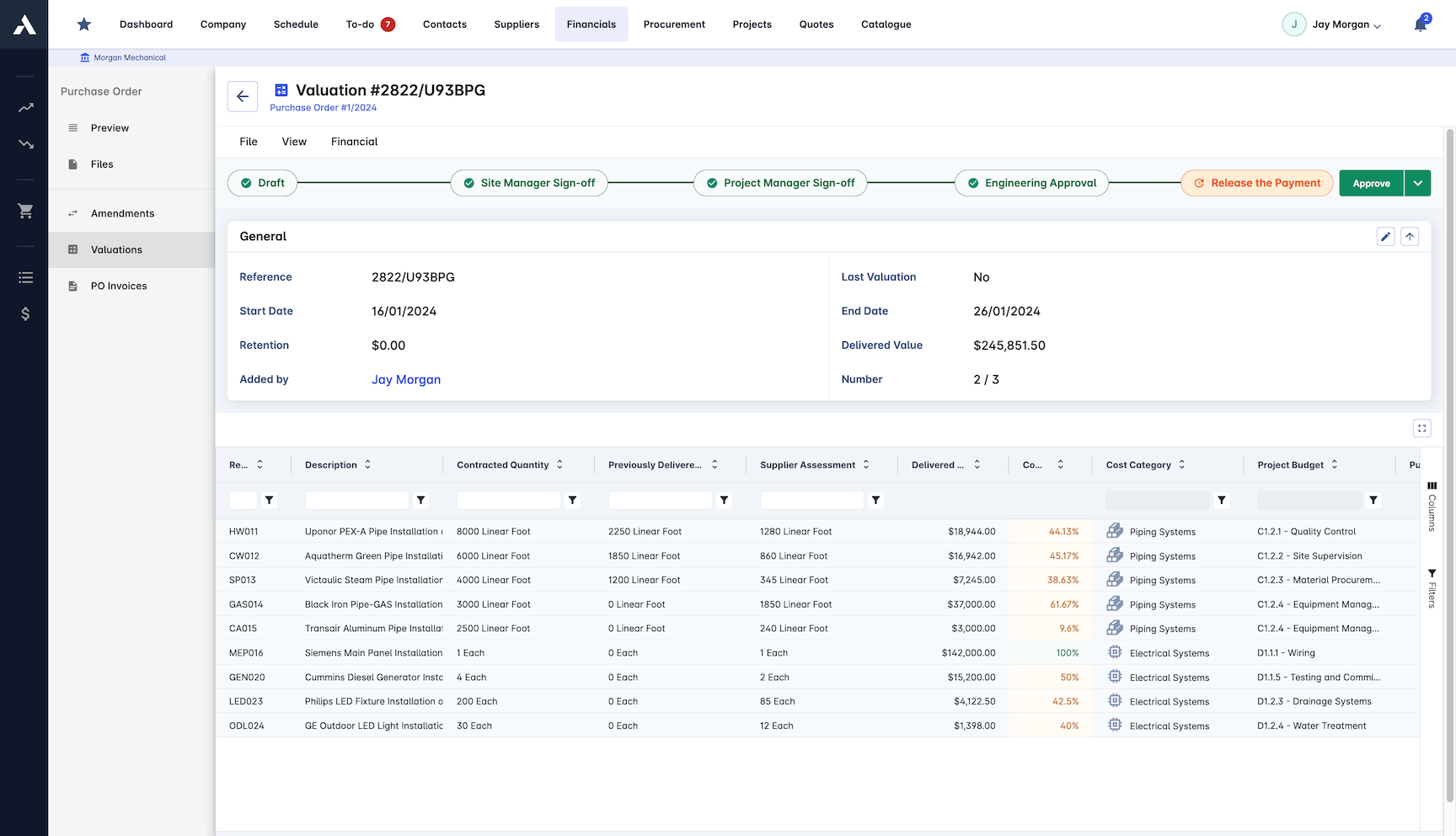
Variance Analysis
Planned against actual on cost, progress and schedule, with alerts the moment a project starts to drift from the plan.
Budget variance tracking
Schedule deviation analysis
Cost overrun alerts
Trend identification
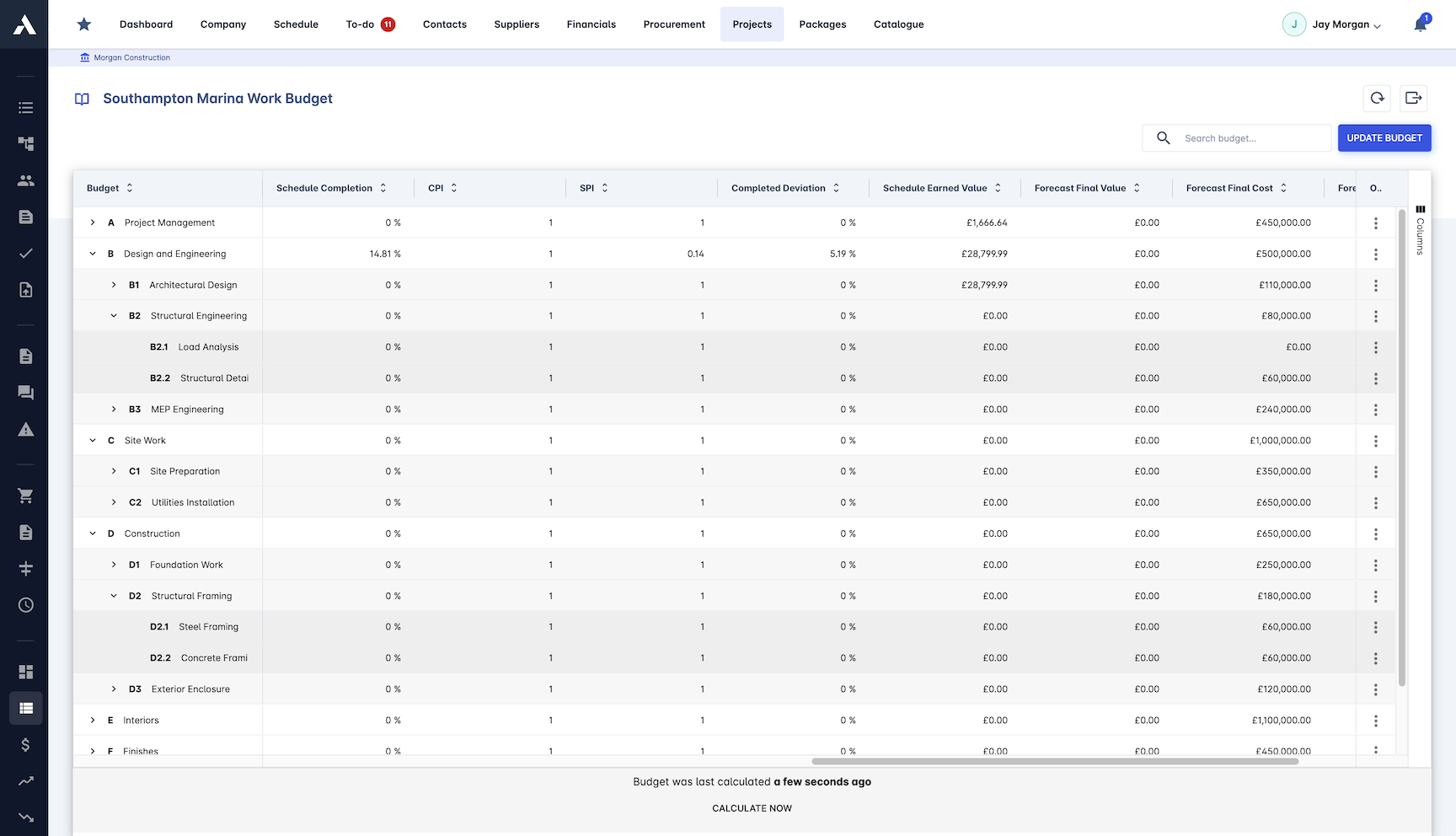
Real-time Progress Tracking
Progress, cost and earned value tracked live across every project, so the WIP reflects the site as it stands today, not as it stood at the last update.
Live progress updates
Cost tracking by trade
Earned value monitoring
Project milestone tracking
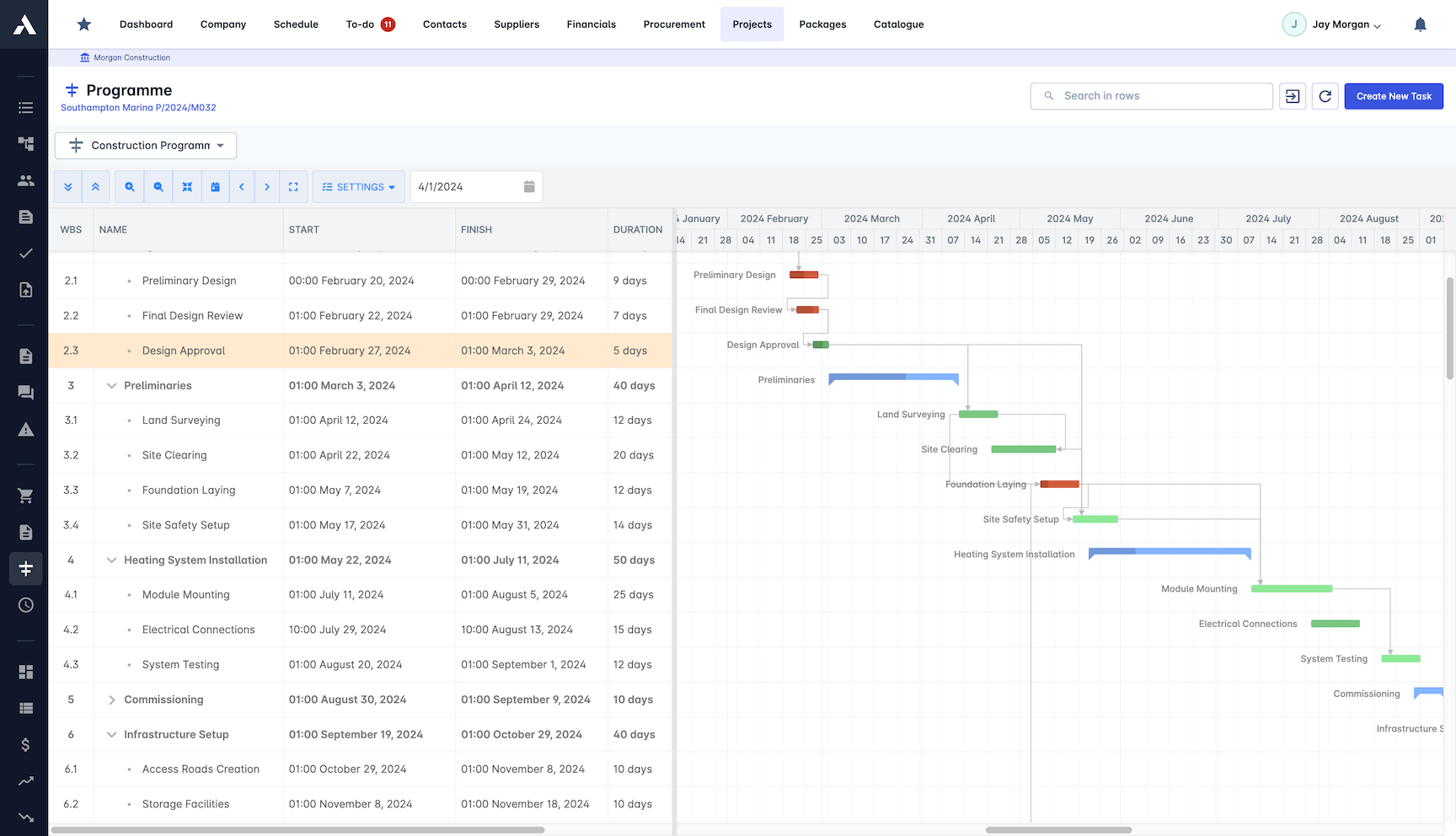
Performance Tracking
Project health visible across the portfolio, so the jobs that need attention get it before the WIP says so.
KPI dashboards
Project health scoring
Resource usage metrics
Productivity analysis
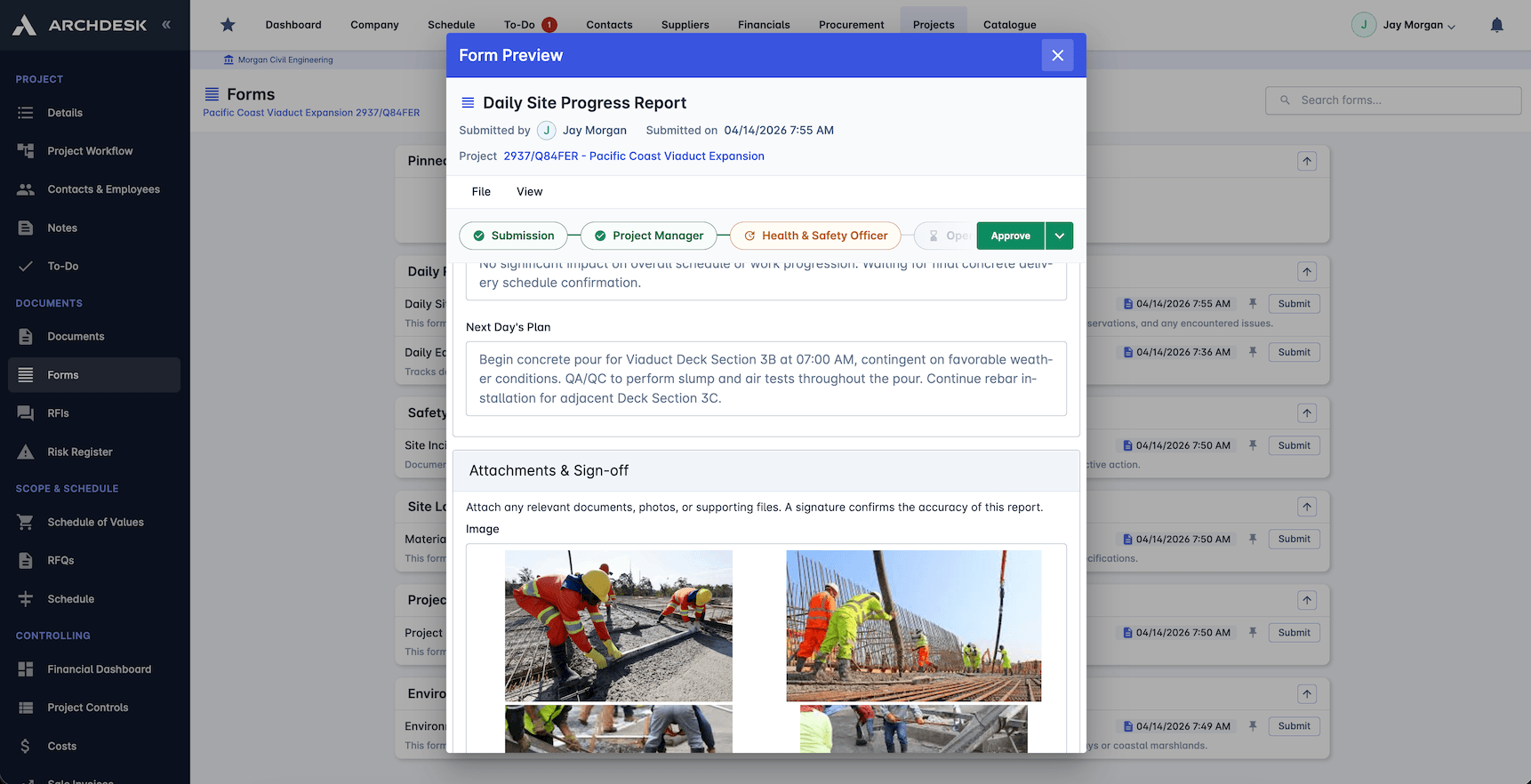
Work in progress reporting, defined
A work in progress (WIP) report shows, for every live contract, how much of the work has been done, how much has been billed, and how far apart those two numbers are. Percent-complete comes from cost incurred against forecast final cost, earned revenue applies that progress to the contract value including approved variations, and the gap between earned and billed is the over- or under-billing position. Read monthly across the portfolio, the WIP is how contractors catch profit fade, under-claimed work and cashflow risk while something can still be done about them.
| WIP line | How it is calculated | Where it comes from in Archdesk |
|---|---|---|
| Percent-complete | Actual cost to date against forecast final cost | Live job costing and cost-to-complete forecasting |
| Earned revenue | Progress applied to contract value, approved variations included | Contract records with variations on their cost lines |
| Over / under-billing | Earned revenue against billed to date | Valuations and certified billing on the same record |
Plenty of pages define a WIP schedule. The difference here is that Archdesk produces one: the report builds from the records that ran the work, alongside the monthly CVR (cost value reconciliation), rather than from figures collected by email at month-end.
Frequently Asked Questions: WIP Reporting & CVR
What is construction WIP reporting software?
Software that builds the work-in-progress schedule from operational records instead of spreadsheets. Archdesk produces the WIP from committed and actual cost against forecast final, certified valuations, and contract value with approved variations included, so over and under-billing surface by project across the portfolio.
How is percent-complete calculated?
From actual cost against forecast final cost and certified valuations, not from estimates emailed in by project managers. The WIP reflects the site as it stands today because progress, cost and earned value are tracked live on every project.
What is a CVR (cost value reconciliation) report?
A CVR (cost value reconciliation) compares the cost of the work done against the value earned for it, so the true position of each contract is visible month by month. In Archdesk the monthly CVR generates from live project data alongside the WIP, in the format each stakeholder needs, with nothing rebuilt in a spreadsheet.
How does WIP reporting catch profit fade early?
Cost-to-complete forecasting and profit projections update from live data, with cost overrun alerts and trend identification the moment a project starts to drift. Fade shows up while it is still a conversation, not as a month-nine surprise.
Can WIP figures be substantiated for finance and auditors?
Yes. Every line in the WIP drills down to the records that produced it: valuations, commitments, actual cost and approved variations. Progress claims, payment certification and revenue recognition run from the same numbers, so the figure finance books is the figure the project reported.
What does the CVR add to the WIP schedule?
The CVR (cost value reconciliation) gives the contract-by-contract cost against value picture; the WIP schedule turns the same records into the billing position finance needs. Archdesk produces both from live commitments, valuations and actual cost, at project and portfolio level, so neither is rebuilt in a spreadsheet at month end.
Where does retention sit in the monthly position?
Retention is tracked per subcontract with the rest of the commercial record, so balances and release timing stay visible beside the numbers the WIP and the CVR are produced from, from the first valuation through the defects period.
Do applications for payment run inside Archdesk?
Yes. Applications for payment run against the same cost codes the WIP and the CVR read from, with payment certification on the same records, so the certified position and the billing position always agree.
Does Archdesk integrate with the accounting systems Irish contractors use?
Yes. Archdesk is a certified Xero partner and integrates with Sage, so the commercial record and the ledger stay in step without re-keying.
The cost-to-date side of every WIP line comes from job costing on the same project records. The finished schedule is read on live project dashboards rather than exported at month-end.
Explore Related Solutions
Everything below runs in the same system, working from the same live data.
Certificates of Work
Issue work completion certificates and get paid
Milestone Payments
Track and process milestone payments
Project Cost Controls
Monitor overall project finances and other KPIs
Labour Cost Tracking
Track labour expenses and compare with your estimates
Invoicing
Manage sale and purchase invoices
Payment Tracking
Monitor incoming and outgoing payments
Accounting Integration
Integrate with your accounting software
Discover more
Explore the full range of solutions and find the right fit for your business.
See your next project on Archdesk
Book a demo and walk through a fully worked example project: one platform running everything from winning the work to closing it out.
Book a Demo