The rest commit the job months before install and find out the margin at closeout.
One system for every job: estimating and bidding, crew scheduling and timesheets, made-to-order panel procurement, QA records, change orders, pay applications. You can see where every job stands, every day, from first bid to closeout.
Trusted by construction companies of every size, worldwide
Built for how facade packages actually get delivered
You win the job on price. Then you deliver it with crews at height, panels fabricated months ahead and a detail that never stops moving.
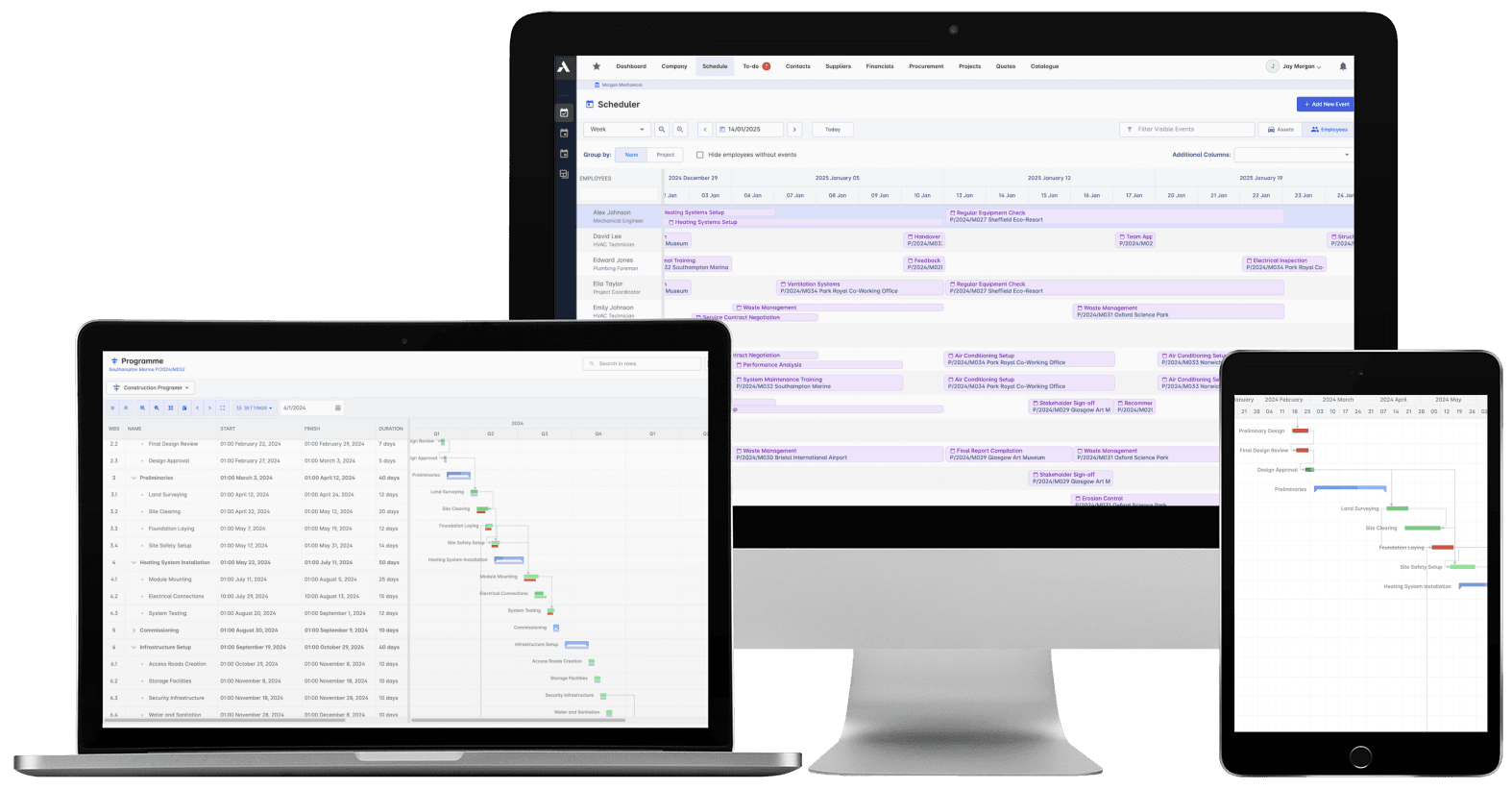
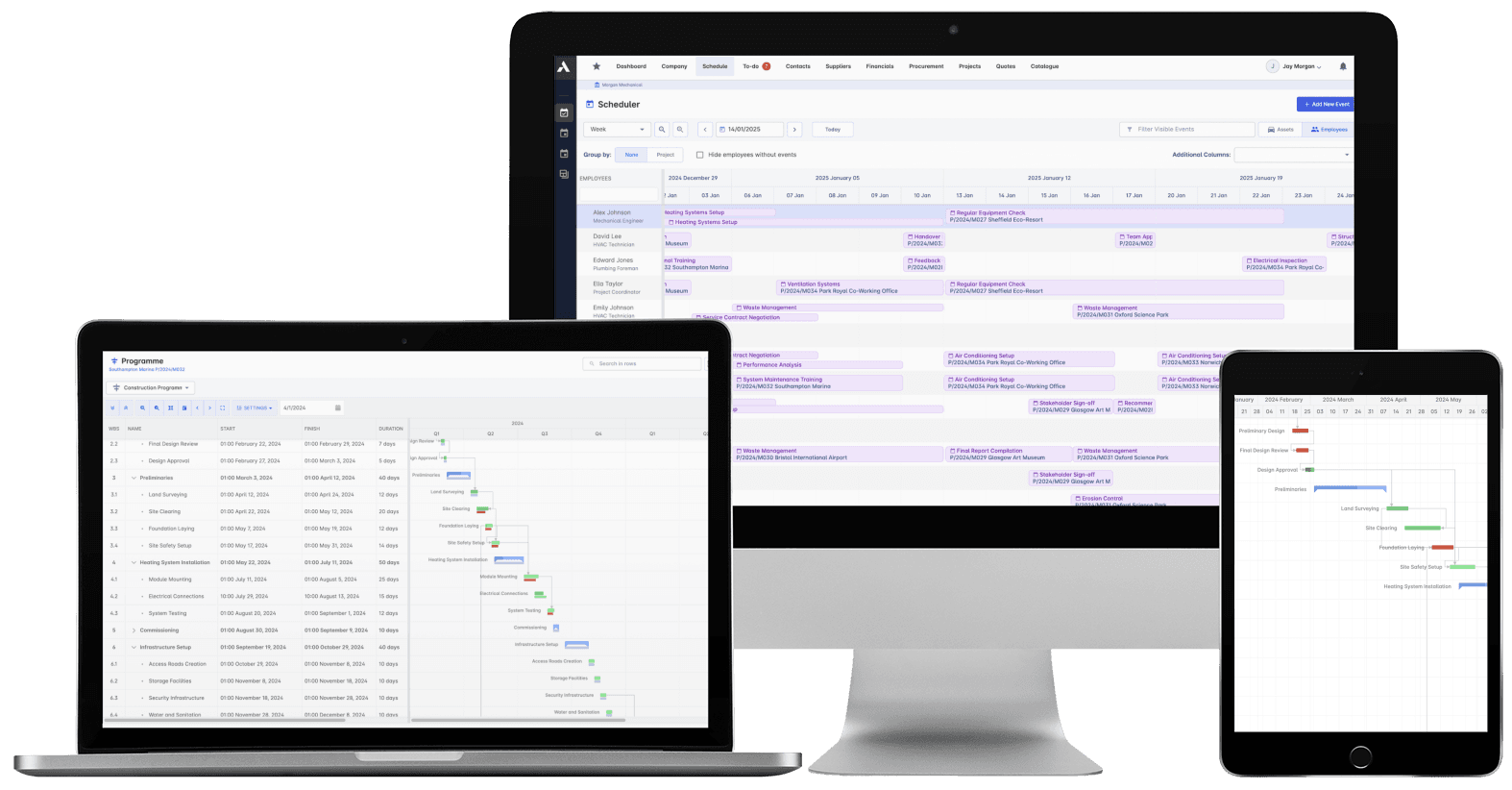
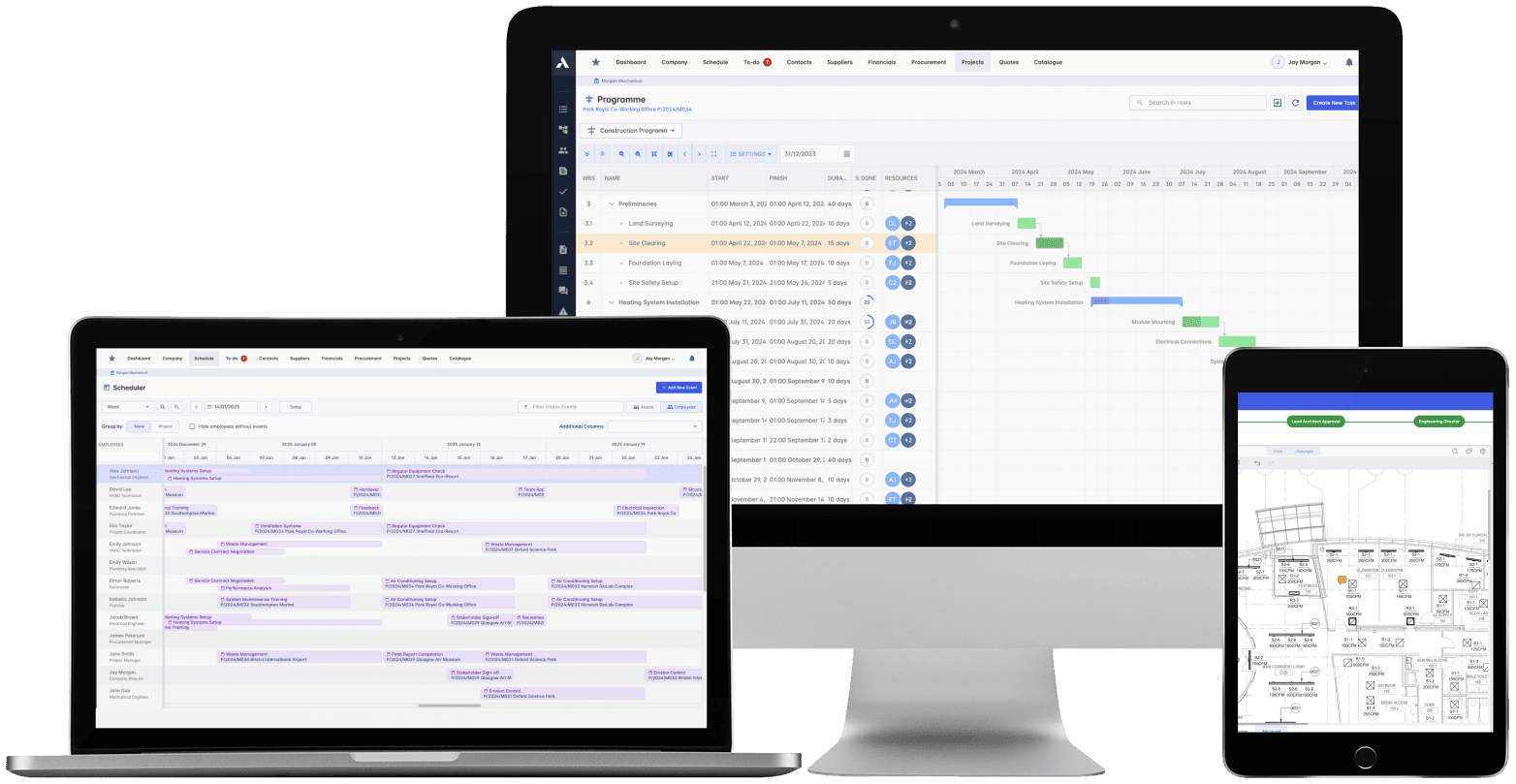
Every crew, every elevation, one program
Plan crews and access across all your live jobs instead of one whiteboard per site. Installed areas, hours and site records flow back from the field daily, so progress against program is something you check, not something you chase.
Panels made to order, months before install
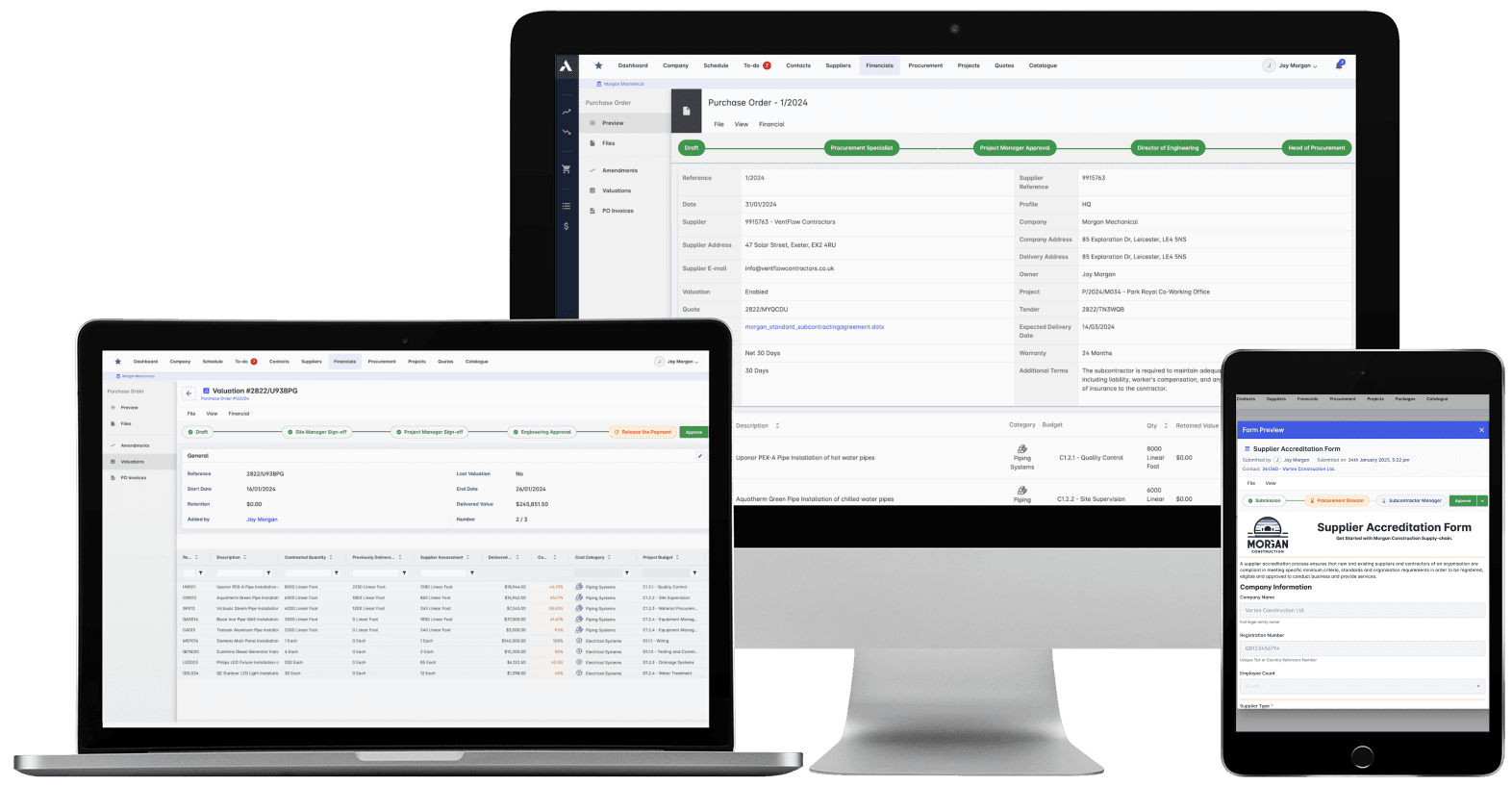
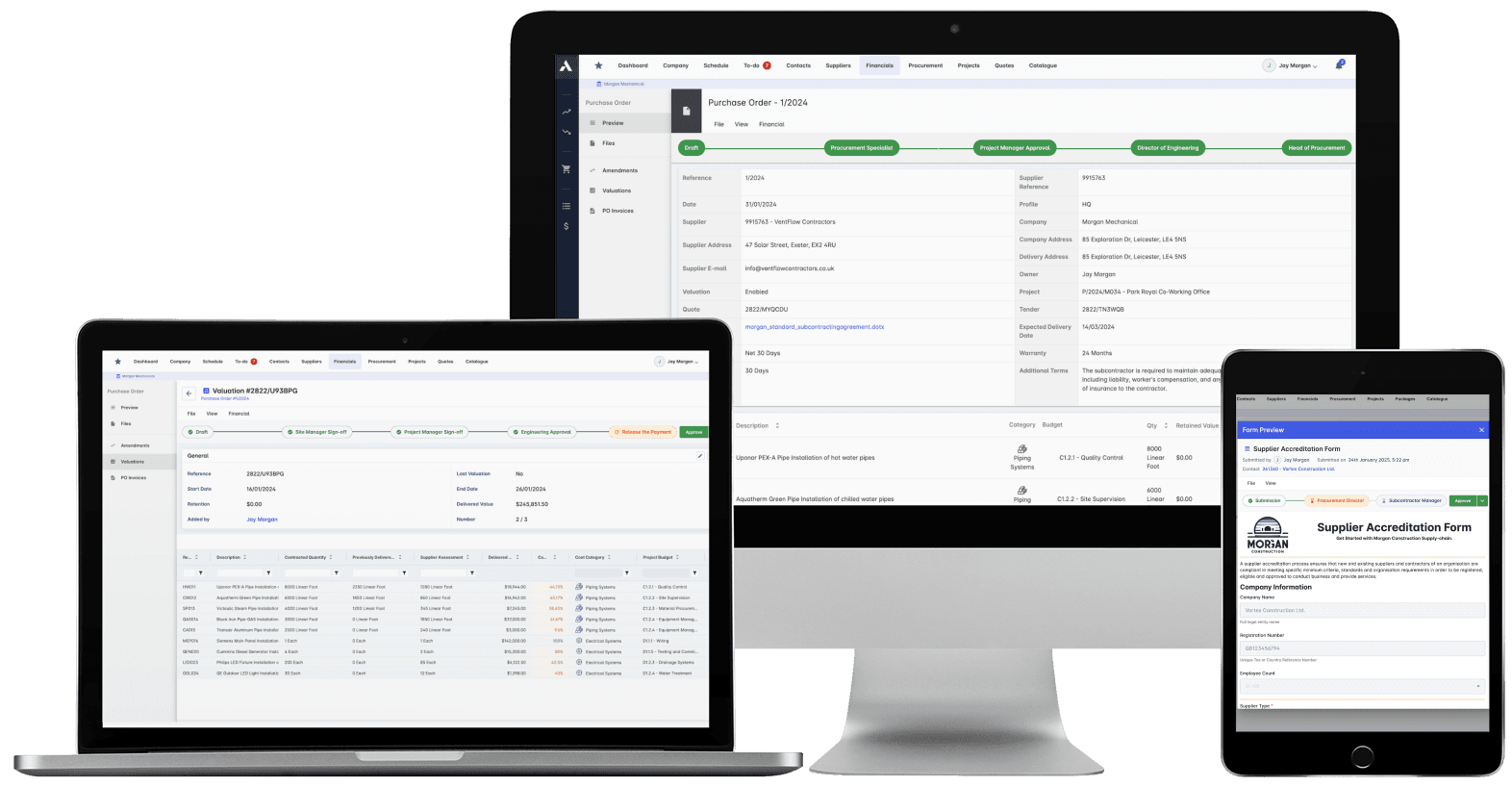
Panels, rails and brackets are fabricated to order on long lead times. Every PO hits the budget as committed cost the moment it is raised, and deliveries sit on the elevations they gate, so a slipping fabrication date shows up early, not on site.
Every fixing on the record
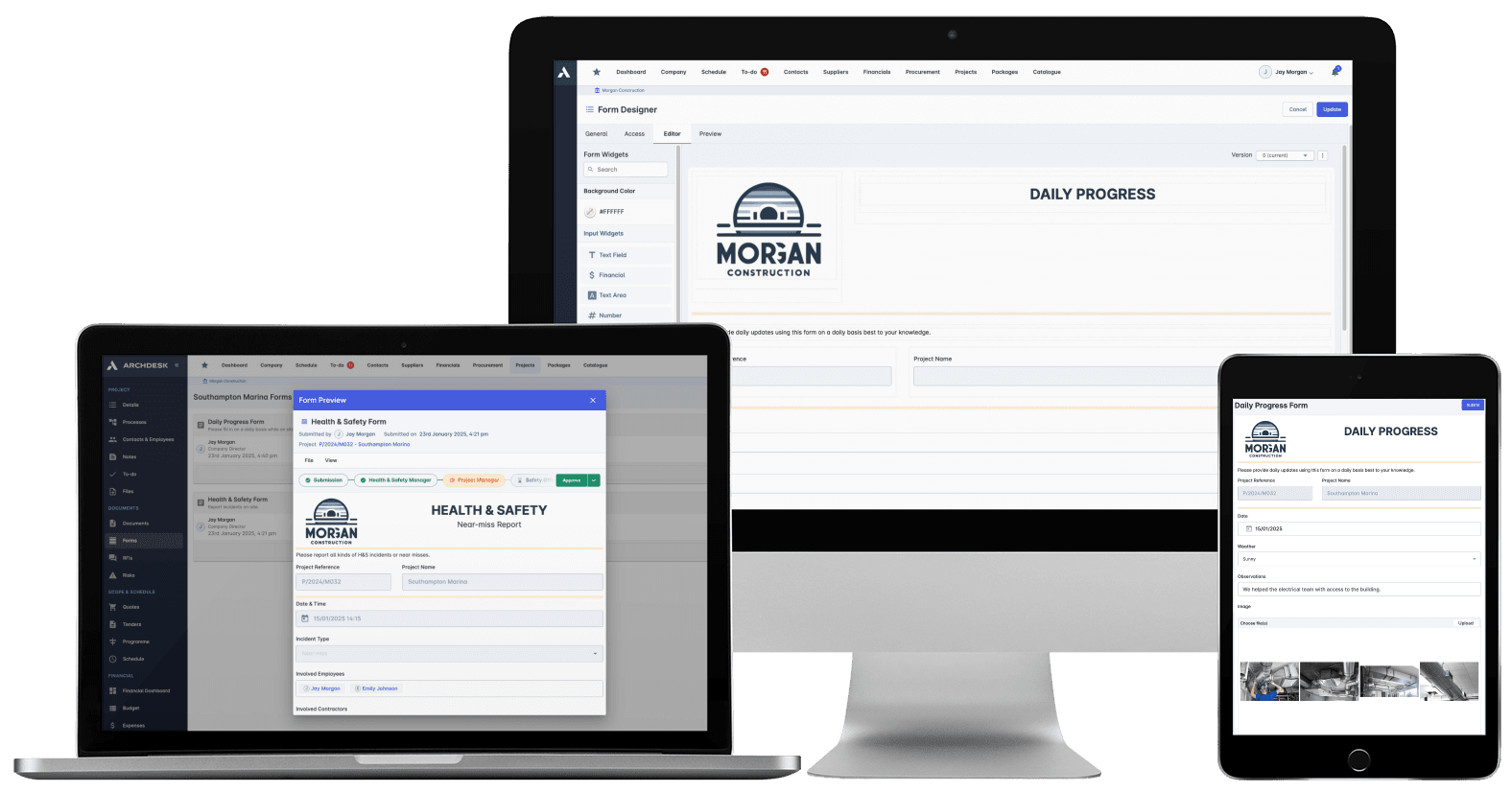
QA inspections, fire barrier records and photo evidence are captured from the field as each elevation completes. The as-built documentation your client will ask for at handover builds as you install, with every record against the project.
One system for the whole facade package
Archdesk is built for cladding and facade contractors delivering rainscreen, curtain walling, industrial envelope and facade remediation work, whether you work direct for clients or as a subcontractor to a general contractor. Estimators, project managers, site supervisors and the commercial team work from the same records, so the estimate you won with becomes the budget you track against, every made-to-order panel lands on the job as committed cost, and the work you record on site becomes the application you get paid on.
Delivering other packages alongside cladding? Archdesk also serves:
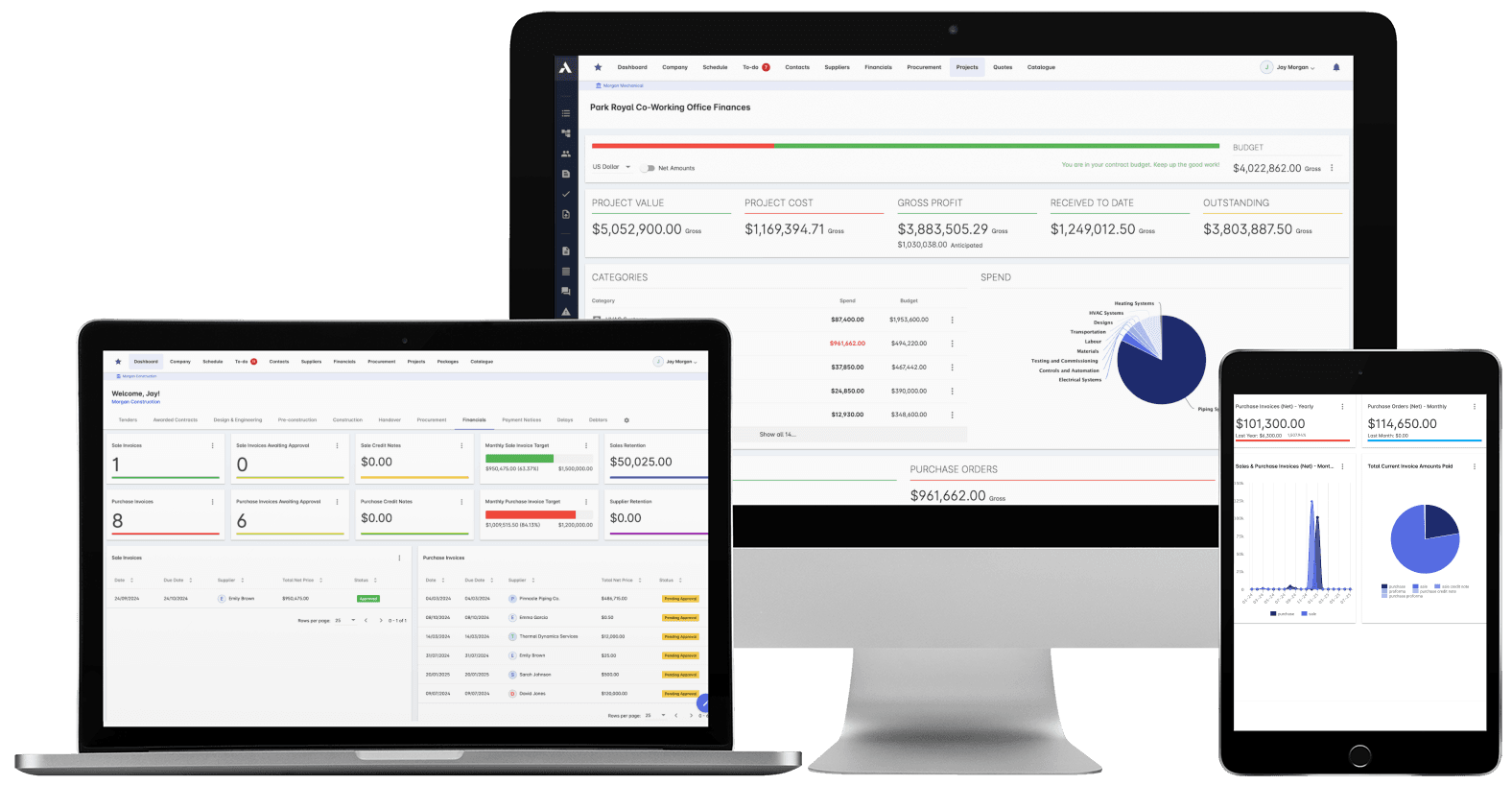
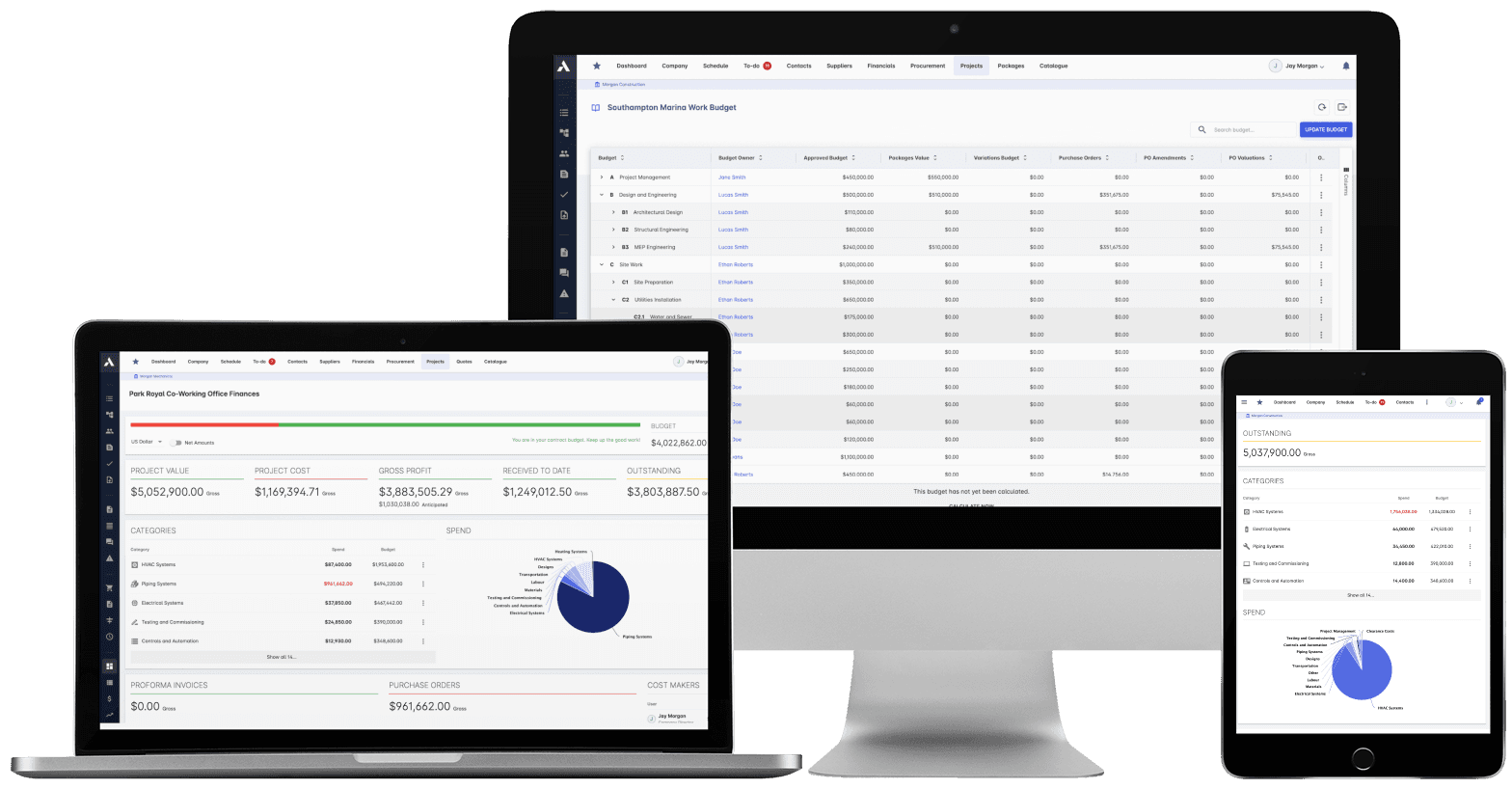
Most of a facade package is committed months before it is installed. Budget, orders and forecast final cost sit in one view, so you know where the job is heading while the panels are still being made.
One system from first bid to closeout
The estimate you won with and the margin you finish with are the same record. Every stage in between writes to it.
1
Estimate & bid
The bid built from real cost data on jobs like this one, with the exclusions and assumptions on the record.
2
Award & mobilization
The estimate you won with becomes the budget you track against. Crews, access and program planned across your live jobs.
3
Design & fabrication
Approvals tracked, panels and rails ordered as committed cost, fabrication and deliveries tracked against the elevations they gate.
4
Installation
Hours, installed areas and site records flow back from the field daily, landing against each job's budget lines.
5
Inspection & QA
Installation records, inspections and photo evidence captured as elevations complete, building the handover pack as you go.
6
Handover & closeout
Applications built from substantiated records, retainage tracked to release, and the margin already known.
Solutions for a Modern Cladding Contractor
Construction Job Costing
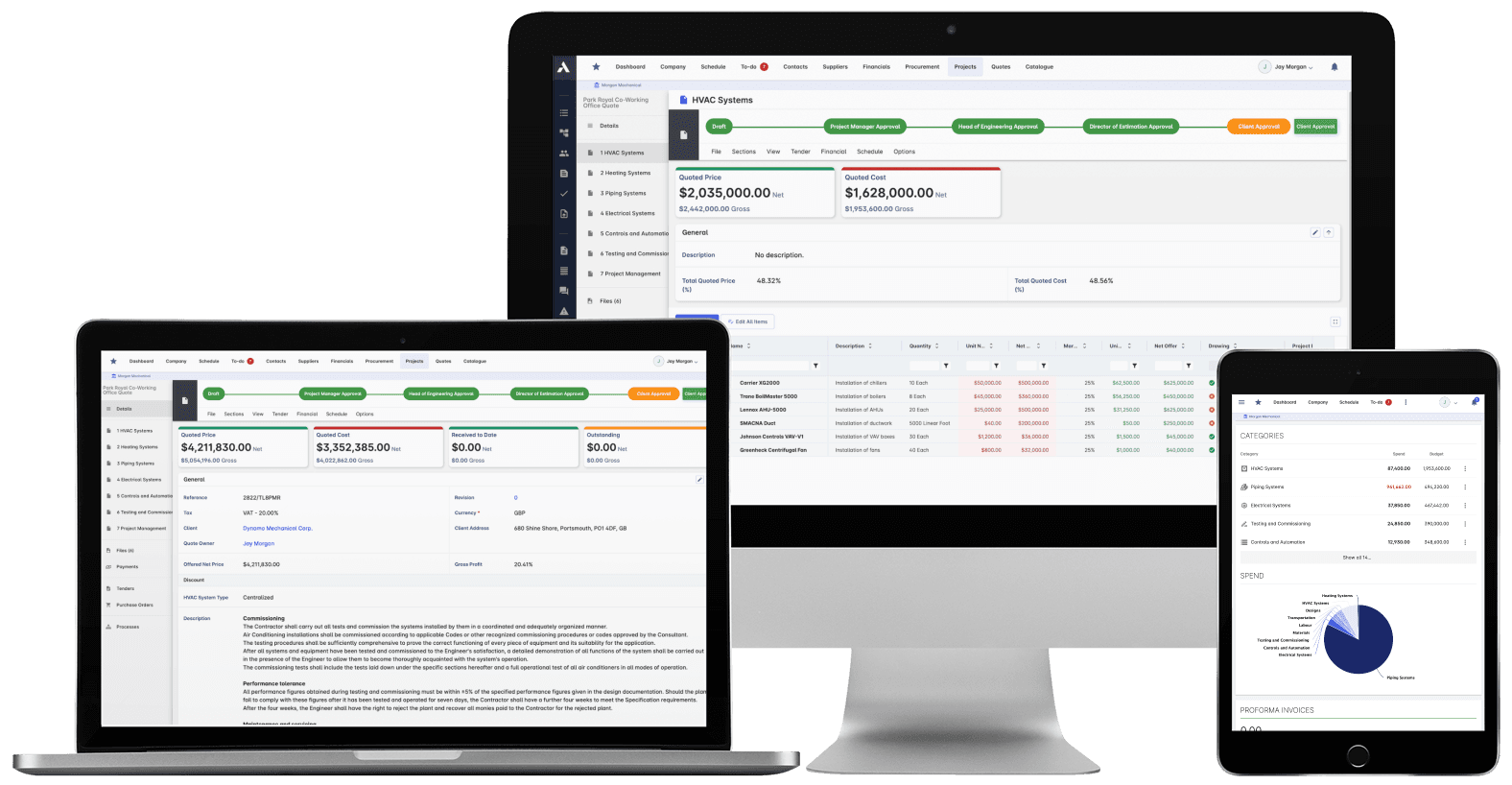
What you priced is what you track. The winning estimate becomes the budget, actuals land against it line by line, and what jobs really cost feeds the next bid.
The schedule connected to what it depends on: long-lead deliveries on the tasks they gate, crews planned across every live job, slippage shown with its cost.
Buy-out without the gaps: RFQs from your BOQ lines, bids back comparable, exclusions visible before award. Then every PO and subcontract lands on the budget the moment it's raised.
Committed at the PO, earned as work is delivered, invoiced months later. See all three stages against every budget line, so variance is a decision you make, not a number you explain.
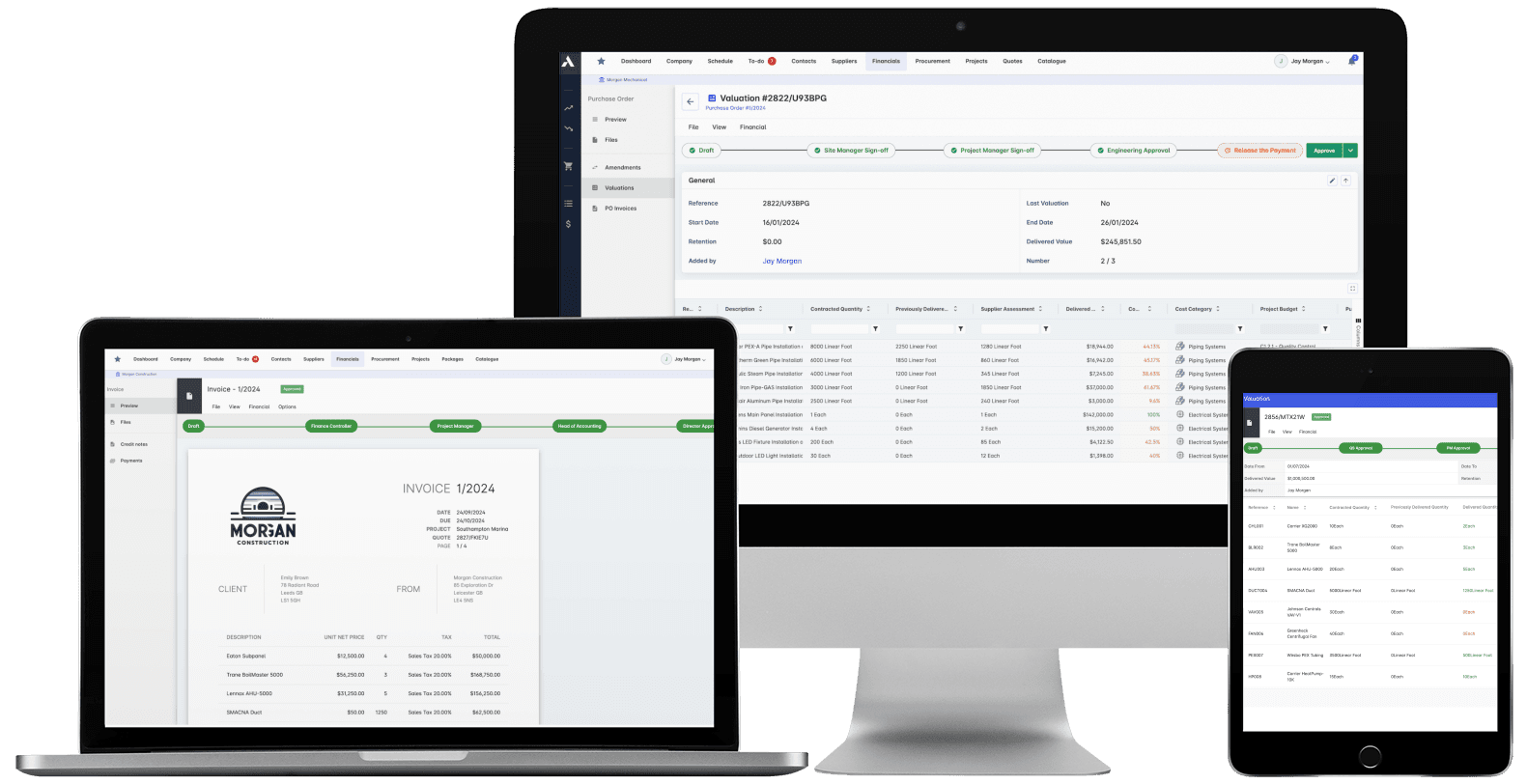
Certify subcontractor pay applications down, build client applications up, from the same records. Invoices, payment notices and retainage released on time, with the audit trail attached.
The schedule, the progress and the money in one system. When a task slips you see what it costs, and when scope changes you see what it does to the schedule. 'On track' means the Gantt chart and the bank account.
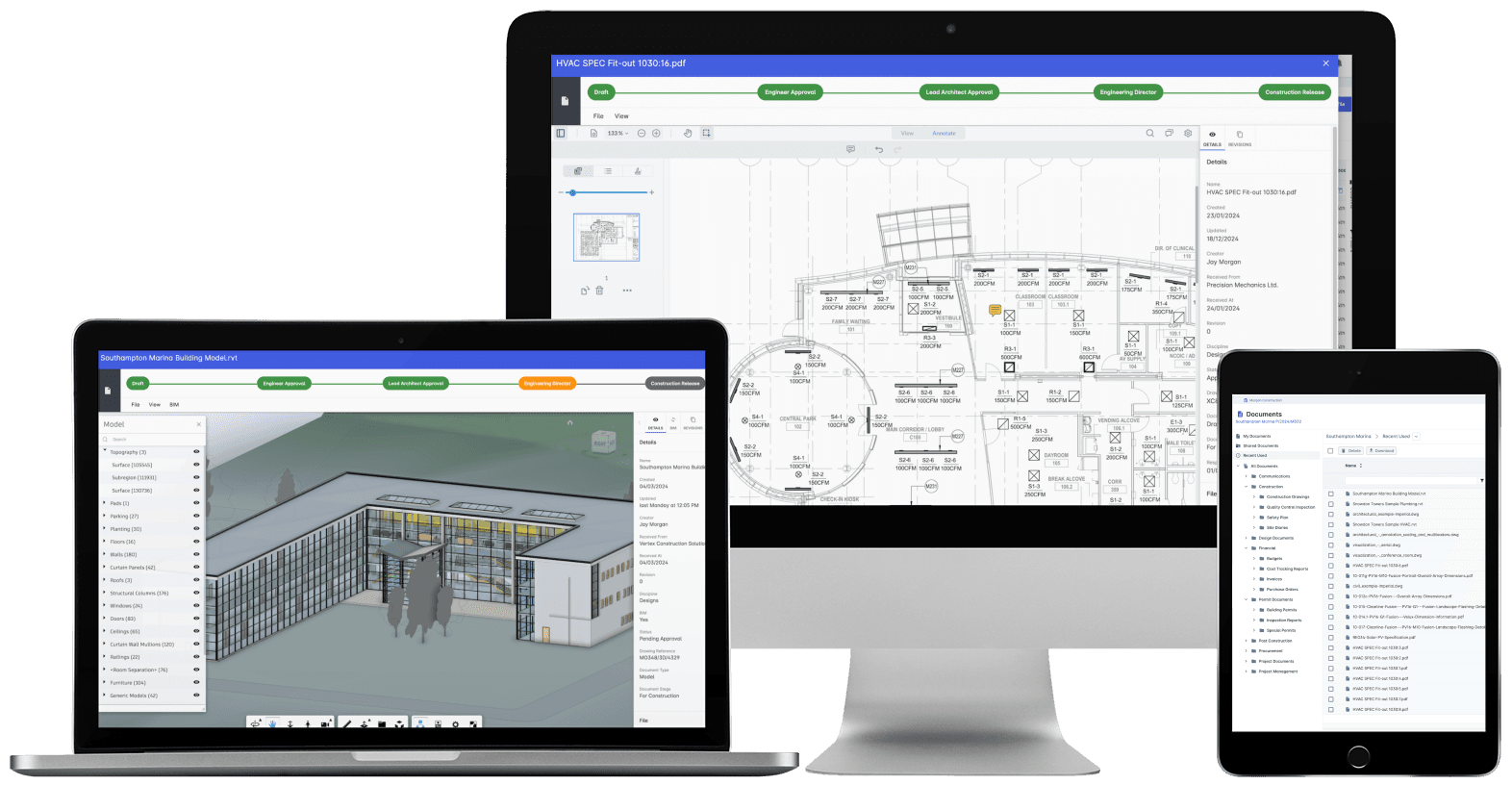
Nobody builds from a superseded drawing. Revision control, approvals and distribution with proof of who received what, when. The record that wins the dispute instead of losing it.
Every project's position, live, from the data that ran the work. Cost, schedule and cash agree with each other because they're the same records. There's nothing to assemble and nothing to reconcile.
What does Archdesk help cladding contractors manage?
Archdesk helps cladding and facade contractors manage estimating and bidding, crew scheduling and timesheets, made-to-order panel procurement, drawings and site records, QA documentation, change orders, payment applications, and job costing in one connected platform.
Is Archdesk suitable for rainscreen, curtain walling and industrial cladding?
Yes. Archdesk is built for mid-size and large contractors delivering rainscreen cladding, curtain walling, industrial roofing and building envelope packages, and facade remediation work, whether you work direct for clients or as a subcontractor to a general contractor.
How does Archdesk handle made-to-order panels and long-lead procurement?
Purchase orders for panels, rails, brackets and glazed units hit the project budget as committed cost the moment they are raised. Deliveries are tracked against the elevations they gate, so a slipping fabrication date shows up in the program months early, not when the crew is stood on site waiting.
Can installation teams use Archdesk in the field?
Yes. Supervisors and installers record timesheets, complete site forms, log installed areas and capture QA records with photos from their phones. What they record lands against the project in real time, so the office sees progress without chasing paperwork at the end of the week.
Can Archdesk record fire barrier and compliance documentation?
Yes. Site forms capture installation records, inspections and photo evidence as each elevation completes, and every record lives against the project. The as-built evidence you need at handover builds as you install instead of being reconstructed afterwards.
How does Archdesk track labor costs across multiple sites?
Timesheets from site land against each project's budget lines daily, so you see labor burn against estimate for every live job, week by week, instead of finding out at closeout.
Can cladding contractors manage change orders in Archdesk?
Yes. Design changes and site instructions are captured, priced and pushed through approval with the record attached. Approved change orders carry into your pay application, so unpriced work stops leaking margin.
Does Archdesk manage drawings and technical documents?
Yes. Fabrication and installation drawings are revision controlled, with approvals and distribution tracked, so site teams always install from the current revision and the document trail is there when a detail gets questioned later.
Does Archdesk handle payment applications and retainage?
Yes. Pay applications are built from the same records as your measured work and approved change orders, and retainage is tracked through to release. Everything you apply for is substantiated, which shortens the argument with the general contractor's cost consultant.
Does Archdesk integrate with accounting software?
Yes. Archdesk integrates with Xero (as a certified partner), Sage, QuickBooks and other accounting systems, so invoices, payments and costs flow between commercial and finance teams without re-keying.
See a facade package run end to end
In the demo we walk you through a fully worked project in Archdesk, from the first estimate, through fabrication and installation, to closeout. Book a demo and see.



























-377x320.webp&w=3840&q=75&dpl=dpl_9hmAz7cuAHCT9We4NrsUCrTyYHQG)
-377x320.webp&w=3840&q=75&dpl=dpl_9hmAz7cuAHCT9We4NrsUCrTyYHQG)