Archdesk for Large Construction Organizations
Enterprise control, without enterprise dragOne platform across every division: governed, integrated, and actually used on site.
A look at Archdesk for large construction organizations: consolidated visibility across divisions, governance that lives in the workflow instead of a policy binder, and straight answers to what operations, finance and IT leaders ask us.
Trusted by construction companies of every size, worldwide






Big enough that nobody sees all of it
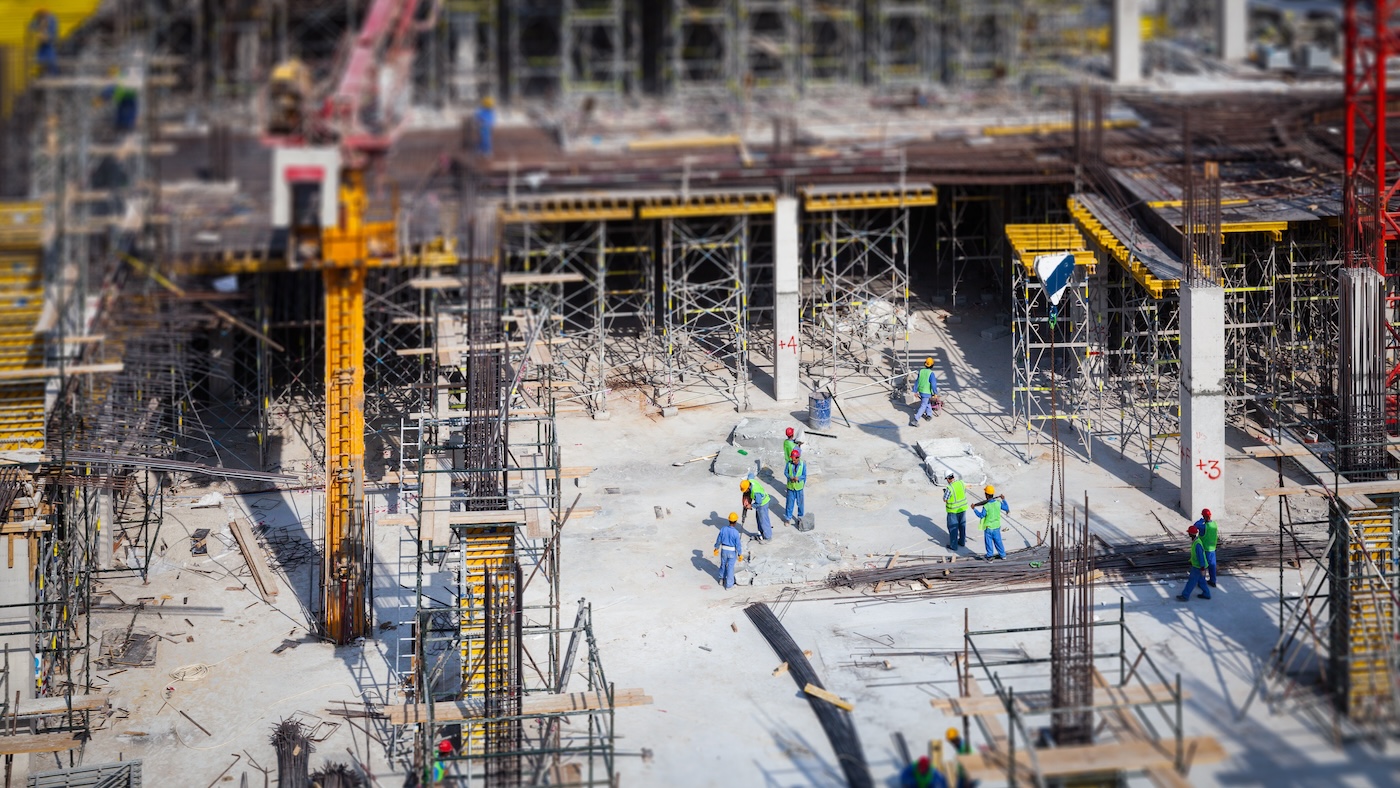
Every division has its own tools, every group report is a consolidation exercise, and the truth about any project depends on who you ask. At your scale the problem is not effort. It is fragmentation. Side by side:
Scale should be an advantage. With one operating platform, it finally is.
Built for organizations, not just projects
Archdesk runs the project lifecycle end to end and is configured around your operating model: your divisions, your approval chains, your reporting lines.
Configured to your structure
Your divisions, approval chains and reporting lines are reflected in how the platform is set up, so the system matches the organization instead of fighting it. No custom code required to make it yours.


Integrates with your stack
Archdesk connects to your ERP, whether that is SAP, Oracle or Microsoft Dynamics, and to accounting systems including Xero (as a certified partner), Sage and QuickBooks. Project operations and group finance stay in step without re-keying.
Adoption is the feature
Enterprise rollouts fail at the site gate. Archdesk gives field teams mobile tools they actually use, so data quality starts where the work happens and flows to where decisions are made.
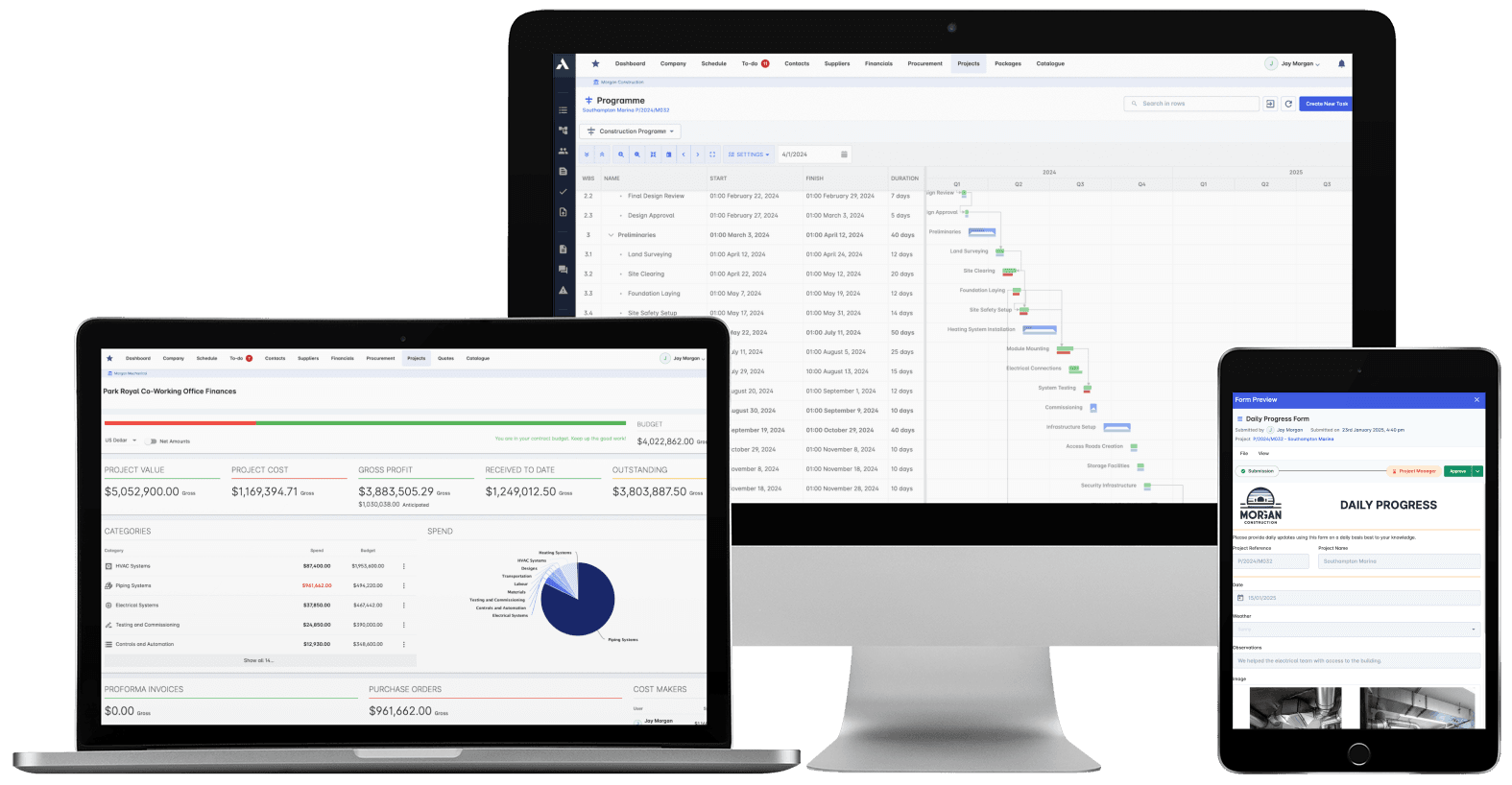
Group visibility in Archdesk: every division, project and margin in one live view.
What large organizations run on Archdesk
Questions large organizations ask us
Can one platform cover divisions doing very different work?
Yes, because the structure is configured per division, not imposed across them. A fit-out business and a civils business can run different templates, budget structures and workflows while the group still reports across both on one data model. Different work, one source of truth.
How does Archdesk fit our existing finance and reporting landscape?
Archdesk is the project operations layer, not a replacement for your finance stack. It integrates with ERPs such as SAP, Oracle and Microsoft Dynamics, alongside accounting systems like Xero (as a certified partner), Sage and QuickBooks, and its reporting can feed the tools your leadership already uses. Finance keeps its systems; the project data finally arrives clean.
What about security and access control?
Access is role-based, so people see what their job requires and no more, and actions leave an audit trail. Our security practices and hosting details are documented for your IT team to review, and our team supports security assessments as part of enterprise procurement.
How do you roll out across hundreds of users without stopping work?
In phases, not a big bang. Rollout typically goes division by division or region by region, with each role trained on the parts of the platform they touch. Live projects continue while new ones start on the system, and the implementation team plans the sequence with you.
We built our own internal system years ago. Why move off it?
Internal tools age badly: the people who built them move on, maintenance competes with the day job, and every new requirement becomes a project. Archdesk is developed continuously against the whole industry's requirements, so you get a roadmap without funding one. Migration can happen gradually, division by division.
What does the commercial model look like at our scale?
Enterprise agreements are shaped around your structure: the number of users, divisions and modules you actually need, with room to grow into more. The right starting point is a conversation about your operating model, which is exactly what the demo is for.
See the whole group in one view
In the demo we walk you through a fully worked multi-project organization in Archdesk: consolidated reporting, governed workflows and data flowing from site to boardroom. Book a demo and see.
Book a Demo