
Archdesk for Estimators
Bid from evidence, not memoryEstimates built on what your jobs actually cost, and a loop that closes on every project.
A look at Archdesk from the estimator's seat: where your rates come from, what happens to your estimate after the win, and straight answers to the questions estimators ask first.
Trusted by construction companies of every size, worldwide


























We know the pressure behind every number
You carry the company's margin in your assumptions, usually without ever learning how the last assumptions performed. Archdesk closes the loop between what you price and what things cost. Side by side:
Your judgment stays the product. Archdesk just makes sure it works from evidence and gets credit when it lands.
Not just faster bids. Estimating that compounds.
Thousands of contractors estimate through Archdesk. The habits that separate winning bidders, structured cost data, closed feedback loops, reusable structures, are how the system works out of the box.
The loop closes by design
Estimate, budget, committed cost and final billing live in one structure. Every finished job automatically becomes estimating intelligence for the next one, without a data project.


Structures you reuse
Cost breakdowns and bid templates carry from job to job, so consistency is free and comparisons are real.
Assumptions on the record
Exclusions, allowances and rationale stay attached to the estimate, so handover to delivery keeps your intent.
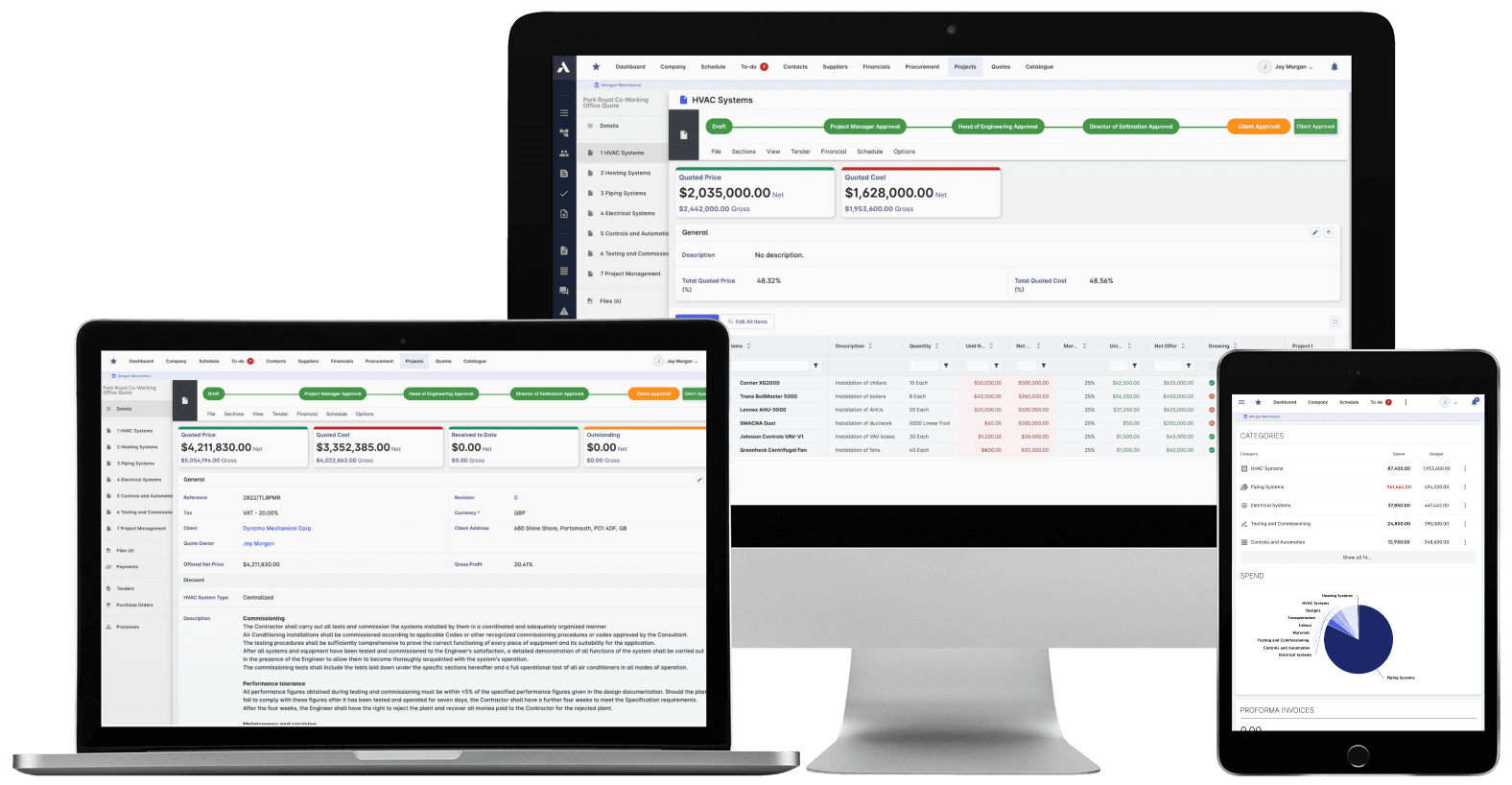
Estimating in Archdesk: structured, reusable, and connected to what jobs actually cost.
Where estimators spend their time in Archdesk
Questions estimators ask us
Where does the cost data behind my estimates come from?
From your own delivered jobs. Purchase orders, subcontracts, timesheets and final job costs are recorded against the same cost structure you estimate in, so the rates you lean on reflect what your company actually paid, recently, on comparable work.
Can I keep my estimating structure and templates?
Yes. Your cost breakdown structures and bid formats are configured during onboarding and saved as templates. If they have drifted over the years, this is the natural moment to consolidate them.
What happens to my estimate when we win?
It becomes the project budget, line for line. Delivery tracks committed cost and progress against what you priced, which is also how estimate-versus-actual feedback finds its way back to you.
How do I see how my estimates performed?
Estimate, budget and final cost sit in the same structure per job, so performance by line, by trade or by project type is a report, not a research project. You find your systematic blind spots and fix them.
Can I price a bid from a takeoff in Archdesk?
Yes. Estimates build from cost libraries and takeoffs, with margin visible on every line, and the winning estimate or takeoff converts into the project budget without retyping.
Does Archdesk handle subcontractor pricing during bids?
Yes. Subcontractor RFQs and quotes are managed against the packages in your estimate, so coverage and price comparisons stay organized while the bid moves.
Will this slow me down on deadline day?
The opposite is the point. Templates carry the structure, past jobs carry the data, and the mechanical work of assembling a bid shrinks. Deadline pressure lands on the judgment calls, where it belongs.
See a bid built from real numbers
In the demo we walk you through a fully worked project in Archdesk from the estimator's seat: the bid, the budget it became, and the final cost record it learned from. Book a demo and see.
Book a Demo