Applications for Payment Software for UK Contractors
Applied. Certified. Paid. One record from claim to cash.Each application for payment assembles from what the project already holds: measured progress from site, approved variations and the certified history to date. Submit on time every cycle, answer the certifier from dated records, and follow certification, retention and cash due on the same figures the CVR reads from.
Trusted by construction companies of every size, worldwide















The monthly valuation cycle run from records, not recollection
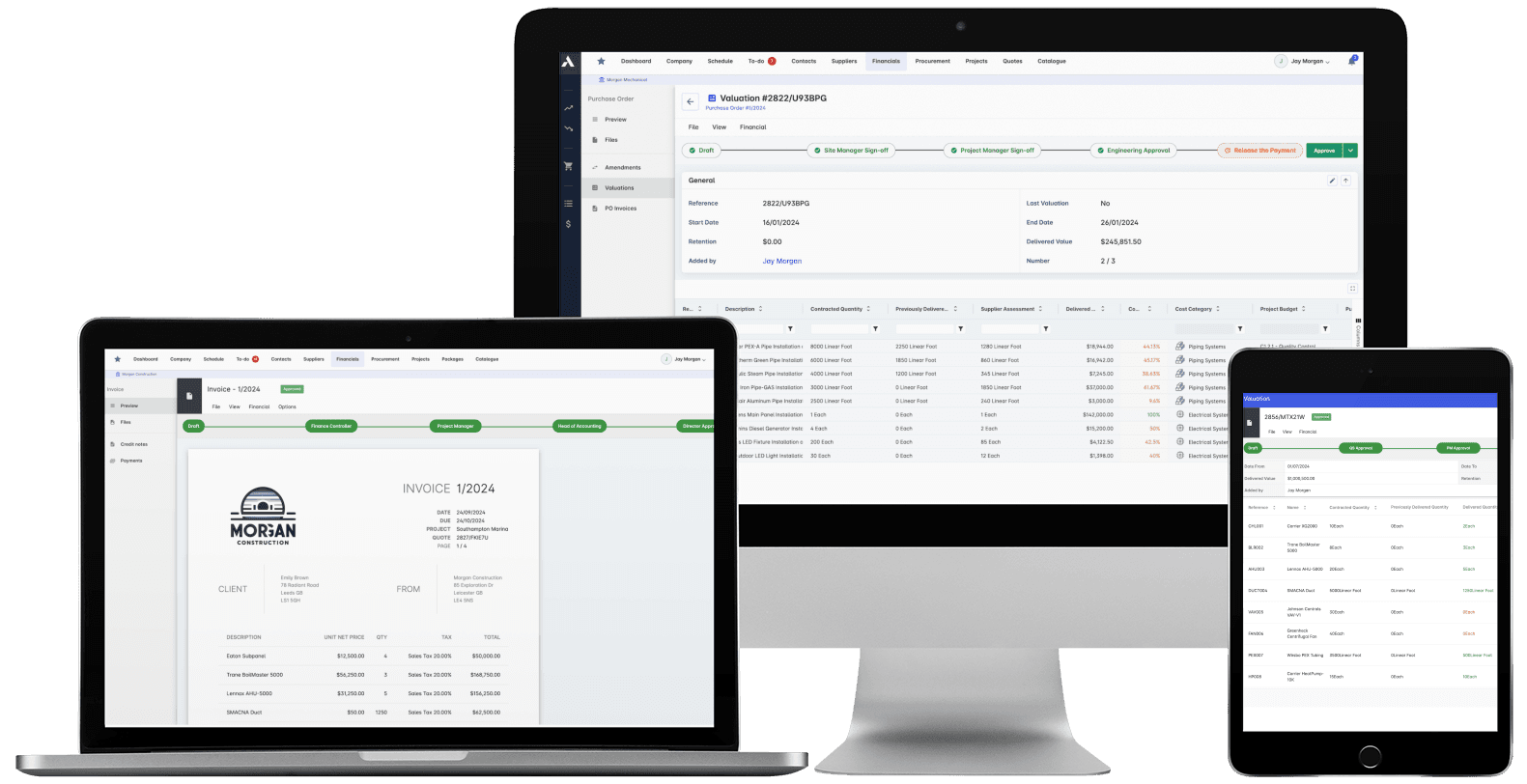
Applications for payment live or die on their records. Archdesk assembles each application from verified site progress, approved variations and the cumulative certified history, applies retention and previous payments automatically, and moves the certificate through multi-level approvals with digital signatures. Certified valuations convert to invoices and sync with your accounting system, Archdesk is a certified Xero partner and integrates with Sage, and retention is tracked per subcontract through to release. Because applications, certificates and payments sit on the same records the CVR (cost value reconciliation) is produced from, the commercial position moves the day the certificate is signed, at project and portfolio level.

Claims argued from records, not recollection
Every valuation carries its evidence on the claim itself: cost breakdowns, progress photos, quantity verification and supporting documents, so a certifier who disagrees is answered with dated records rather than recollection.
The application in on time, every cycle
Each application for payment assembles from measured site progress, approved variations and the cumulative certified history, with retention and previous payments applied automatically before it goes out.
Certified value becomes cash you can see
Certified valuations convert to invoices automatically and sync to your accounts, with retention tracked per subcontract and release dates followed to the day.
Certification that does not drift
Payment certification moves through multi-level approvals with digital signatures, and automated notifications keep sign-off moving instead of sitting in an inbox.
The audit trail the final account is settled from
Every application keeps its full history: applied, certified, paid and the retention still held per subcontract, and the same records feed the monthly CVR (cost value reconciliation), so the final account is agreed from figures both sides can trace.

Valuation Management
Every valuation carries its evidence. Cost breakdowns, progress photos and quantity checks sit on the claim itself, so disagreements are settled from dated records.
Interim valuations and certified progress billing
Detailed cost breakdown per valuation
Progress photos attached as evidence
Quantity verification tools
Supporting documents on every claim
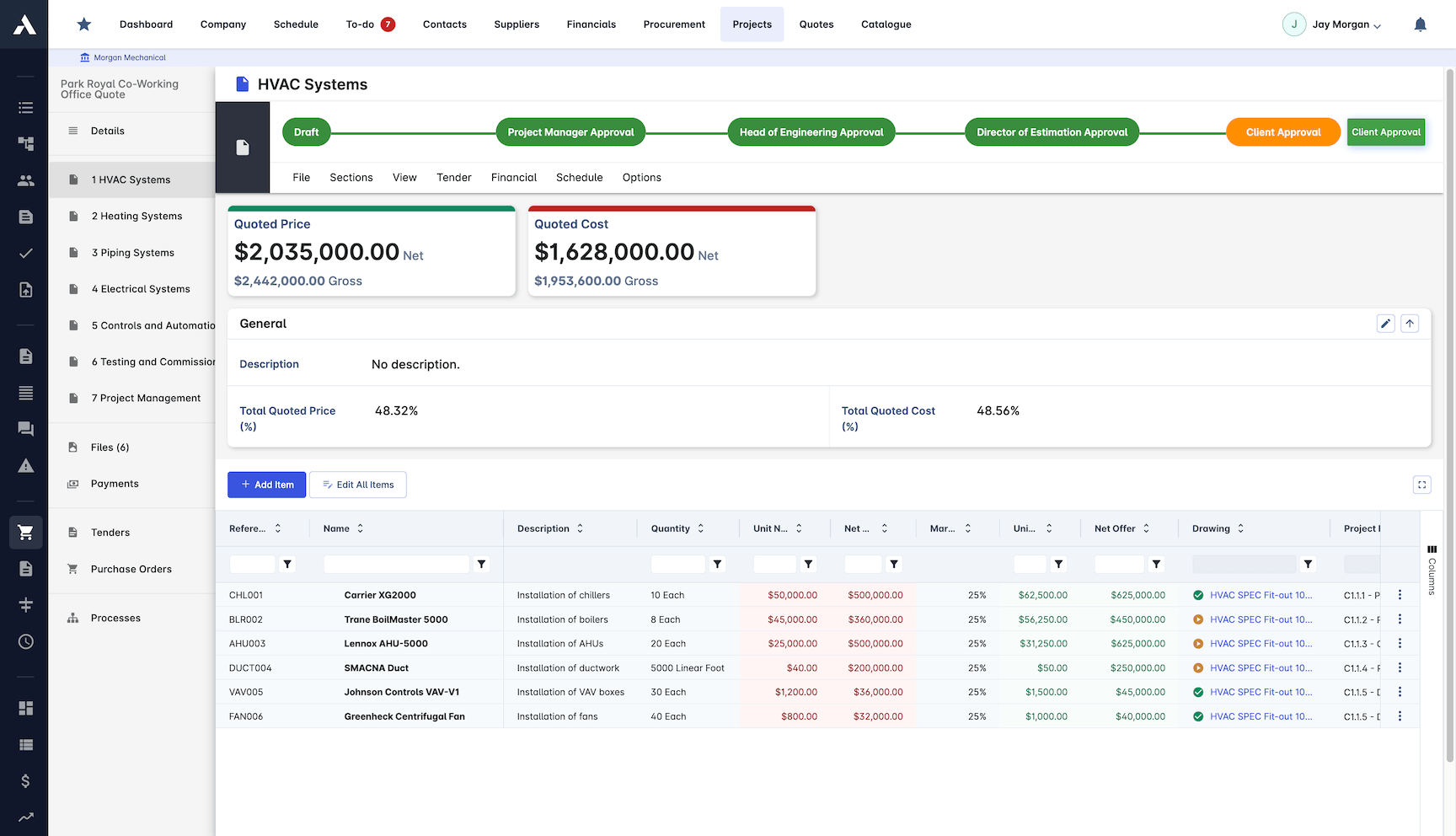
Approval Process
Certification moves through configurable approval steps with digital signatures, and automated notifications stop the certificate sitting in an inbox.
Multi-level approval workflows
Digital signature capture
Notifications keep sign-off moving
Full approval audit trail
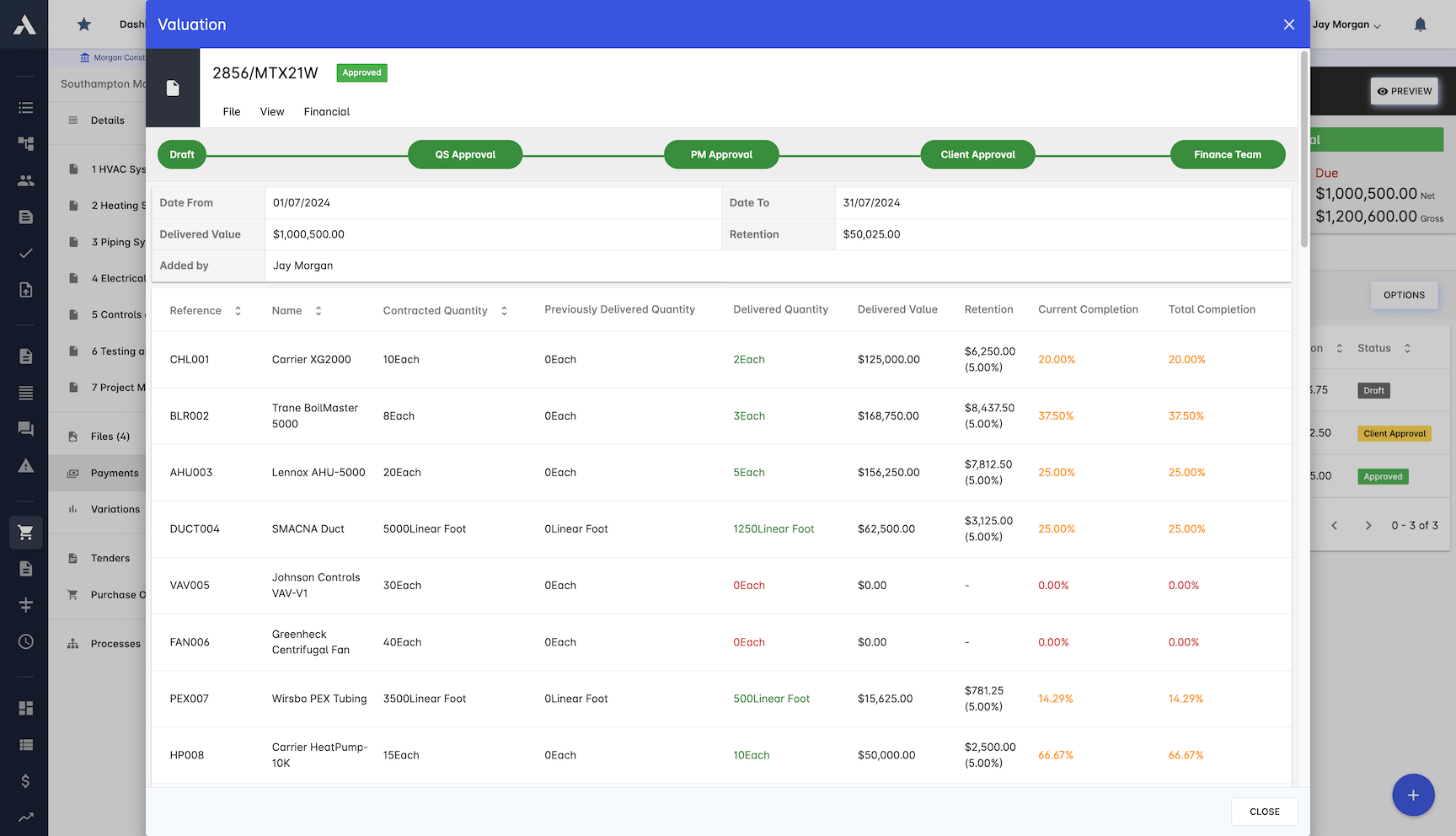
Payment Management
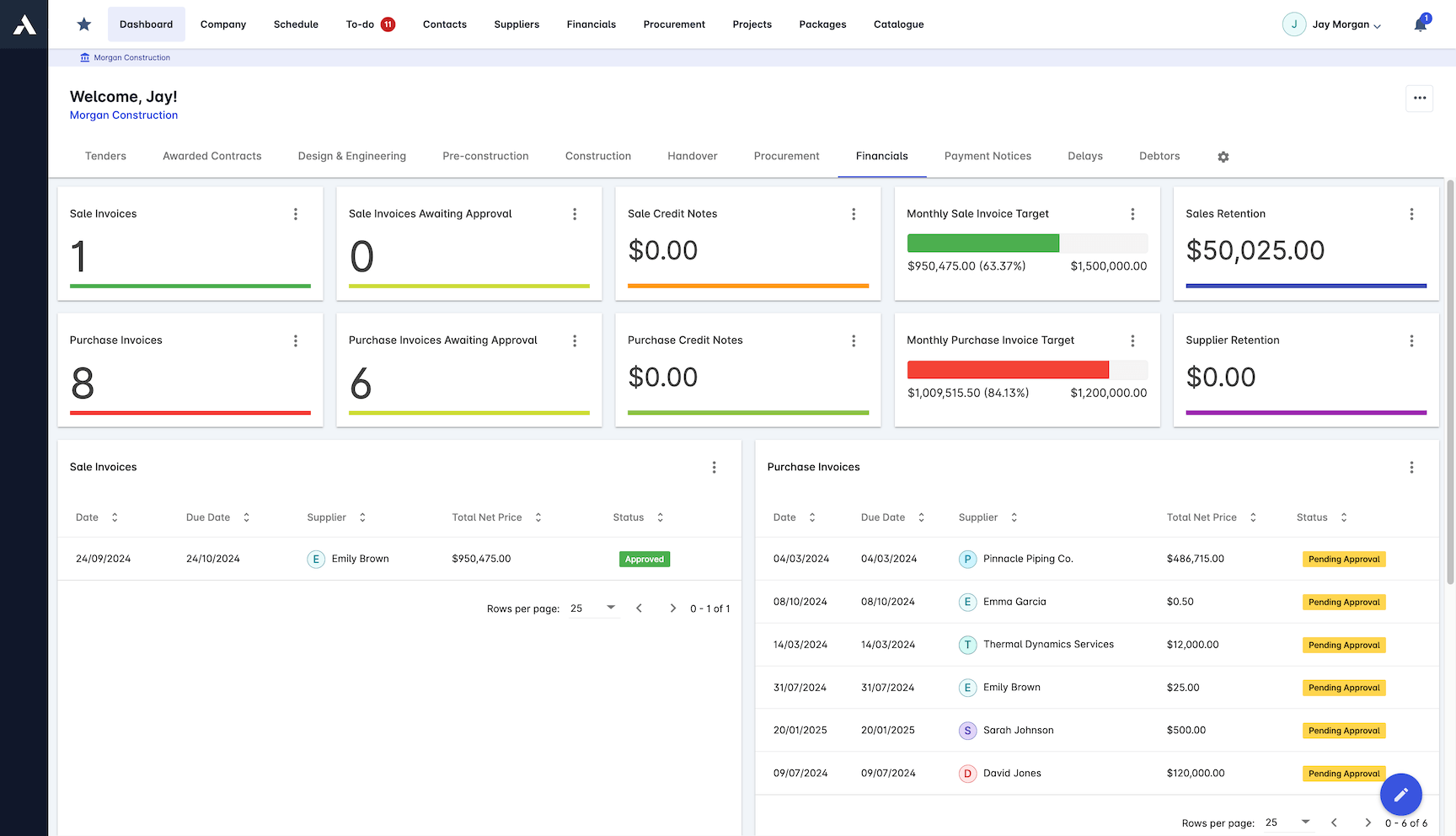
Once certified, the valuation converts to an invoice automatically and the money is tracked to the day: retention, release dates and payment history in one place.
Valuations convert to invoices automatically
Retention and release dates monitored
Syncs with your accounting software
Global taxes and deductions supported
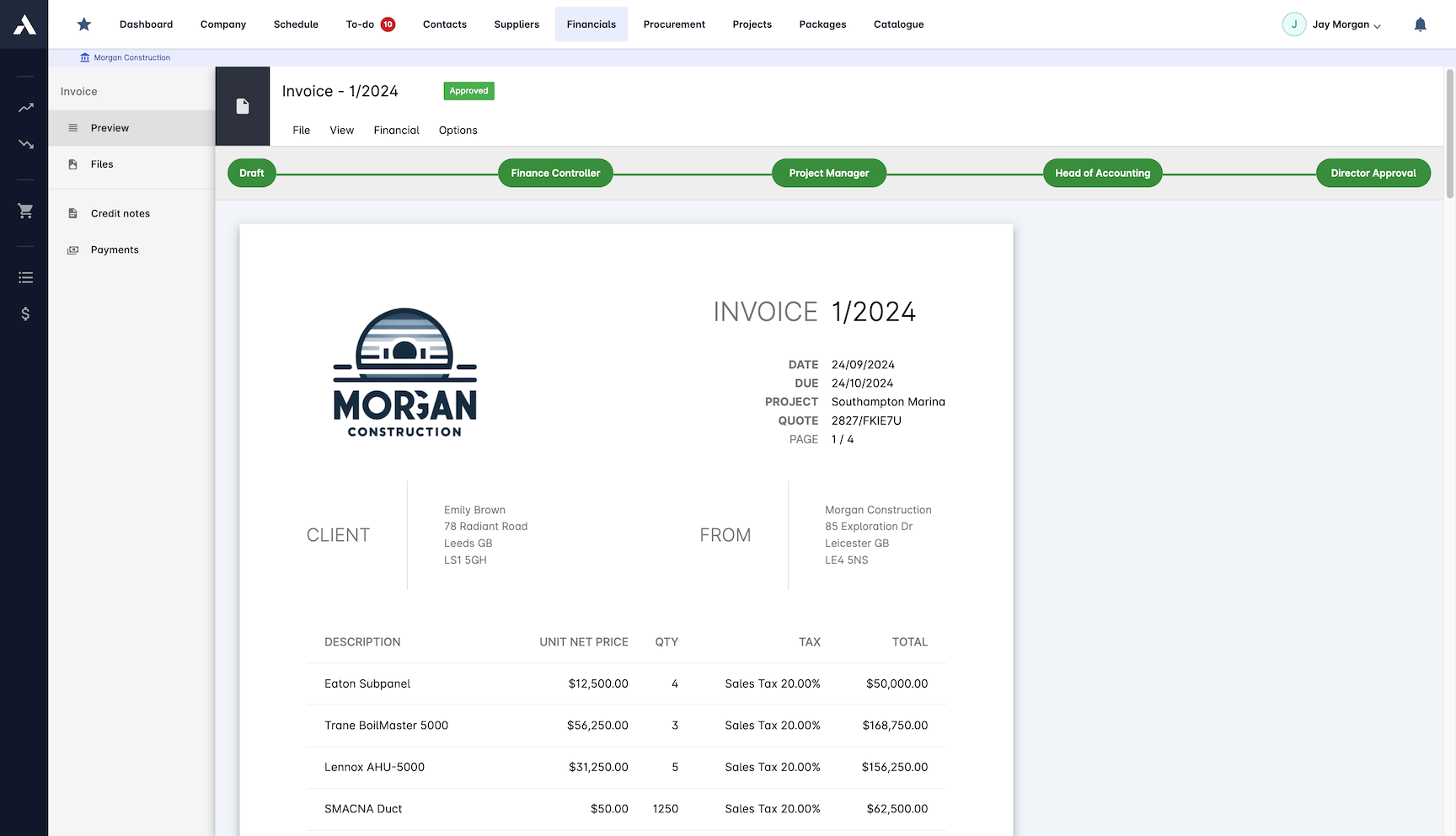
Automated Certificate Generation
Valuation certificates calculated from verified site progress, not assembled by hand. Retention, previous payments and approved variations are applied automatically.
Calculations driven by verified progress
Retention applied automatically
Previous payments carried forward
Approved variations included in the claim
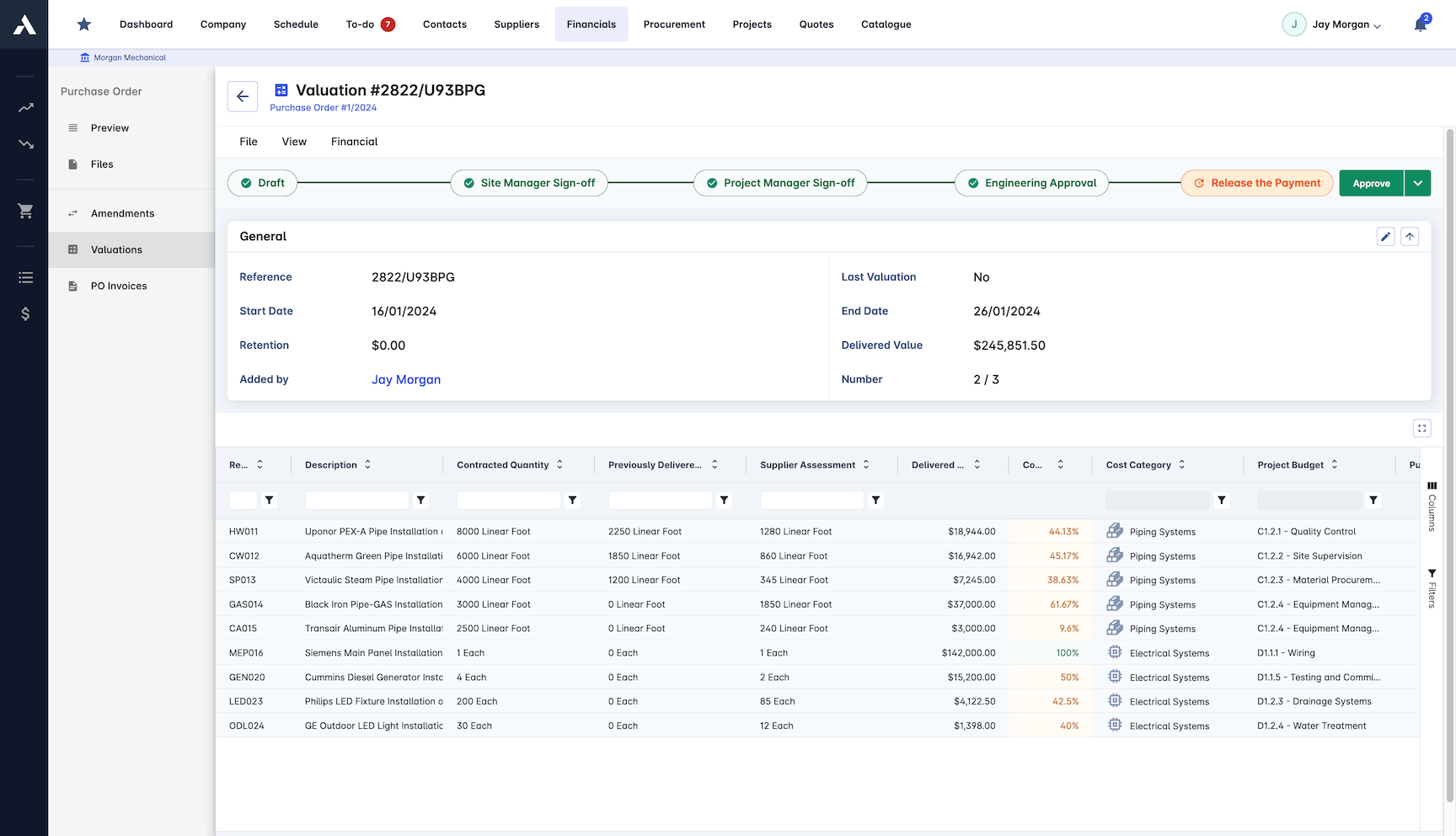
Reporting & Analytics
See how certification is running across every project. Valuation trends, forecasts and cash projections come from the same certified data, so there is nothing to reconcile.
Valuation trend analysis across projects
Progress tracking reports
Financial forecasting from certified data
Cash flow projections per project
Valuations and retention, defined
A valuation is a periodic request, usually monthly, for the value of work delivered under a construction contract to date, which the payer assesses and certifies before paying. Retention is a percentage of each certified amount held back, typically released in stages after completion. Together they are the payment mechanics most commercial teams live on: the applied, certified and paid amounts per application, the notices that go with them, and the retention ledger of what is still held on every contract.
Plenty of pages define these terms. The difference here is that Archdesk runs them as records: each application assembles from verified site progress, approved variations and the certified history, retention is calculated, held and tracked to release on the same record, and the whole cycle feeds work-in-progress (WIP) reporting and the CVR (cost value reconciliation), so the commercial position is current rather than reconstructed.
Want the background first? Browse all construction payment guides.
Frequently Asked Questions: Payment Applications
What is a payment application in construction?
A payment application (valuation) is the claim a contractor submits for the value of work completed in a period. Archdesk builds each application from what the project already knows: verified site progress, approved variations and the certified history to date, so the claim is assembled from records rather than memory.
How does Archdesk build a payment application?
Valuation certificates are calculated from verified site progress, not assembled by hand. Retention, previous payments and approved variations are applied automatically, so the application is ready on time, every cycle.
How do you defend a valuation the certifier disagrees with?
With dated records. Every valuation carries its evidence on the claim itself: detailed cost breakdowns, progress photos, quantity verification and supporting documents, so disagreements are settled from what was recorded, not what was remembered.
What happens after a valuation is certified?
The certified valuation converts to an invoice automatically and syncs with your accounting software. Retention and release dates are monitored, and cash due is tracked to the day, with the full history from applied to certified to paid on one record.
Does Archdesk support payment notices and payless notices?
Yes. Certification moves through configurable multi-level approval workflows with digital signature capture, payment notices and payless notices are supported, and the full approval audit trail stays on the record.
How do payment notices and retention fit into the payment cycle?
In UK practice, paying a subcontractor runs on the application and certification cycle: a payment notice sets out what will be paid, a pay less notice any difference, and retention is held and released under the subcontract. Documents, approvals and payment records live on the same project record in Archdesk, so the paper trail sits with the numbers.
How does Archdesk handle retention and its release?
Retention is tracked per subcontract: the percentage held on each certified amount, the balance outstanding and the release points that follow completion and the end of the defects period. Release dates are monitored on the same record as the application history, so retention is followed through instead of written off.
Do applications for payment run inside the platform?
Yes. Applications for payment run in Archdesk against the same project records the budget reads from: assembled from verified progress and approved variations, certified through multi-level approvals, and converted to invoices once certified, so the applied, certified and paid positions always agree.
How does the valuation cycle feed the CVR?
Applications, certificates and payments sit on the same records the CVR (cost value reconciliation) is produced from, so certified value lands in the commercial position the day it is signed off, at project level for the quantity surveyor and across the portfolio for the board.
Which accounting systems does Archdesk work with?
Archdesk is a certified Xero partner and integrates with Sage, so certified valuations convert to invoices and land in the ledger without re-keying, and finance keeps its own system while the commercial team works from the project record.
Explore Related Solutions
Everything below runs in the same system, working from the same live data.
Milestone Payments
Track and process milestone payments
Project Cost Controls
Monitor overall project finances and other KPIs
Labour Cost Tracking
Track labour expenses and compare with your estimates
Work in Progress Reporting
Monitor completion costs across your whole project portfolio
Invoicing
Manage sale and purchase invoices
Payment Tracking
Monitor incoming and outgoing payments
Accounting Integration
Integrate with your accounting software
Discover more
Explore the full range of solutions and find the right fit for your business.
See your next project on Archdesk
Book a demo and walk through a fully worked example project: one platform running everything from winning the work to closing it out.
Book a Demo