Construction ERP Software for UK Contractors
One ERP for the projects and the commercial position behind them.Estimating, valuations, cost control, procurement, documents and finance on one data model. CVR (cost value reconciliation) produced from live records, retention tracked per subcontract and applications for payment run in the same platform, not a finance system with a projects bolt-on.

Trusted by construction companies of every size, worldwide















One data model from first estimate to final account
Construction ERP software for UK contractors has to carry the whole commercial cycle, not just the ledger: the estimate that wins the job, the orders and subcontracts committed against it, the valuations certified as work is delivered, and the retention that follows every subcontract through to release. Archdesk runs all of it on one data model. The estimate becomes the budget, commitments post at approval, applications for payment run against the same cost codes, and the CVR (cost value reconciliation) is produced from live records at project and portfolio level, one set of figures from first valuation to final account.

Committed cost, not invoice archaeology
Every purchase order and subcontract commits against a budget line at approval, so the true cost position runs months ahead of the invoices and the CVR reads from live records rather than month-end exports.
Finance without double entry
Applications for payment and invoicing run in the platform, retention is tracked per subcontract, and integrations with Xero (as a certified partner) and Sage keep the ledger in step without re-keying.
The estimate becomes the budget
Won work converts into delivery without re-keying: rates, quantities and scope carry over, so the commercial baseline is the tender you actually priced.
The site and the commercial team on one record
Site forms, timesheets, drawings and RFIs land on the same project the quantity surveyors price from. One place, one record, no drift between the field and the valuation.
One data model, one commercial position
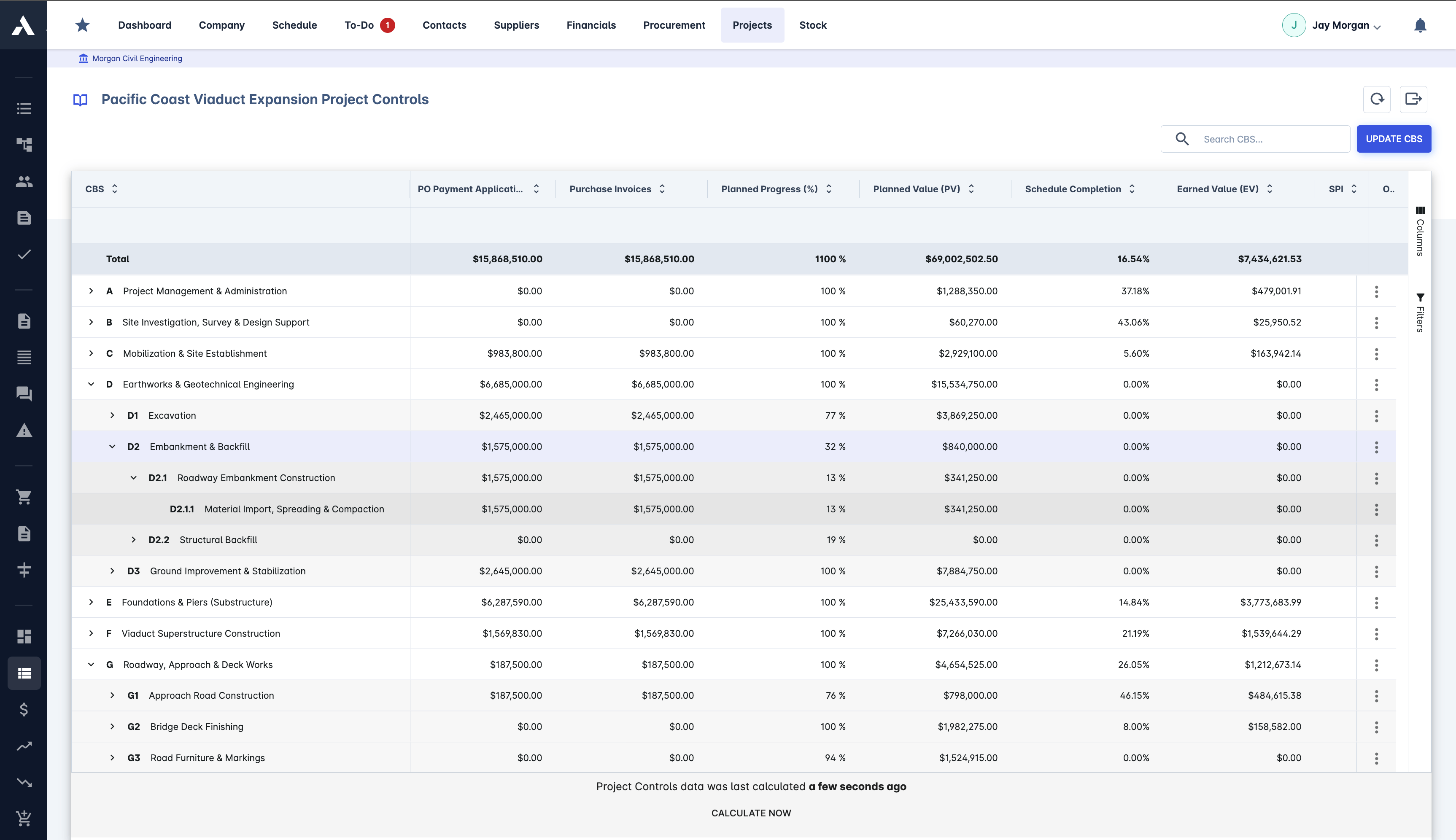
Every module reads and writes the same records, so CVR (cost value reconciliation), CPI, SPI and any KPI your commercial team defines report live at project and portfolio level. A no-code engine shapes workflows and approvals to your process, no developer required.

Job Costing & Cost Control
Actual cost lands against the budget line the moment it is committed. Budget versus actual, cost to complete and margin run live per job and across the portfolio.
Committed cost visible at order time
Budget vs actual on every cost code
CVR (cost value reconciliation) reporting
Margin visible while you can still act
Finance & Accounting Integration
Payment applications, invoicing and payment tracking run in the platform; the ledger stays in your accounting system via integrations with Xero, Sage, QuickBooks and others.
Valuations and retention tracking
Sales and purchase invoicing
Certified Xero partner; Sage and QuickBooks integrations
No double entry between systems
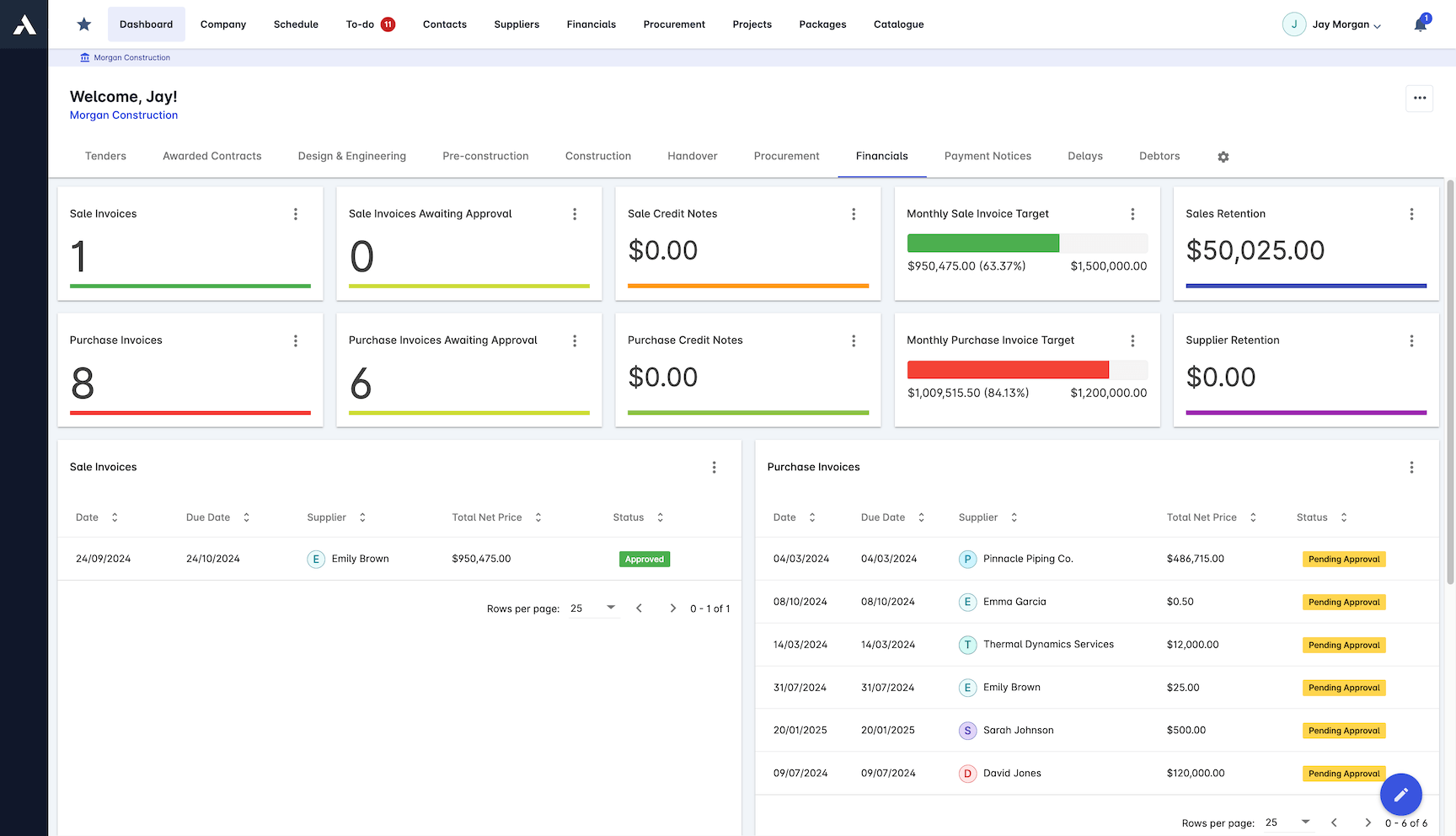
Reporting & Dashboards
Live dashboards and custom KPIs built on the one data model underneath it all: CVR, CPI, SPI, WIP and cash position at project and portfolio level.
Project and portfolio dashboards
CVR, CPI, SPI and custom KPIs
Work in progress and cost to complete
Reports built from live records, not exports
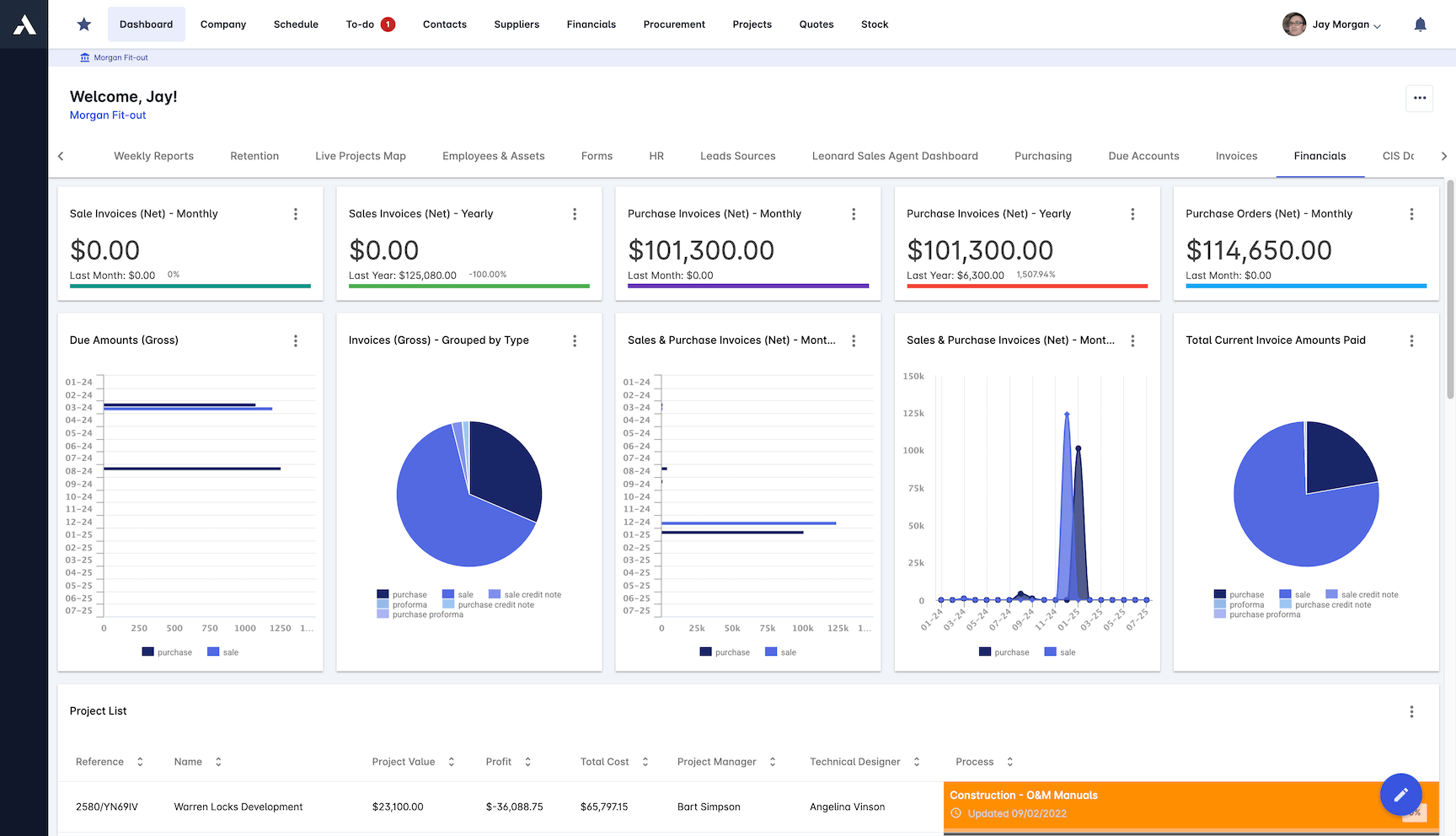
Estimating to Handover
The estimate that wins the job becomes the budget that runs it. Rates, quantities and scope carry from bid to delivery without re-keying, so the commercial baseline is real from day one.
Estimates priced from live rate libraries
Won bids convert straight into project budgets
Scope and quantities carried into delivery
One record from first estimate to final account
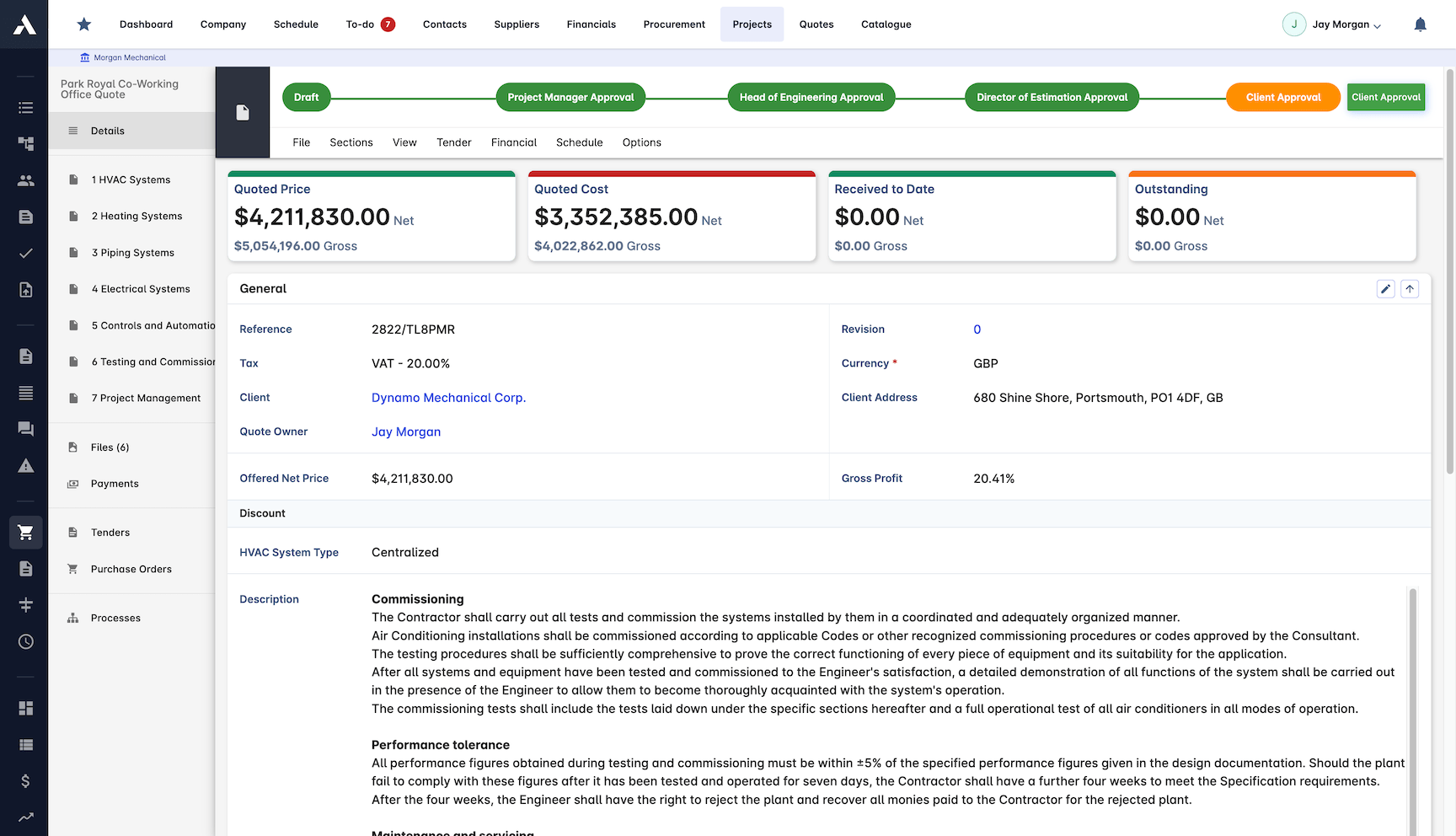
Procurement & Supply Chain
Purchase orders, subcontracts and valuations run through approval workflows against budget. Supplier records, insurances and performance history stay current in one register.
POs and subcontracts committed against budget
RFQs and side-by-side bid comparison
Supplier compliance and performance records
Three-way invoice matching
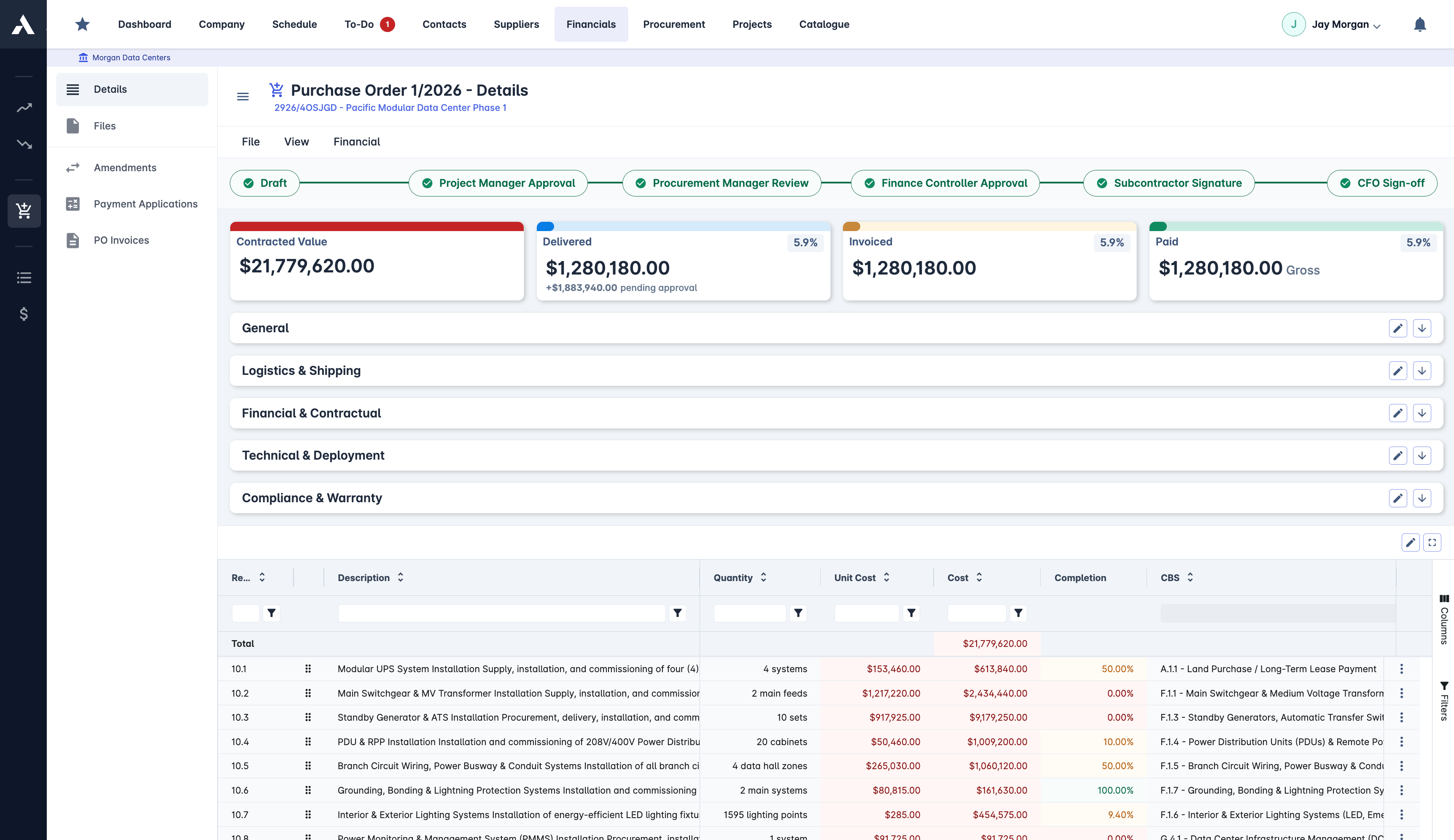
Scheduling & Delivery
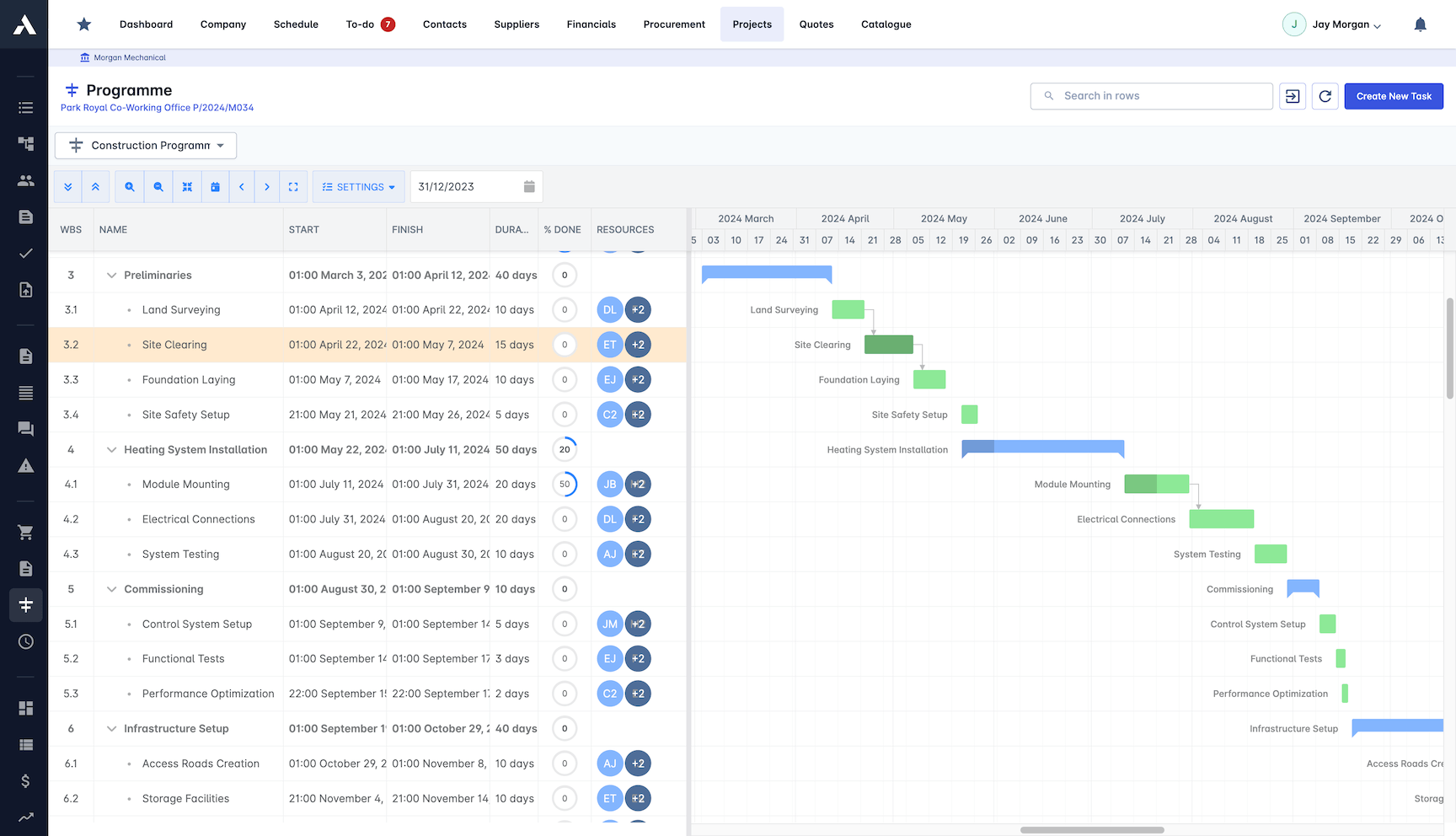
Gantt schedules with baselines and critical path, connected to the same projects your costs and site records live on, so programme and money are read together.
Gantt schedules with baselines
Critical path and resource conflicts
Progress tracked against programme
Schedule and cost on one project record
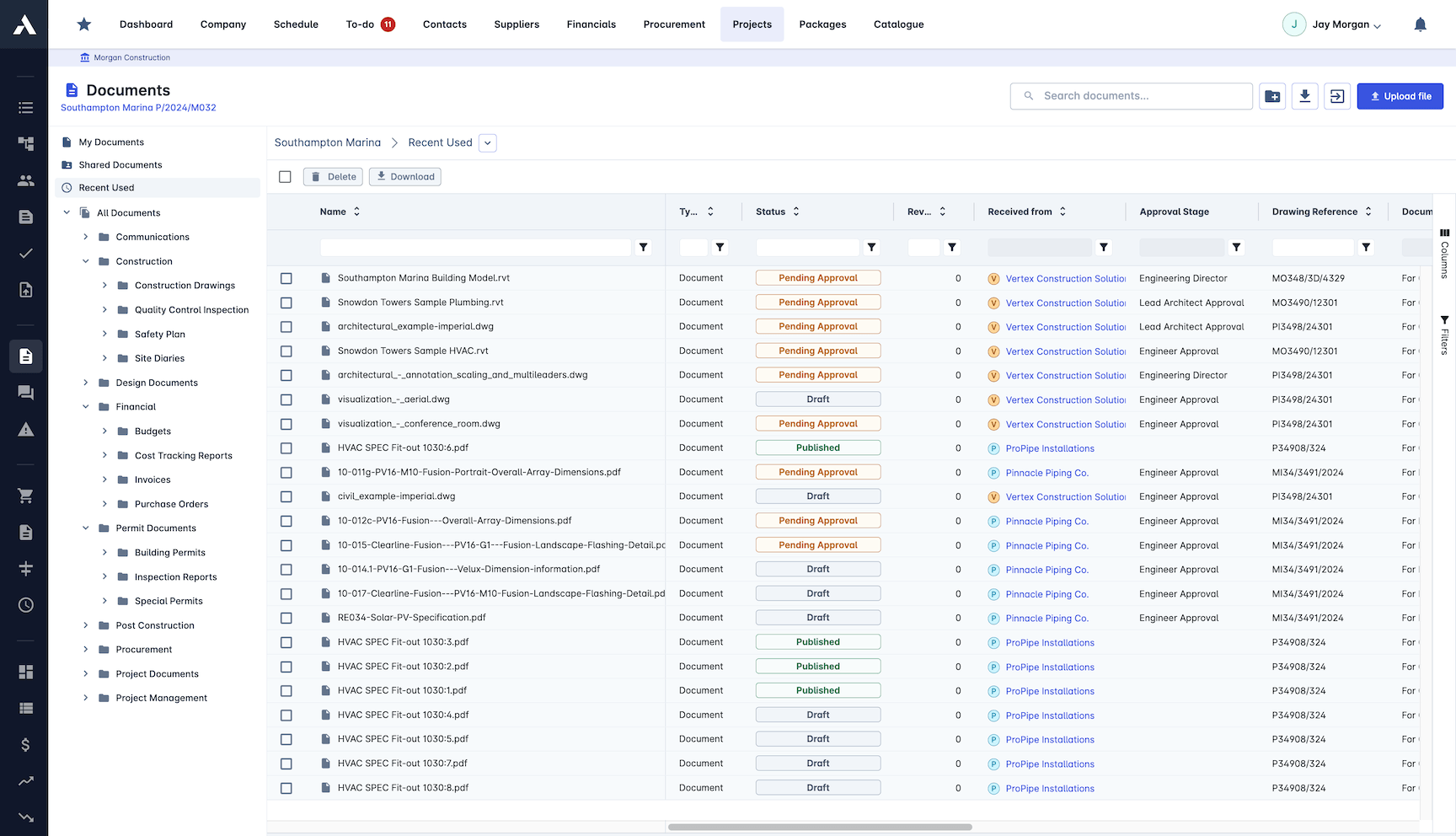
Documents & Site Records
Drawings and documents with revision control, and site forms, timesheets and attendance captured in the field, all landing on the project record the office already works from.
Document and drawing revision control
RFIs raised and answered on the record
Site forms and daily records from the field
Timesheets feeding job costs directly
What construction ERP covers, and how to compare systems
Construction ERP covers the full operating cycle of a contracting business: estimating and bidding, project budgets and cost control, procurement and subcontracts, documents and site records, and the invoicing and payment cycle that turns delivered work into cash. Most vendors list the same modules, so the module list is a poor basis for comparison. What separates systems is whether those modules work one shared project record or pass exports between compartments.
One boundary holds in every comparison: a construction ERP does not replace the accounting ledger. The workable architecture keeps finance in the accounting system and the project cycle in the ERP, connected without re-keying.
The ledgers Archdesk connects to, and how each connection works, are on the accounting integrations page.
- 01
One project record underneath every module
The estimate should become the budget, orders should commit against it, and site records should land on it with no export in between. Ask the vendor to show the estimate converting into a live budget, not a slide about integration.
- 02
Cost known at commitment, not at invoice
The system should show the cost position the moment a purchase order or subcontract is approved. If actual cost only appears when invoices arrive, the system reports history, not position.
- 03
A clear boundary with accounting
Check which ledgers the system connects to and how: native integration, file export, or custom work. The answer decides how much double entry your finance team keeps.
- 04
Configuration your own team can change
Approval chains, fields and workflows change as the business grows. A no-code engine keeps those changes in your hands; anything that needs a developer will lag the process it is meant to control.
- 05
A field experience the site will accept
Site forms, timesheets and records only feed the numbers if the field teams find them usable on the day. Judge that part of the system with the people who will live in it.
- 06
Reporting that reads live records
CVR (cost value reconciliation), CPI, SPI and custom KPIs should read from the same records the teams work in, at project and portfolio level, with no month-end spreadsheet assembly.
New to the topic? Read the complete guide to construction ERP, or go deeper on ERP for European contractors and composable cloud ERP architecture.
Plant and equipment run through the same records: construction asset management sits inside the ERP.
Frequently Asked Questions: Construction ERP
What is construction ERP software?
Construction ERP software runs the whole business on one data model: estimating, scheduling, cost control, procurement, document control, site records and finance read and write the same project records instead of living in separate tools. That is what keeps the commercial position live rather than reconciled after the fact. In Archdesk that one data model spans more than 30 modules, from the first estimate to final account.
How is a construction ERP different from generic ERP software?
Generic ERPs are built around products, stock and repeatable processes. Construction runs on projects: every job has its own budget, programme, supply chain and payment cycle. A construction ERP is built around the project record, with cost codes, valuations, variations, retention and subcontractor workflows as first-class features rather than customisations.
Does Archdesk replace our accounting software?
Archdesk runs the operational and commercial side: budgets, commitments, valuations and invoicing. It integrates with accounting systems including Xero (as a certified partner), Sage and QuickBooks, so finance keeps its ledger while the project data flows without re-keying. The full roster of supported ledgers, and how each connection works, is on the accounting integrations page.
Can the ERP adapt to how we already work?
Yes. A no-code configuration engine lets you shape workflows, approvals, fields and automations to your operating model without custom development, so the system follows your process rather than the other way round.
How does reporting work in a construction ERP?
Because every module writes to the same records, reporting is live: budget versus actual, CVR (cost value reconciliation), CPI and SPI, work in progress and custom KPIs, at project and portfolio level, without exporting spreadsheets from five systems first.
What does Archdesk cost?
Pricing is quote-based: pay per user, or choose an unlimited-users package priced on annual construction volume. Every quote includes all modules, unlimited data, implementation and support, and external collaborators such as subcontractors, clients and consultants are free of charge.
How do payment notices and retention fit into a construction ERP?
In UK practice, paying a subcontractor runs on the application and certification cycle: a payment notice sets out what will be paid, a pay less notice any difference, and retention is held and released under the subcontract. An ERP built around the project record keeps documents, approvals and payment records together, so the paper trail sits with the numbers.
How does the ERP handle retention through to release?
Retention is tracked per subcontract on the same records the budget and the CVR read from, so balances and release timing stay visible through the defects period instead of sitting in a spreadsheet. When release falls due, the position is already in the numbers the commercial team works from.
Do applications for payment run inside the ERP?
Yes. Applications for payment run in the platform against the same cost codes as the budget, with certification through approval workflows, so the certified position and the cost position always agree and nothing waits for a month-end export.
Which UK accounting systems does Archdesk integrate with?
Archdesk is a certified Xero partner and integrates with Sage, so the ledger stays in your accounting system while budgets, commitments, valuations and applications for payment run in the ERP, with no re-keying between the two.
Can one ERP report across the whole portfolio?
Yes. Because every project writes to the same data model, CVR, CPI, SPI and any custom KPI aggregate at portfolio level from the same live records each project team works in, so a managing director and a quantity surveyor read the same numbers.
Explore Related Solutions
Everything below runs in the same system, working from the same live data.
Project Management
Streamline your project workflows from start to finish
Project Budgets
Control project finances and stay in budget
Risk Register
Identify and manage project risks
Real-time Reporting
Get instant updates across your project portfolio
Document Management
Centralise document handling and access
Project Cost Controls
Monitor and compare your actuals with the estimate
Site Forms
Digitise and streamline your site documentation processes
Site Diary & Daily Reports
Keep the daily site record structured and defensible
Work in Progress Reporting
Monitor completion costs across your whole project portfolio
Discover more
Explore the full range of solutions and find the right fit for your business.
See your next project on Archdesk
Book a demo and walk through a fully worked example project: one platform running everything from winning the work to closing it out.
Book a Demo