Construction Job Costing Software
Know what every job really costs. While it's running.The winning estimate becomes the job budget, and from that day every timesheet, purchase order and invoice lands on its cost code. True cost per job is a live number you manage, not a surprise you reconcile at final billing.

Trusted by construction companies of every size, worldwide


















Every cost lands on the job that caused it
Construction job costing software tracks what each job actually costs by coding labor, materials, plant and subcontractor spend to the right cost code as it is incurred. Archdesk starts that record at the estimate: the priced bid becomes the working budget, actuals land against the same lines, and CVR (cost value reconciliation) shows the position per job and across the portfolio.

The estimate is the baseline
The winning estimate becomes the job budget without re-keying, so actuals are always compared against the numbers the job was priced on.
Labor hours priced, not just counted
Site timesheets carry cost rates, so crew hours turn into labor cost on the job the day they are worked.
Committed before it is spent
Purchase orders and subcontracts post to the job as commitments the moment they are raised, so the cost is visible months before the invoice arrives.
Change orders priced into the job
Change orders carry their cost impact onto the affected cost codes when they are approved, so scope growth never hides inside the base budget.
True cost feeds the next bid
Every job closes with a complete actual-cost record per cost code, so estimators price the next bid from what jobs really cost, not what the last spreadsheet assumed.

Estimate to Budget
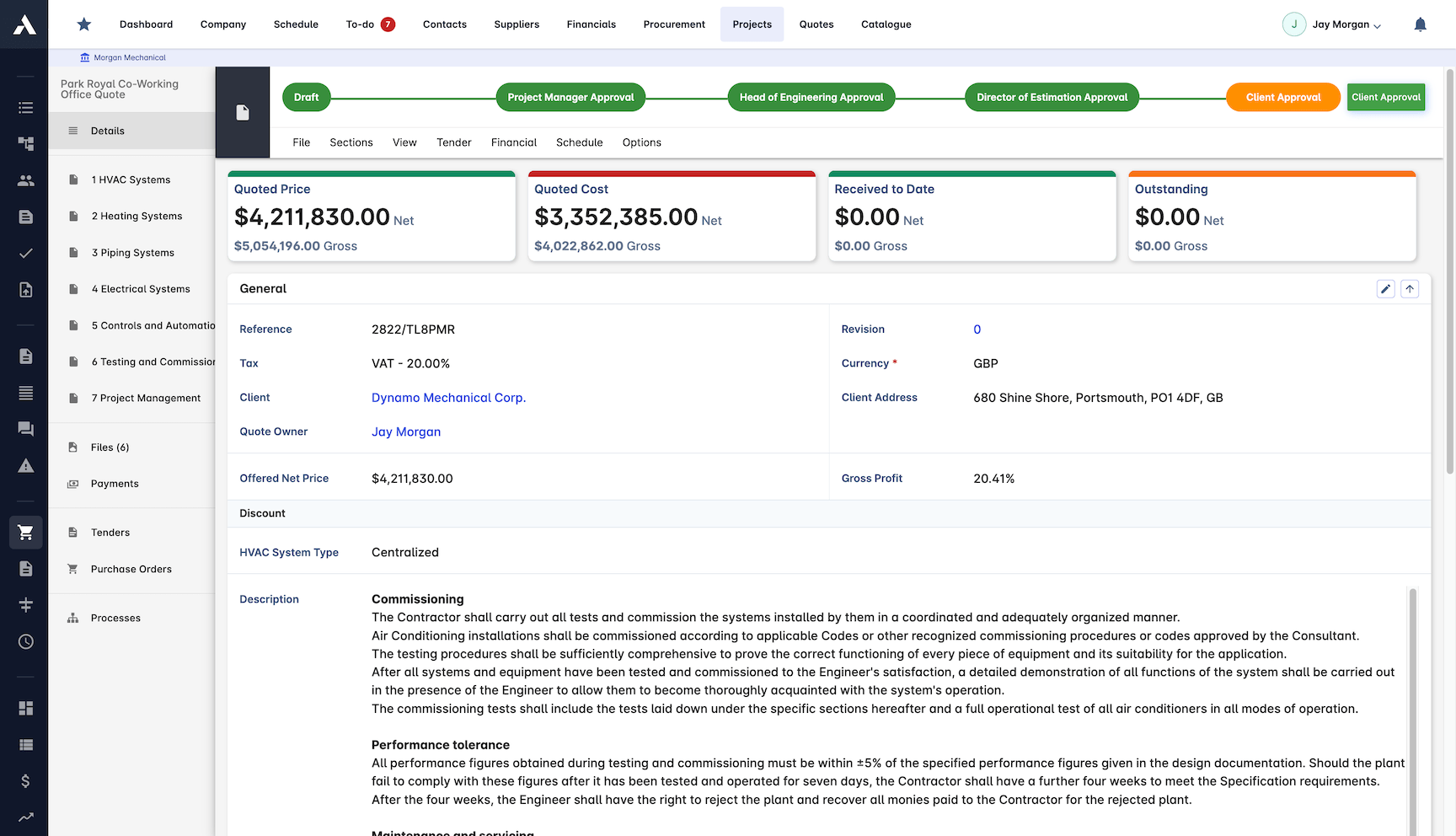
Win the job and the priced estimate becomes the cost-coded budget, line by line. Job costing starts from the numbers the work was sold on, with no re-keying and no translation loss between sales and delivery.
Winning estimate becomes the working budget
Cost codes carried from pricing to delivery
No re-keying between estimating and delivery
Margin visible per line from day one
Labor Cost Tracking
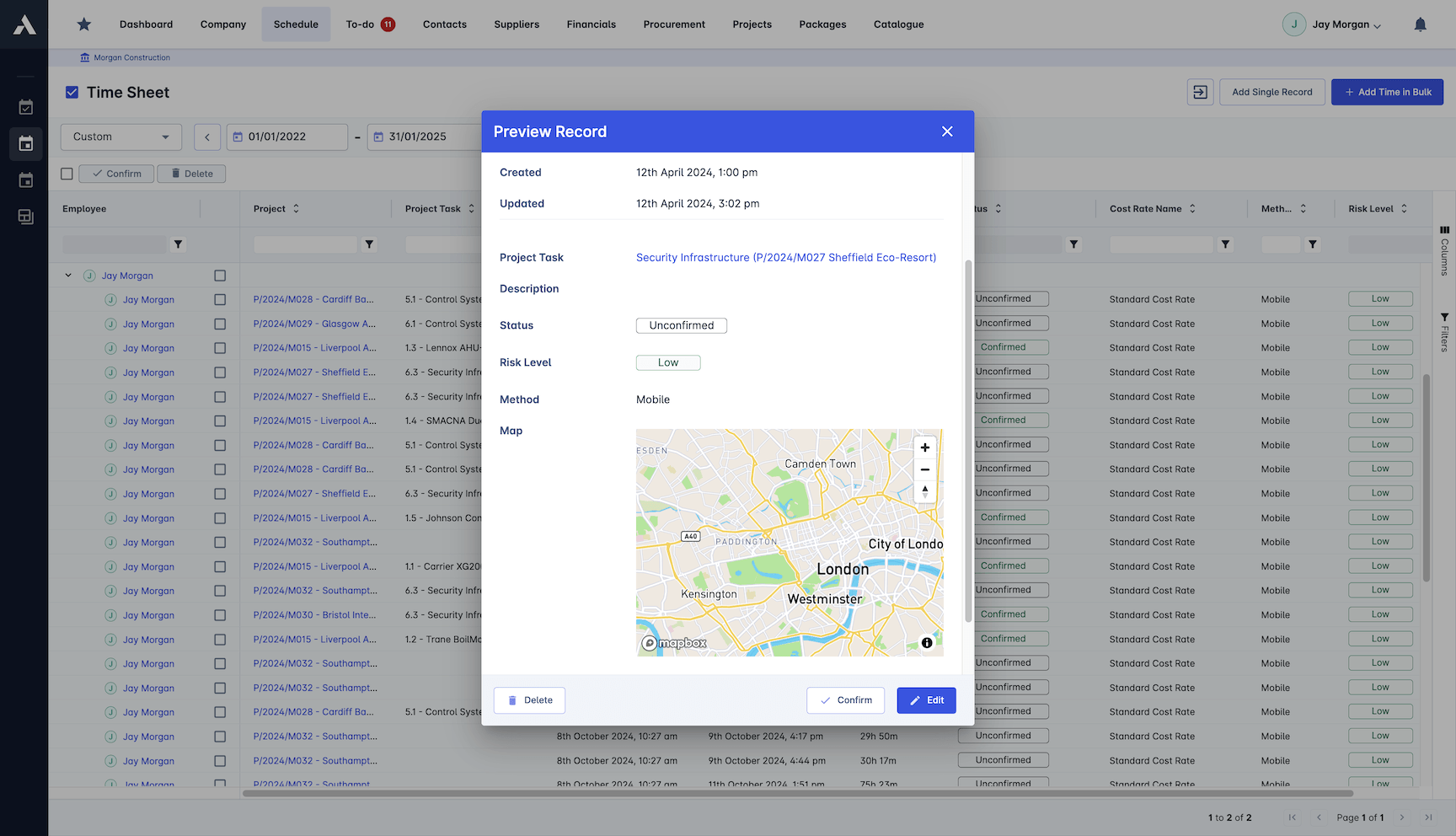
Timesheets from site carry cost rates, so hours become labor cost on the right job and cost code the day they are worked, not when payroll closes the month.
Site hours captured against jobs and cost codes
Cost rates applied to recorded hours
Labor cost visible daily per job
Expenses and plant time recorded with the work
Committed Cost Visibility
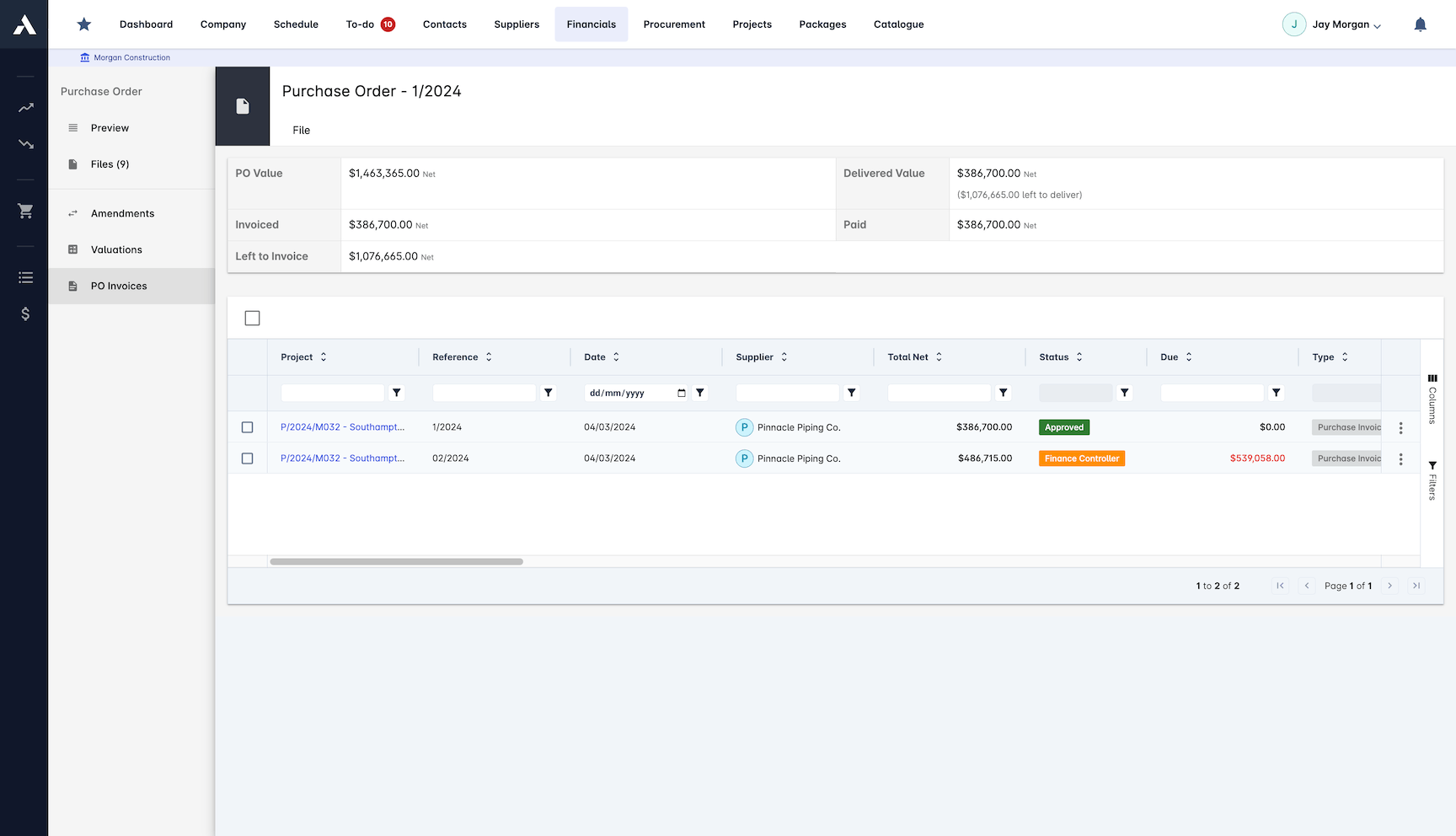
Purchase orders and subcontract packages post to the job as commitments the moment they are raised. The gap between committed and invoiced stays visible, so nothing arrives at final billing unannounced.
POs and subcontracts land on the budget when raised
Committed versus invoiced per cost code
Amendments tracked against the original order
Cost visible months before the invoice
Actuals and Invoice Matching
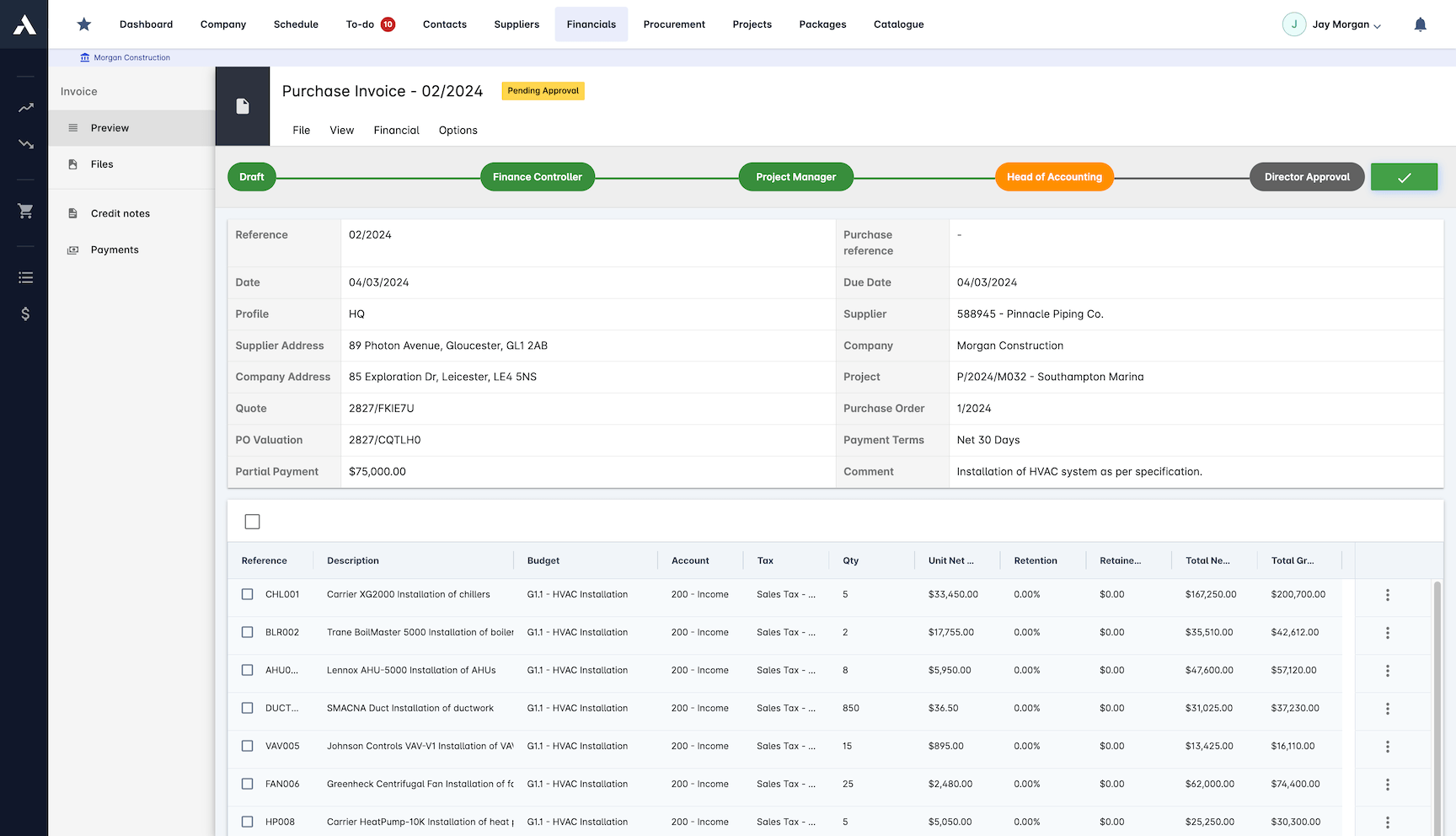
Supplier and subcontractor invoices land against their commitments and cost codes, with retainage handled, so actual cost per job is reconciled continuously rather than quarterly.
Invoices matched to purchase orders
Retainage tracked per subcontract
Actuals posted to the originating cost code
One record from order to payment
True Cost and CVR Reporting
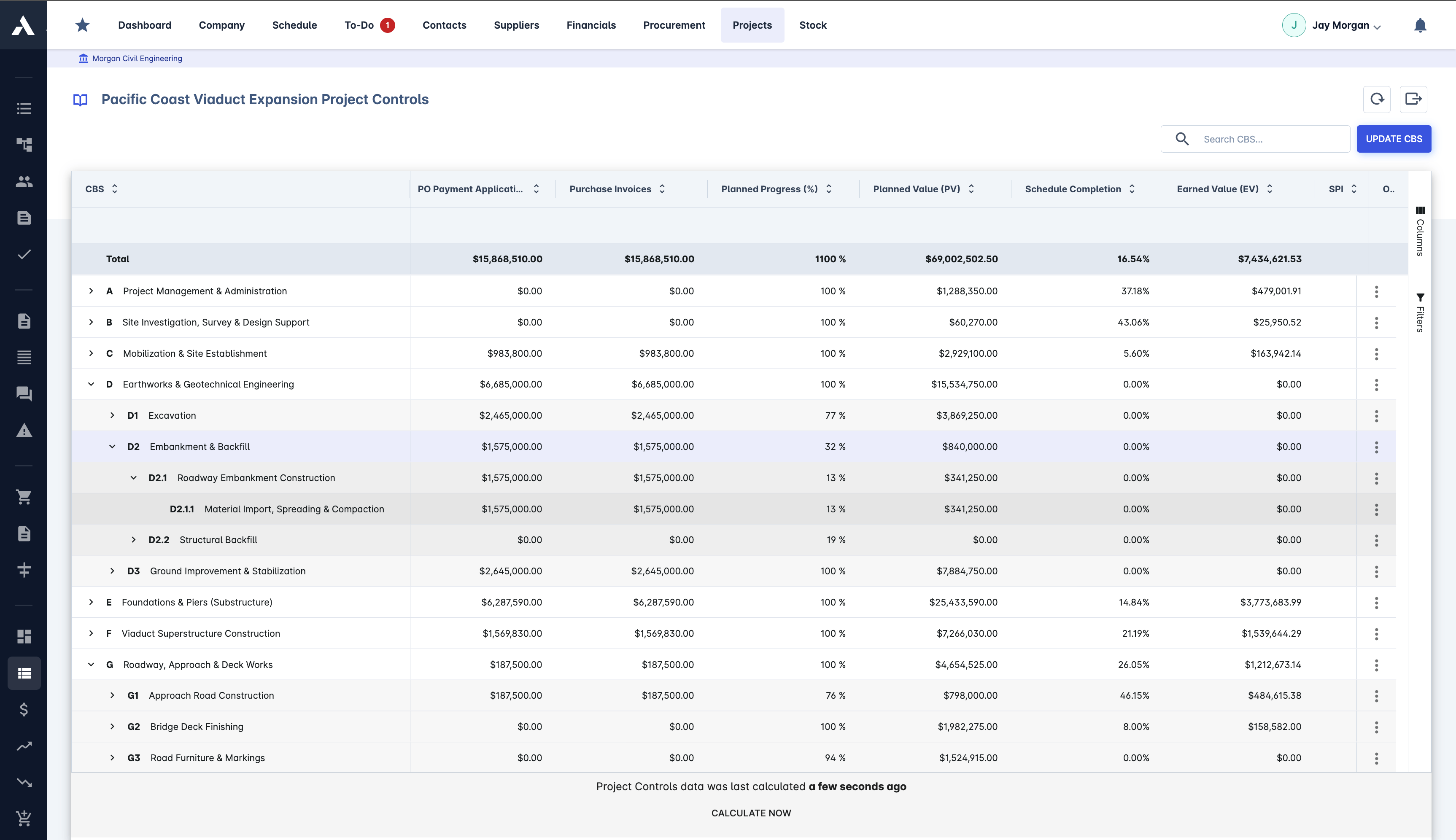
CVR (cost value reconciliation) per job and across the portfolio, built from the same records site and commercial teams work in. Budget, committed, actual and forecast sit on one screen.
CVR (cost value reconciliation) per job
Budget, committed, actual and forecast together
Portfolio view across all live jobs
Custom KPIs from the same cost records
Frequently Asked Questions: Construction Job Costing
What is job costing in construction?
Job costing tracks what each job actually costs by coding labor, materials, plant and subcontractor spend to the job and cost code that caused it, as the cost is incurred. Compared against the budget the winning estimate created, it shows the true position per job while the work is still running, not after final billing.
How does Archdesk track job costs?
The winning estimate becomes the cost-coded job budget, and from that point every timesheet, purchase order, subcontract and invoice lands on its cost code. Committed cost posts when an order is raised, actuals post when invoices are matched, and CVR (cost value reconciliation) shows budget, committed, actual and forecast together per job and across the portfolio.
How is labor cost captured per job?
Site timesheets carry cost rates, so recorded hours become labor cost on the right job and cost code the day they are worked rather than when payroll closes the month. Expenses and plant time are recorded with the same work.
What is the difference between committed and actual cost?
Committed cost is money you have promised: purchase orders and subcontract packages post to the job the moment they are raised. Actual cost is money invoiced against those commitments. Archdesk keeps both visible per cost code, so a job’s true position is known months before the invoices arrive.
Can job costing feed the next estimate?
Yes. Every job closes with a complete actual-cost record per cost code, so estimators price the next bid from what jobs really cost. Because the estimate, the budget and the actuals share the same cost codes, the comparison needs no re-keying.
How do lien waivers fit into the payment side of job costing?
In US practice, paying a subcontractor typically runs on an exchange of lien waivers alongside the pay application and retainage cycle: a conditional waiver before the money moves, an unconditional waiver once payment has cleared. Documents, approvals and payment records live on the same job record in Archdesk, so the waiver paper trail sits with the job cost numbers.
Learning the process? Read the construction job costing guide. Or browse all job costing and cost control guides.
This page is about what each job really costs against the priced numbers. Setting and managing the budget is construction budgeting, and live actual-versus-estimate control with the CVR is project cost controls. The priced numbers the job is costed against start life in construction estimating software, and committed cost lands through construction procurement.
Explore Related Solutions
Everything below runs in the same system, working from the same live data.
Estimation
Accurate project cost estimation
Bid Management
Streamline your bidding process and win more jobs
Change Order Management
Handle project changes efficiently and accurately
Client Proposals
Create professional client facing proposals
BIM Integration
3D take-off estimation
Project Cost Controls
Monitor and compare your actuals with the estimate
Discover more
Explore the full range of solutions and find the right fit for your business.
See your next project on Archdesk
Book a demo and walk through a fully worked example project: one platform running everything from winning the work to closing it out.
Book a Demo