
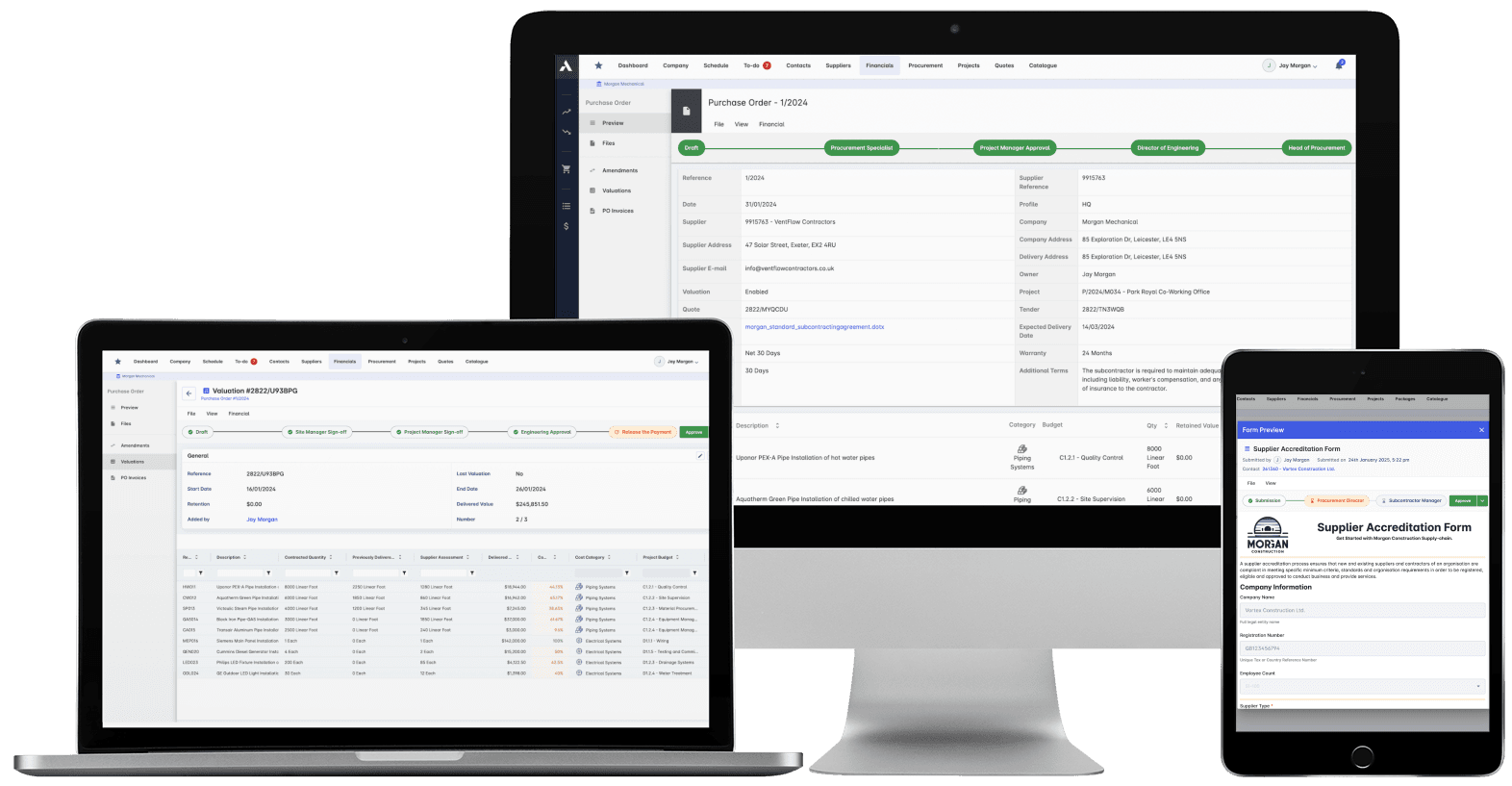
Buy-out that matches the bid
RFQs go out from the same lines you estimated, subcontractor quotes come back comparable, and scope gaps surface before award, not at mobilization.

The rest chase pay apps, retainage and thirty subs through spreadsheets.
One system for the whole job: estimating and bidding, drawings and documents, schedules, timesheets, subcontractor pay applications and retainage, and the schedule of values behind every bill to the owner. You can see where every project stands, every day, from first bid to closeout.
























You sit between the owner and thirty subcontractors, and the margin lives in that gap.
RFQs go out from the same lines you estimated, subcontractor quotes come back comparable, and scope gaps surface before award, not at mobilization.
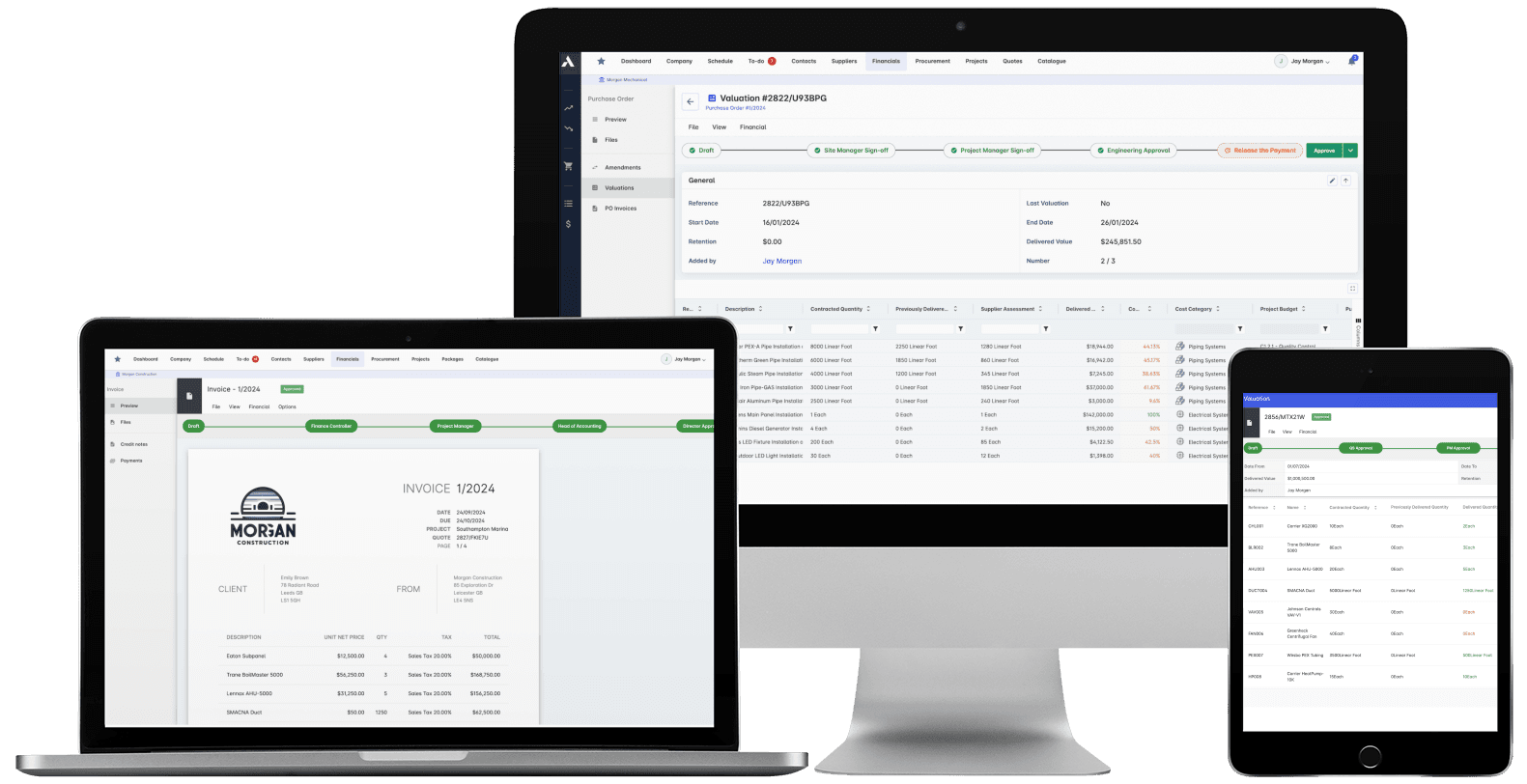
The pay applications your subs submit and the pay application you send the owner read from the same records, with retainage tracked per subcontract on both sides of the money.
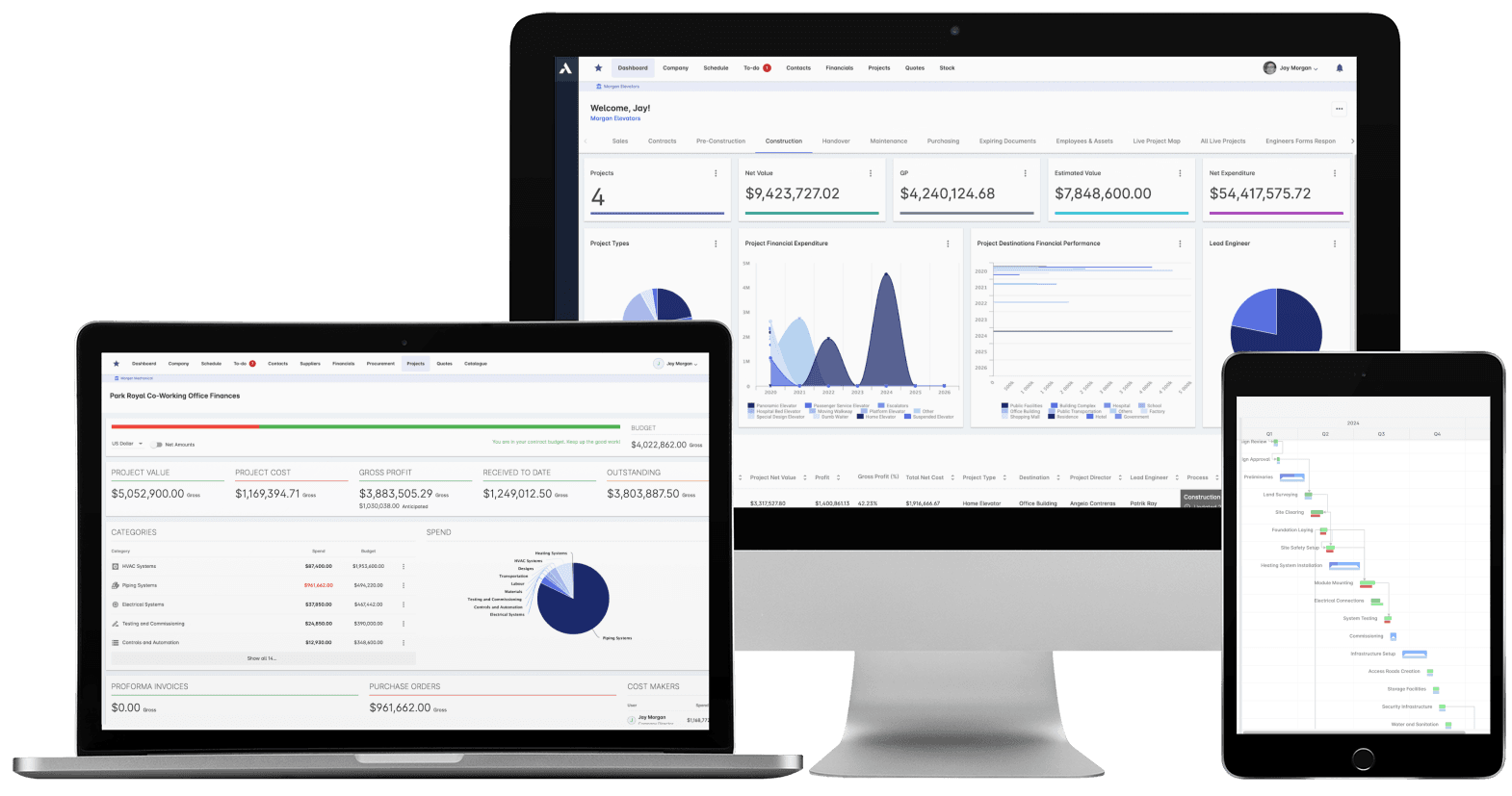
Committed cost lands the moment a PO or subcontract is approved, so budget versus actual and cost to complete run ahead of the invoices, job by job and across the book.
What you priced is what you track. The winning estimate becomes the budget, actuals land against it line by line, and what jobs really cost feeds the next bid.
Explore Job Costing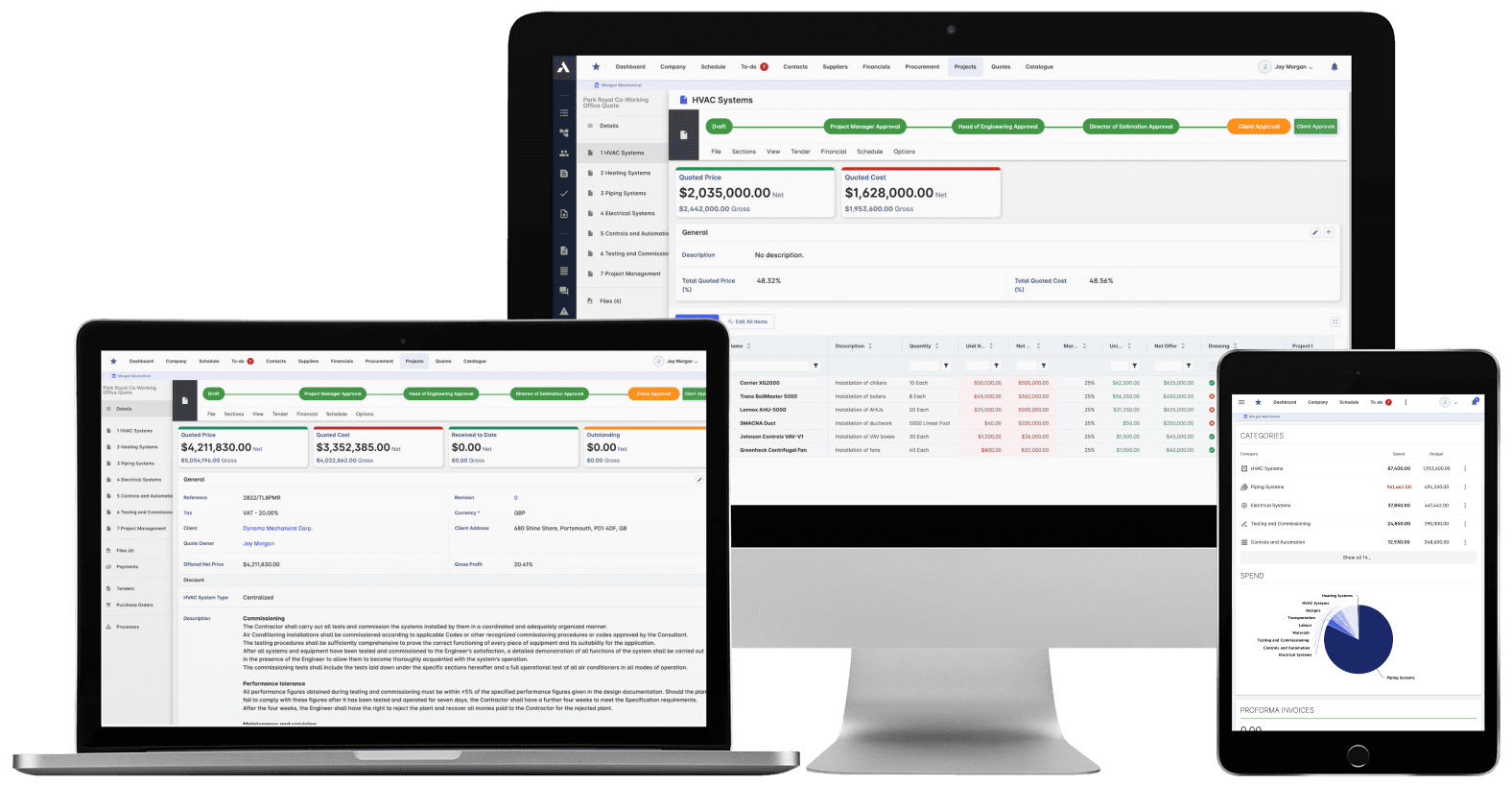
The schedule connected to what it depends on: long-lead deliveries on the tasks they gate, crews planned across every live job, slippage shown with its cost.
Explore Scheduling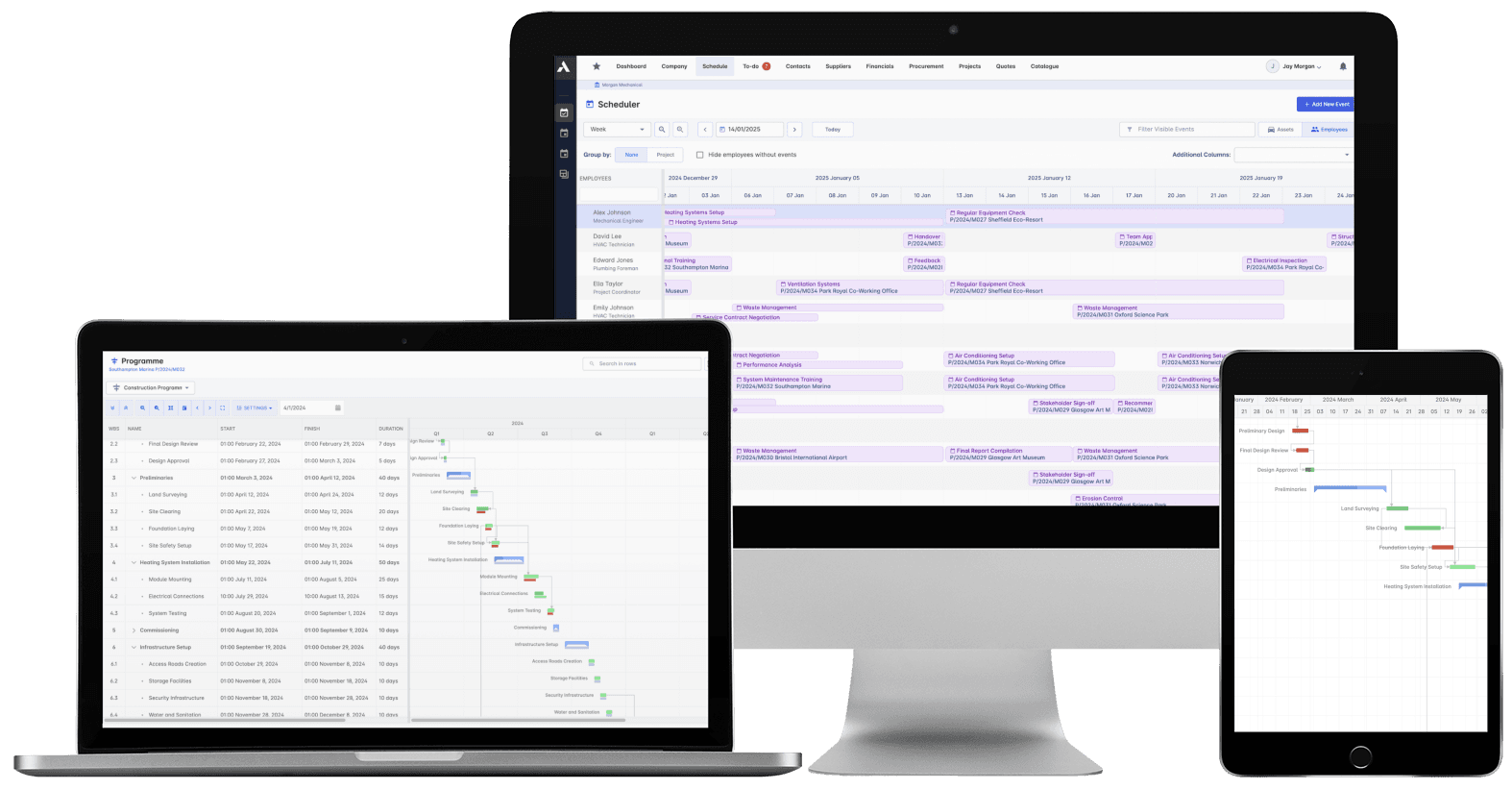
The schedule, the progress and the money in one system. When a task slips you see what it costs, and when scope changes you see what it does to the schedule. 'On track' means the Gantt chart and the bank account.
Explore Project Management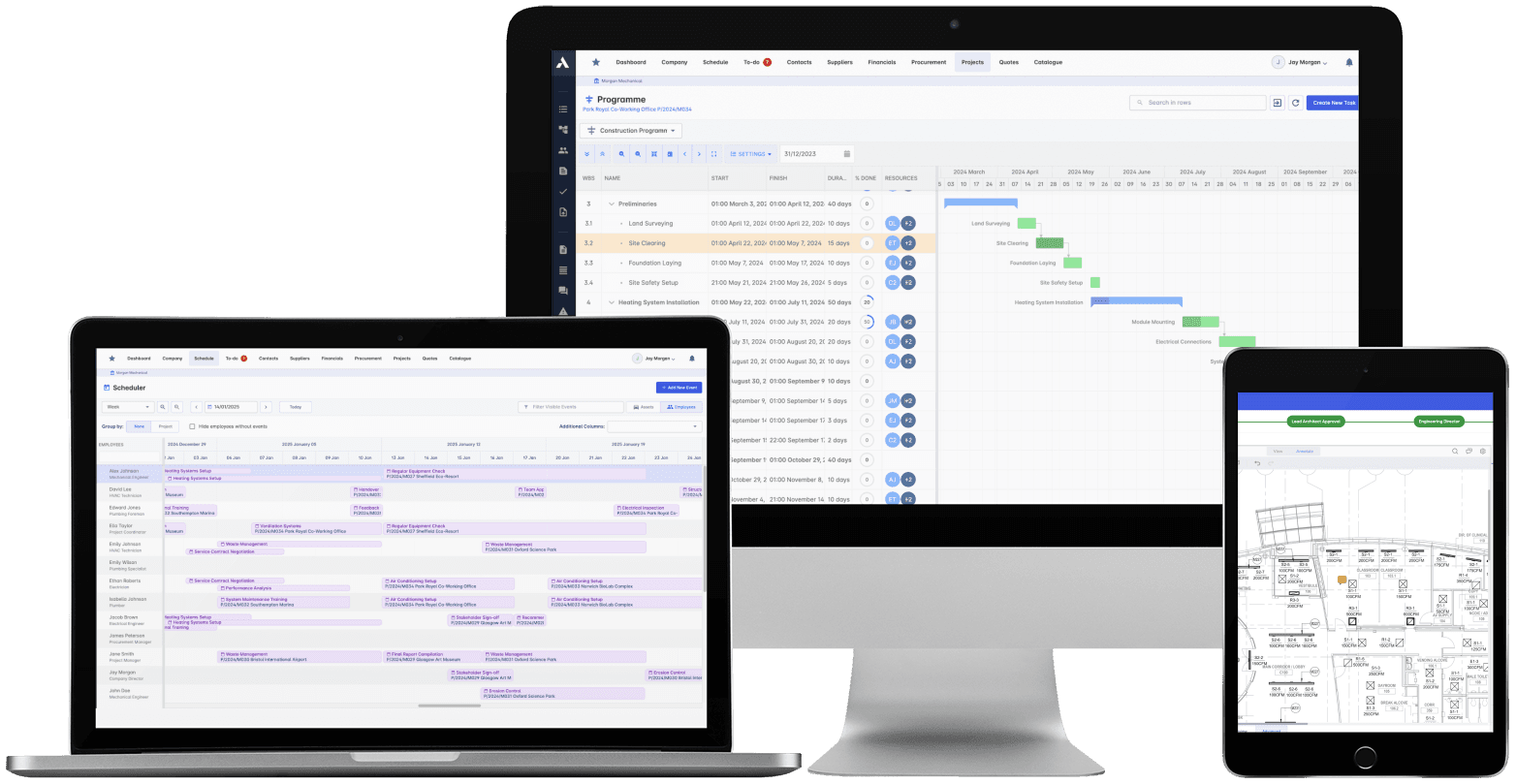
Nobody builds from a superseded drawing. Revision control, approvals and distribution with proof of who received what, when. The record that wins the dispute instead of losing it.
Explore Document Management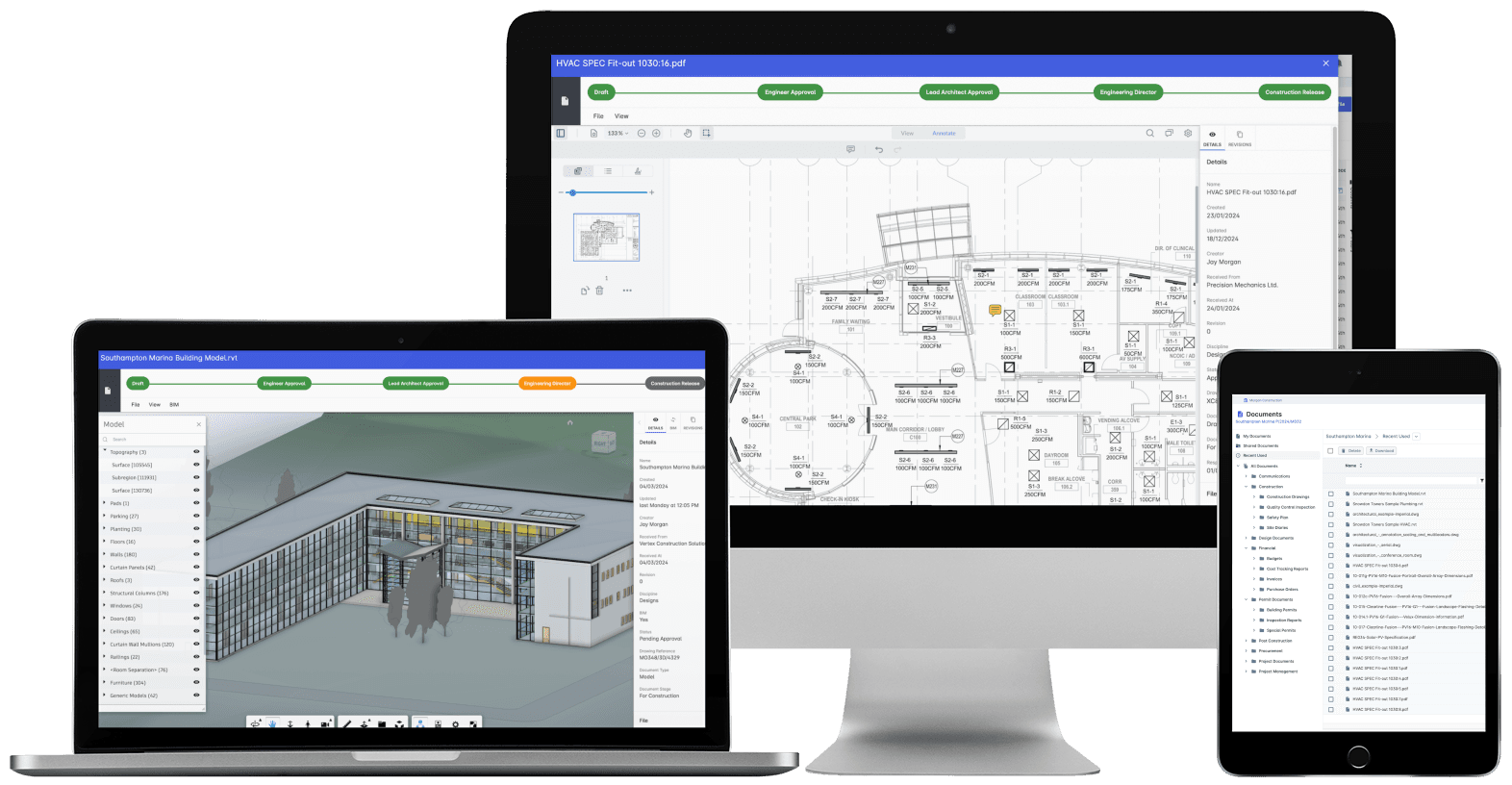
Buy-out without the gaps: RFQs from your BOQ lines, bids back comparable, exclusions visible before award. Then every PO and subcontract lands on the budget the moment it's raised.
Explore Procurement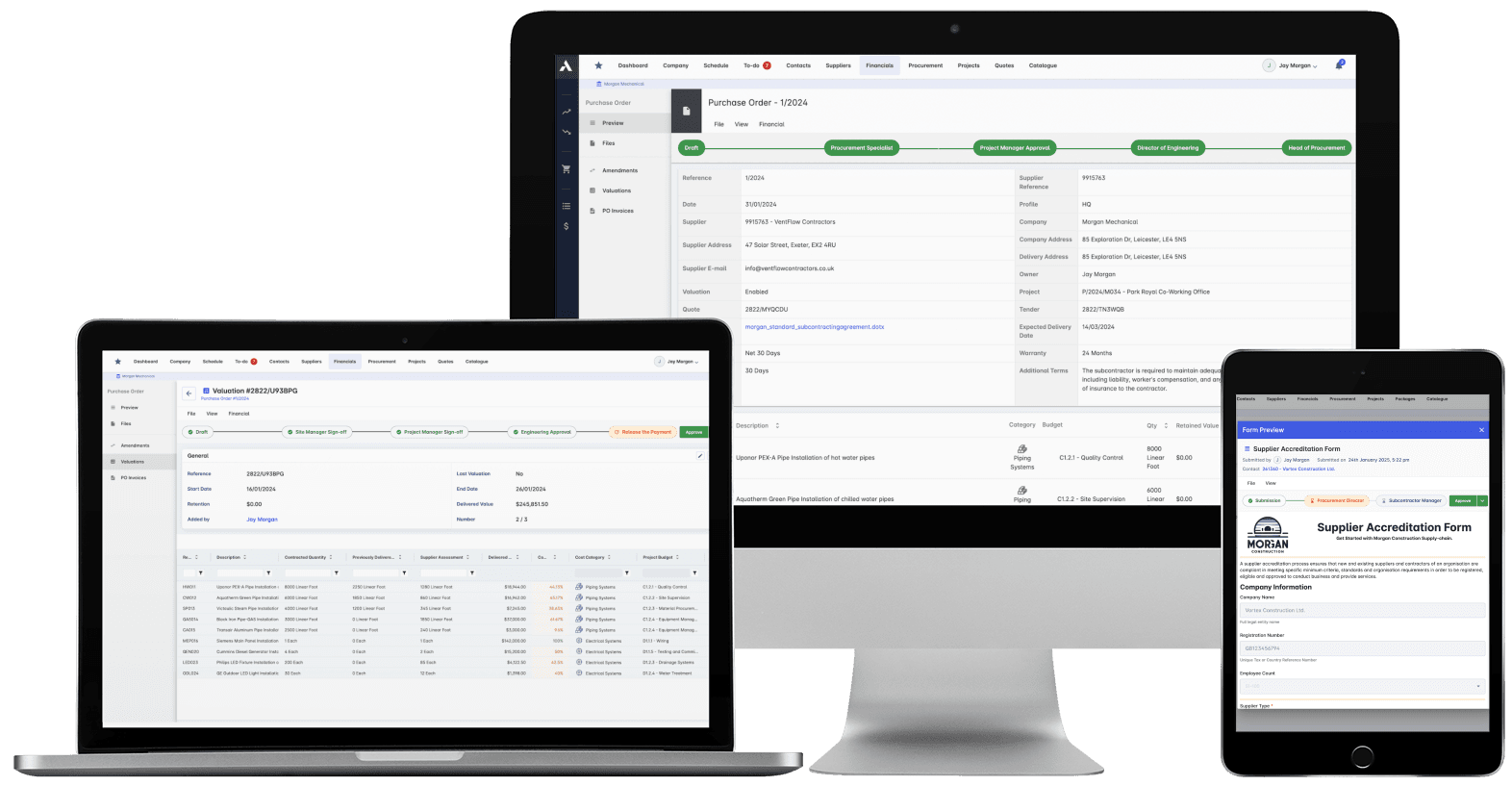
Committed at the PO, earned as work is delivered, invoiced months later. See all three stages against every budget line, so variance is a decision you make, not a number you explain.
Explore Cost Controlling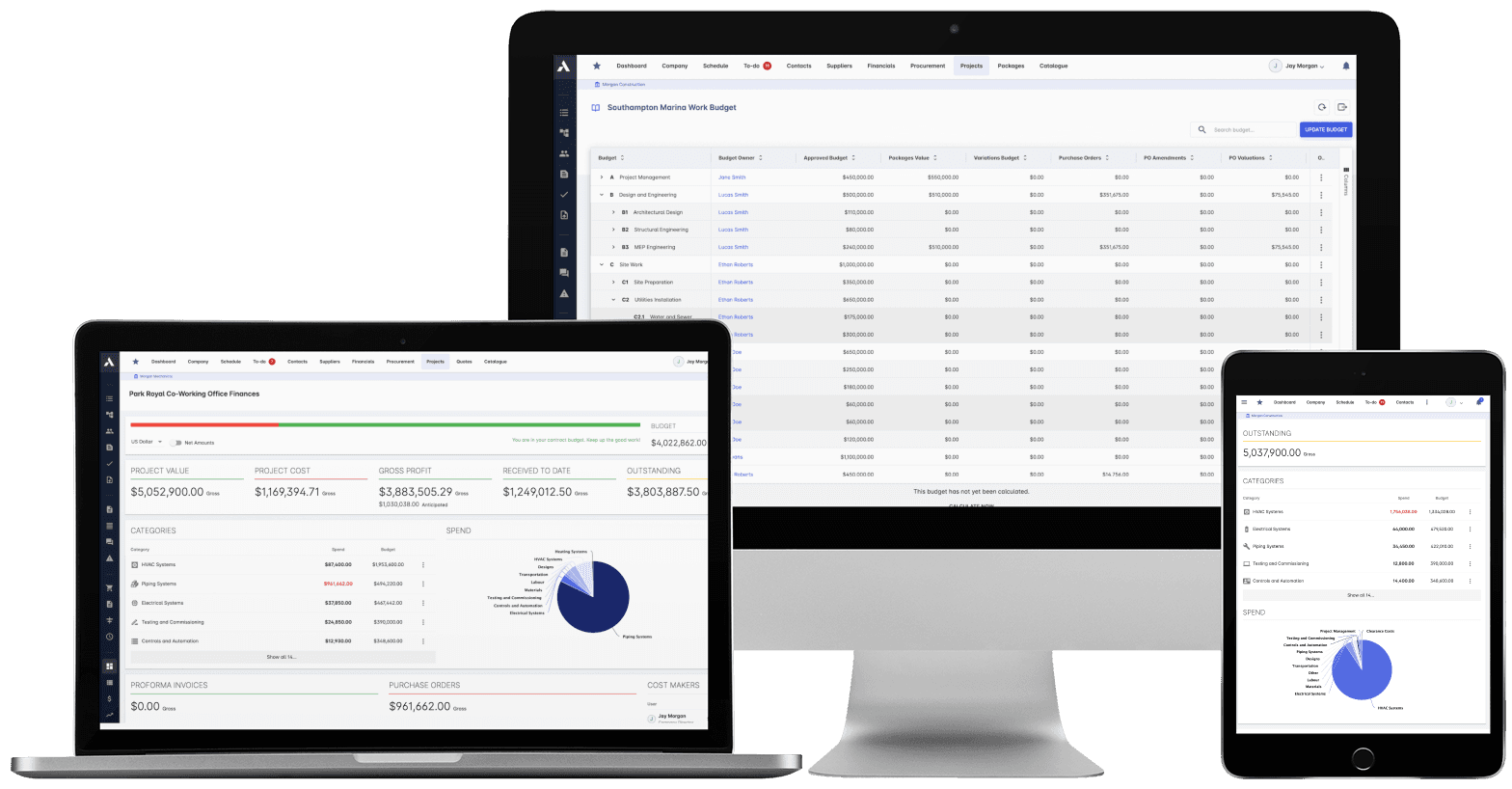
Certify subcontractor pay applications down, build client applications up, from the same records. Invoices, payment notices and retainage released on time, with the audit trail attached.
Explore Financials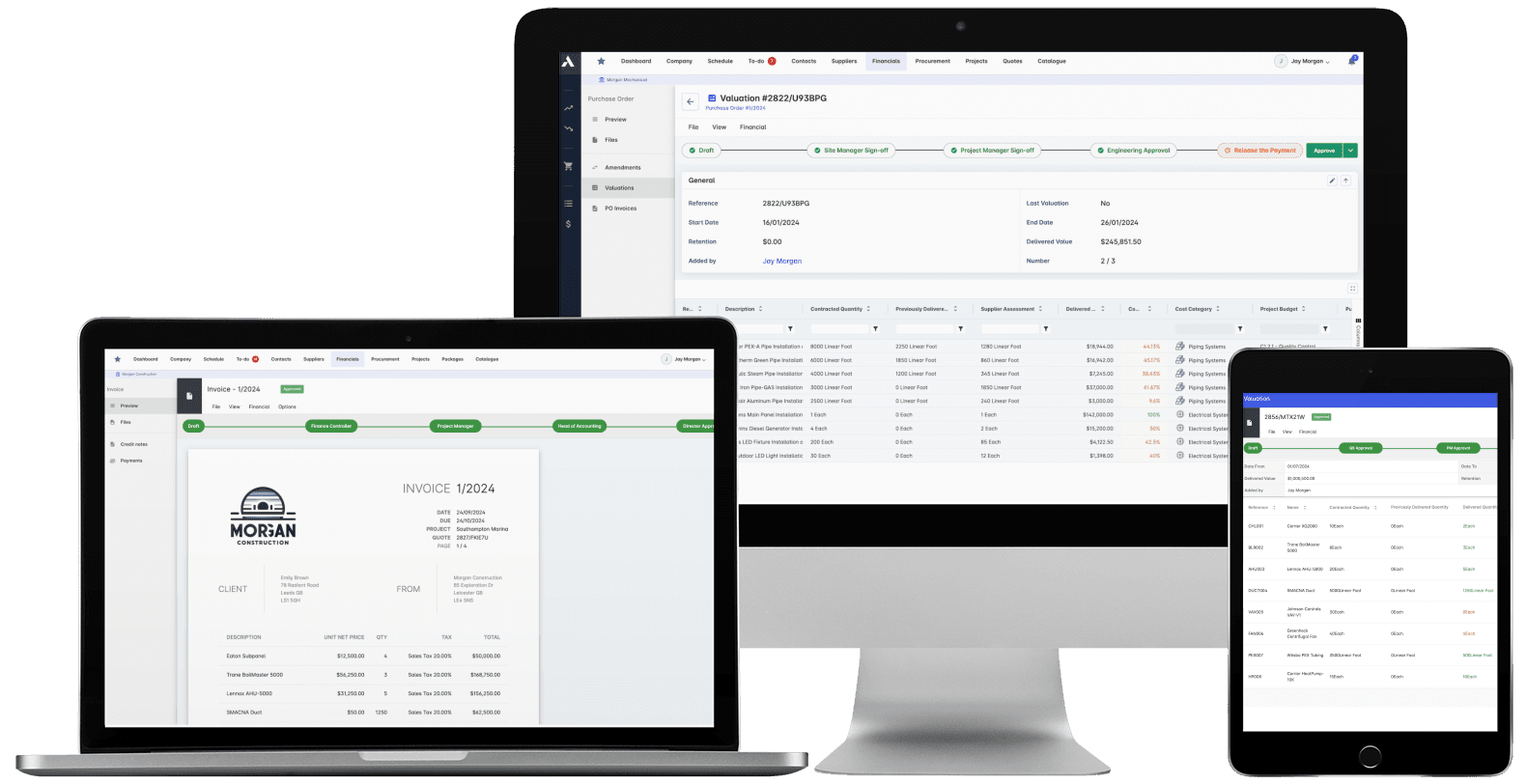
Every project's position, live, from the data that ran the work. Cost, schedule and cash agree with each other because they're the same records. There's nothing to assemble and nothing to reconcile.
Explore Live Data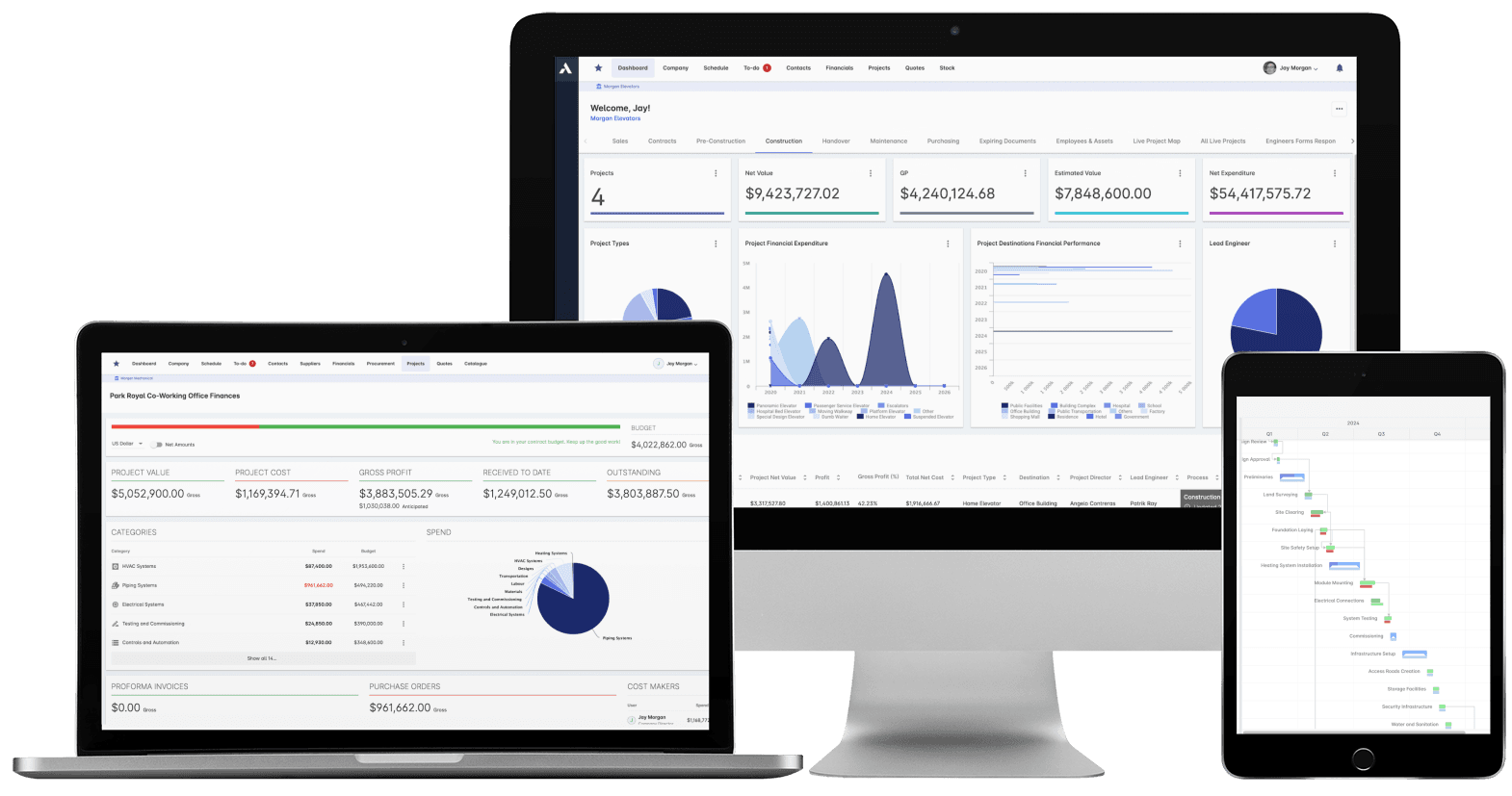
Construction Volume
£10M
Average Administrative Cost
£500k
From small residential jobs to the world's largest infrastructure projects
-377x320.webp&w=3840&q=75&dpl=dpl_GFvyZWRNr846QU5E8V8rfeGtn6qv)
Nivy Mall in Bratislava is a modern shopping and lifestyle hub featuring a mix of retail stores, dining options, and entertainment facilities.
-377x320.webp&w=3840&q=75&dpl=dpl_GFvyZWRNr846QU5E8V8rfeGtn6qv)
Tallest building in the European Union. Designed by Foster + Partners.
Archdesk runs the general contractor cycle in one platform: estimating and bidding, subcontract buy-out, document control, field delivery, subcontractor pay applications and retainage, and job cost reporting at project and portfolio level.
No. General contractors also run estimating and bidding, scheduling, document control, site forms and timesheets in Archdesk. The commercial modules get the attention because that is where the fee is protected, but day-to-day delivery sits on the same project record.
Yes. Budgets, committed costs, change orders, certified work and retainage balances sit on live records, so over-budget packages and billing gaps show while there is still time to act, job by job and across the portfolio.
Yes. You can send RFQs built from your estimate lines, level subcontractor bids side by side, award and raise subcontract orders, then certify subcontractor pay applications against those orders. The same records substantiate the schedule of values and the pay application you send the owner.
Lien waivers are documents uploaded against PO pay applications, giving the general contractor a full audit of all lien waivers across the subcontracted work. Each waiver sits with the order and payment records it belongs to, so the paper trail is in one place when the question comes.
Yes. Archdesk integrates with QuickBooks Online and is a certified Xero partner, and Sage 50 is covered by export. Invoices, payments and costs flow between operations and accounting without double entry.
Yes. Configurable no-code workflows and one data model support general contractors from a growing regional operation to an enterprise group running work across divisions.
The demo walks a fully worked example project through Archdesk: the bid, the buy-out, the pay applications and the closeout. Book a demo and see it end to end.
Book a Demo