SAP Construction Integration
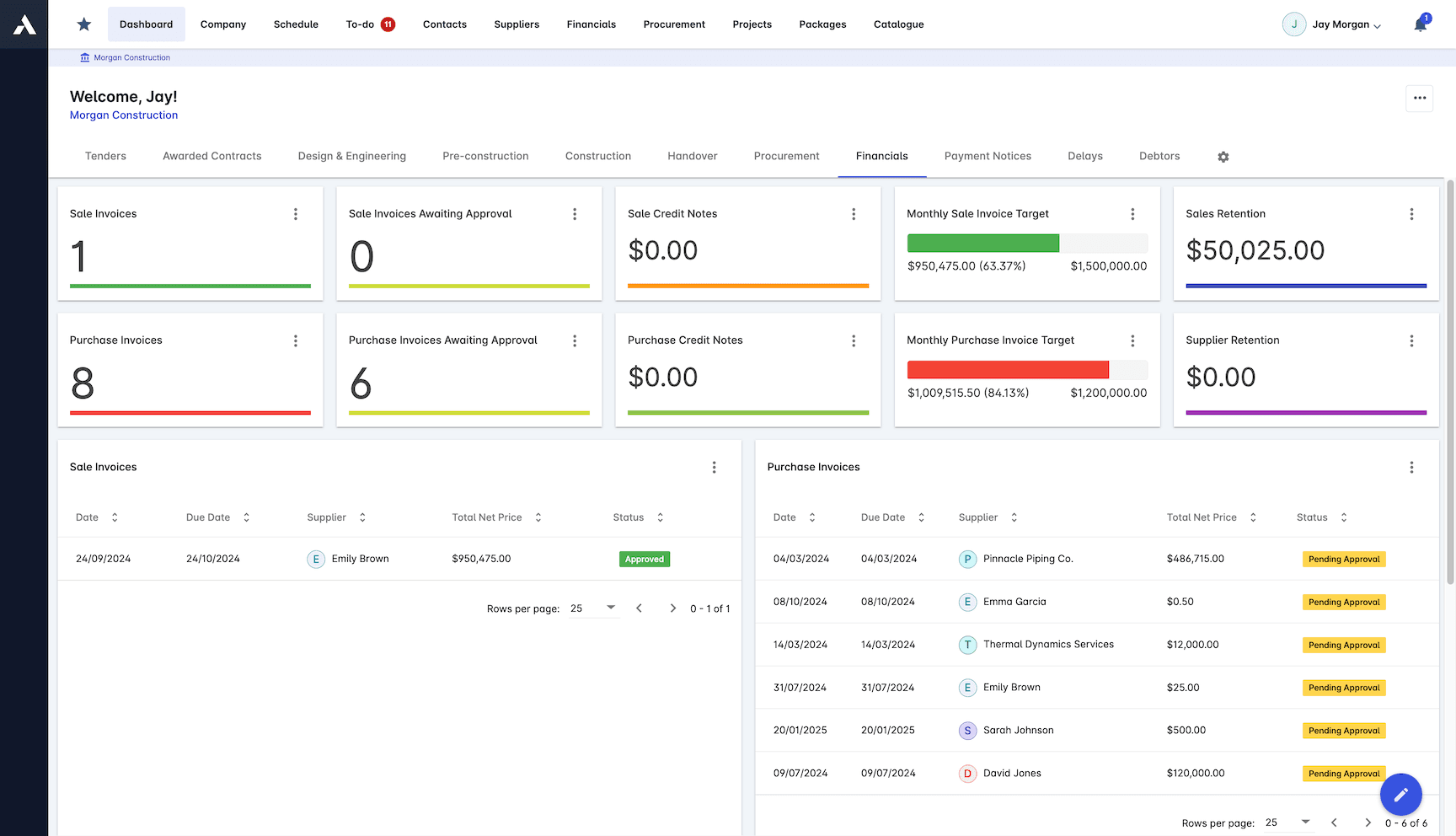
SAP runs the company. Archdesk runs the projects. Connect them.Archdesk has integrated with SAP across older ECC-era landscapes and S/4HANA, using multiple interface methods, configured with our team for each customer's environment. Financial documents move between projects and the ERP project-coded.
Trusted by construction companies of every size, worldwide




















SAP landscapes differ by decades. The integration method has to follow.
An SAP estate can mean a heavily customized ECC system that has run the business since the 2000s, a fresh S/4HANA implementation, or a migration in progress between the two. Each generation exposes different interfaces and conventions, and a serious integration partner asks which one you run before promising anything. Archdesk has delivered integrations across both older SAP landscapes and S/4HANA, using multiple interface methods, chosen and configured with our team for the environment in front of us.

ECC-era and S/4HANA experience
Older SAP landscapes and current S/4HANA systems expose different integration surfaces. Archdesk has worked with both.
Multiple interface methods
There is more than one way into an SAP system, and the right one depends on your version, your middleware and your governance. The method is chosen per environment, not imposed.
Configured with our team
Scope, mapping and testing are worked through with your SAP owners during implementation. Your basis team keeps control of the SAP side.
The construction layer SAP lacks
Pay applications, change orders, subcontractor accounts and site records live in Archdesk, reconciled with the ERP instead of parallel to it.
Straight talk about SAP projects
SAP integrations have a reputation because vendors promise magic. We promise a method: agree scope with your SAP owners, map to your configuration, test against real transactions, then go live.

The ECC to S/4HANA divide, and why it matters for integration
SAP ECC and S/4HANA are different platforms wearing the same logo. ECC-era systems typically integrate through interface mechanisms that have been stable for twenty years, often wrapped in company-specific middleware and tightly governed change control. S/4HANA landscapes lean toward modern service-based interfaces and cloud extension patterns. A construction platform that claims to integrate with SAP has to be comfortable in both worlds, and honest that the approach differs between them.
That is the context for how Archdesk approaches it: multiple interface methods, experience on both sides of the divide, and a configuration process run with your SAP owners rather than around them.
The typical routes into an SAP system
In practice, SAP integrations are built through a handful of well-worn routes, and the right one depends on your SAP version, your middleware landscape and your governance rules:
- APIs and web services. S/4HANA exposes modern OData and REST services; older systems offer SOAP web services and remote function calls (RFC/BAPI). The cleanest route where the landscape allows it.
- IDocs. SAP's classic document-based exchange, battle-tested for decades and often the incumbent standard for financial documents in ECC-era estates.
- Integration tables. Staging tables that each side reads and writes on an agreed schedule: simple, auditable, and popular where governance restricts direct interfaces.
- ESB and middleware connectors. Many enterprises route every interface through their integration layer, whether SAP's own (PI/PO, Integration Suite) or a third-party ESB. Archdesk connects to the bus rather than to SAP directly.
- File-based batch interfaces. Scheduled file drops over secure transfer: the pragmatic route for tightly locked-down or heavily customized systems.
Which route fits is a scoping decision made with your SAP owners, against your environment and your change-control rules, before anything is built.
What an SAP integration covers
The standard scope below is the starting point; the final mapping follows your SAP configuration. Projects and purchase orders can be included depending on the system and setup.
| Entity | Direction | Notes |
|---|---|---|
| General ledger / nominal codes | One-off sync (typical) | The ledger's nominal code structure is typically synced once at setup, so cost coding in Archdesk maps to the chart of accounts and every document posts against the right codes. |
| Vendors / suppliers | Two-way | Supplier records stay consistent between Archdesk and the ledger, so purchase transactions land against the right account. |
| Clients / customers | Two-way | Client records match on both sides, so sales invoices post without re-keying account details. |
| Sales invoices | Two-way | Invoices raised against clients in Archdesk reach the ledger project-coded, without being typed twice. |
| Purchase invoices | Two-way | Costs captured against projects land in the ledger coded to the job they belong to. |
| Credit notes | Two-way | Corrections travel with the invoices they adjust, on both the sales and the purchase side. |
| Expenses | Two-way | Project expenses reach the ledger against the right job, so the cost position stays complete. |
| Payments | Two-way | Payment status stays visible against sales and purchase invoices, feeding cashflow visibility and the CVR (cost value reconciliation) position. |
| Projects | Configurable | Can be included depending on the system and setup, so ledger transactions read by project on the accounting side too. |
| Purchase orders | Configurable | Can be included depending on the system and setup, extending commitment visibility into the ledger. |
For the wider picture, see accounting and ERP integration and construction ERP.
Frequently Asked Questions: SAP Integration
Does Archdesk integrate with SAP?
Yes. Archdesk has delivered integrations with both older SAP landscapes from the ECC era and S/4HANA, using multiple interface methods. The connection is configured with our team for your specific SAP environment.
We are still on ECC, not S/4HANA. Is that a problem?
No. Plenty of construction and engineering businesses still run ECC-era systems, and Archdesk has experience integrating with older SAP landscapes as well as S/4HANA. The interface method is chosen to fit the system you actually run.
What data does an SAP integration cover?
The standard Archdesk accounting scope: vendors, clients, sales and purchase invoices, credit notes, expenses and payments, with projects and purchase orders included depending on the system and setup. The exact mapping follows your SAP configuration.
Who builds and runs the integration?
The Archdesk team configures the integration for your environment, working with your SAP owners on scope, mapping and testing. Your basis and finance teams keep control of the SAP side throughout.
Why connect SAP to a construction platform at all?
Because SAP knows the company but not the site. Estimates, pay applications, change orders and subcontractor accounts live in Archdesk, and the integration keeps them reconciled with the ERP, feeding cashflow visibility and the CVR (cost value reconciliation) position from figures finance recognizes.
More Archdesk integrations
Every integration connects to the same project data model, so whichever systems your business runs on, the numbers agree. These pages cover the most requested systems, not the full list: Archdesk regularly builds integrations with customers' own ERP and accounting platforms during implementation.
Xero
Certified partner integration, listed on the Xero App Store.
Learn More
QuickBooks Online
Financial documents between projects and QuickBooks Online.
Learn More
Sage 50
Export invoices, credit notes and costs to Sage 50, project-coded.
Learn More
Microsoft Dynamics
Set up with our team, mapped to your Dynamics environment.
Learn More
MS Project
Import and export schedules, both ways.
Learn More
Primavera P6
Two-way schedule exchange, including calendars and baselines.
Learn MoreSee the full picture on the integrations overview or dive into accounting and ERP integration.
See your next project on Archdesk
Book a demo and walk through a fully worked example project: one platform running everything from winning the work to closing it out.
Book a Demo