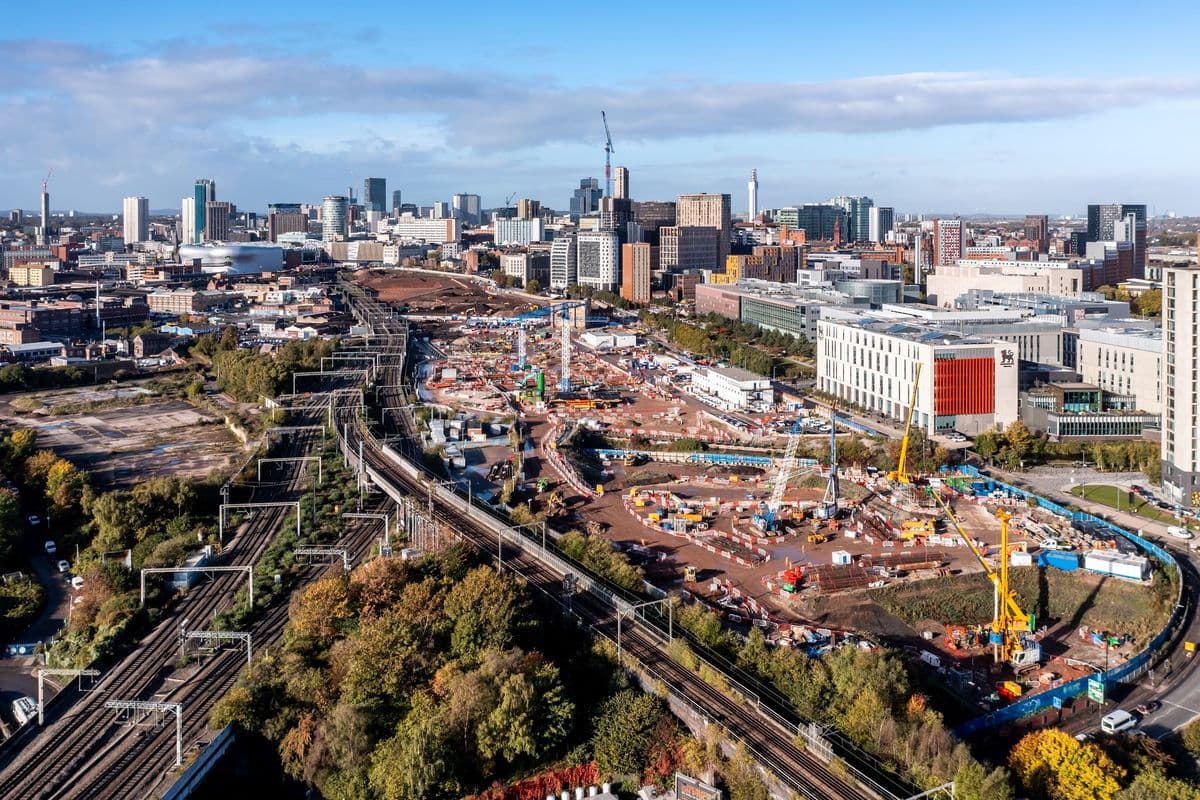
Most announced AI data center CAPEX won’t reach commissioning by 2030, because power and deliverability fail long before concrete does. The market is now split between places that can energise new load inside 24 to 48 months, and places that can’t get a firm grid date at any price. You’ll leave with a numbers-first view of where MW is actually buildable, what it costs, how long it takes, and which gates kill projects so you can price, finance, and resource against reality.
In this article
Global Pipeline Map
Power deliverability now decides where data centre work is real. Grid queue time and substation scope tell you more than any "announced MW" map. JLL Research (via SymTerra, 2026) puts grid connection waits at about 8 years in London and 10 years in Amsterdam for a new 50MW facility. Those markets still throw out tenders, but plenty of schemes can't start enabling works on time. Of the roughly 16GW slated to complete in 2026 across ~140 projects tracked by Sightline Climate, only ~5GW was actively under construction at the point of that analysis. Sightline estimates 30–50% of that pipeline will slip into 2027 or later.
The map makes the concentration visible. BloombergNEF tracked 23.1GW of IT capacity under active construction globally at end-September 2025, spread across 831 sites. The US alone held 15.9GW of that total. The Americas as a whole accounted for 17GW across 311 locations. EMEA and APAC together held 6.1GW, split across 541 sites, more locations, far less MW per site. That gap matters for teams pricing work outside North America: average site size in EMEA and APAC is roughly a quarter of the US equivalent, which changes procurement strategy, gang sizes, and subcontract packaging. The pipeline is heavily concentrated, and the US is its centre of gravity.
Pipeline volume can still be misleading inside the busiest regions. CBRE's year-end 2025 snapshot puts US primary-market capacity under construction at 5,994.4MW, down 5.7% from 6,350MW at end-2024, the first contraction since 2020, and links the slowdown to permitting, zoning, and power procurement delays. Northern Virginia dropped 29% year-on-year; Hillsboro, Oregon fell 15%; Silicon Valley fell 14%. That is the "permit illusion" in practice. Your precon team gets dragged into bids that won't award for months, while delivery teams sit waiting for client-side power commitments. The fallout rate from announced CAPEX to active construction is not small: only about 1 in 3 announced MW in the 2026 pipeline had a spade in the ground at the time Sightline tracked it.
| Market | What tends to block mobilisation | What to verify before you price hard | Evidence |
|---|---|---|---|
| London | Grid queue and substation delivery dates. Powered land in London costs up to 8.8x tertiary UK sites | Connection offer position, scope split for HV works | JLL EMEA Data Centre Report (Mar 2026): ~8-year grid wait; 302MW in pipeline |
| Amsterdam | Grid queue for new large loads. Data centres already consume more than 40% of local electricity demand | Any firm utility dates, not "target quarters" | JLL Research via SymTerra (2026): ~10-year grid wait; Global Data Center Hub (Apr 2026) |
| Dublin | New connections require on-site generation or batteries capable of meeting full electricity demand | Client's plan for on-site power plant, consents, and planning status | JLL EMEA Data Centre Report (Mar 2026); CRU ruling Dec 2025 |
| US primary hubs | Permitting, zoning, power procurement drag, and local opposition. $64B of projects currently blocked or delayed across 54 local moratoriums | Permits path, utility upgrades, client power commitment in writing | Data Center Watch; CBRE YE 2025; Sightline Climate (Feb 2026) |
| Riyadh | 1.4GW under construction and 5.2GW planned, but grid reinforcement and water supply for cooling are critical path items at this scale | Substation ownership, HV scope split, water rights or dry-cooler strategy | JLL EMEA Data Centre Report (Mar 2026) |
| Frankfurt | Berlin alone has 2.8GW of pending grid connection requests, more than the city's entire current grid capacity. Frankfurt is tighter than headline MW figures suggest | Grid offer letter, DNO confirmation, and renewable supply route (50% renewable required from Jan 2024; 100% by Jan 2027) | Helm & Nagel (May 2025); 279MW in Frankfurt pipeline (JLL, Mar 2026) |
Five Headline Numbers
The real constraint on data centre work is power-ready, permit-ready sites. Sightline Climate tracks roughly 16GW slated for 2026 delivery across about 140 projects, but only about 5GW is under construction today. Treat the other 11GW as a lead, not live workload, until there is a grid slot, a substation route, and long-leads placed. Sightline's own track record supports that caution: 26% of expected 2025 capacity slipped, and a further 10% pushed back commercial operation dates quietly. It projects 30–50% of the 2026 pipeline will miss schedule.
"Under construction" gets quoted two ways. BloombergNEF reports 23.1GW of data centre IT capacity under construction at end-September 2025, across 831 active construction sites. The Americas alone account for 17GW of that across 311 locations; EMEA 2.9GW across 258 sites; APAC 3.2GW across 283. MSCI reports more than 47,000MW under construction using a broader definition of "new capacity," with that pipeline representing an estimated $550 billion in end value. Don't argue about which is right. Ask what definition the client is using before you price prelims, commissioning, and power scope.
| Measure | Number | What it includes | Source |
|---|---|---|---|
| IT capacity under construction | 23.1GW | IT load basis, not total facility draw | BloombergNEF, end-Sep 2025 |
| New capacity under construction (broad) | 47,000MW+ | Broader "new capacity" lens | MSCI, 2025-12-03 |
Cost per MW is now a commercial trap if you treat it as one benchmark. JLL's 2026 outlook quotes a global average of $11.3m per MW for shell and core, up from $7.7m in 2020, a 7% annual rise. AI-optimised facilities clear $20m per MW once you add higher power density and liquid cooling. All-in AI builds including GPU fit-out run $30–40m per MW. Power infrastructure drives 30–40% of total facility cost, so grid scope and equipment selection decide your risk far more than the civils package does. Turner and Townsend's 2025 cost index puts Tokyo at $15.2 per watt and Singapore at $14.5 per watt, the two most expensive markets globally, with Dublin and Madrid at $10.0 per watt at the other end of the tier-one range. Those are shell-and-core figures only. Tenant AI fit-out adds up to $25m per MW on top.
Programme risk sits in permitting, power, and long-leads. Build Energy Hub puts build-to-commissioning at 18 to 30 months, with a full development cycle of 3 to 6 years once you add site selection and permitting. Average grid connection wait times in primary markets now exceed four years, per JLL. In Western Europe the queue runs 7 to 10 years in established hubs, against a construction period of roughly 2 years. That sequencing mismatch is where projects stall, not on site. Transformer and chiller lead times are now a tender question, not a procurement detail, because late orders force unsafe commissioning compression. Large power transformers currently average 128 weeks from order to delivery, and generator step-up units run to 144 weeks, according to Wood Mackenzie's Q2 2025 survey. A 52-week factory quote can become 74 weeks to site once you add submittal revisions, missed factory acceptance test slots, and logistics. JLL reports average global equipment lead time across all categories is now 33 weeks, roughly 50% above pre-2020 levels.
Power-secured projects are not the same as bankable projects. JLL reports 77% of the global construction pipeline is pre-committed to tenants, and global occupancy sits at 97%. But more than half of projects in 2025 experienced construction delays of three months or more. Pre-commitment does not protect programme. What protects programme is a confirmed grid connection date, long-leads on order, and commissioning milestones tied to energisation, not practical completion. On a 60MW facility, a one-month slip costs the owner roughly $14.2m in lost revenue. That figure sharpens every conversation about float and contingency.
Price and programme to a power-ready date, not a start-on-site date. The gap between "announced MW" and "buildable MW" is where margin leaks.
Regional Deep Dives
Regional risk now comes down to one question: can the project get power on time. Hyperscale build time is now running at 18 to 24 months on average, up from about 12 months before the current squeeze on equipment and permits. Source: MarketReportsWorld (6 Apr 2026).
Europe can show a big pipeline but still fail the deliverability test at the substation. Cushman & Wakefield puts the EMEA development pipeline at approaching 15GW and says growth is becoming selective because power and regulation decide what can start. Source: Cushman & Wakefield (17 Feb 2026).
| Market signal | What it does to your job | What to lock down before you price | Evidence |
|---|---|---|---|
| Large “pipeline” numbers in core hubs | You carry prelims and team cost while power dates drift | Client-side utility milestones, energisation dates, and who owns delay cost | EMEA pipeline approaching 15GW, selective growth driven by power and regulation (C&W, Feb 2026) |
| Major grid request backlogs | Commissioning gets resequenced and you lose productivity across MEP trades | Switchgear and protection scope split, temporary power strategy, staged testing plan | Berlin grid connection requests reported at 2.8GW pending (Helm & Nagel, May 2025) |
| Secondary-market spillover | Faster starts, but thinner local supply chains and supervision load rises | Labour plan by trade, prefab strategy, and commissioning resource map | Singapore constraints and Johor spillover cited in this section (Underhyped.ai, Feb 2026; Japan Times, Feb 2026) |
APAC risk is now as much about consent and regulation as it is about grid. Singapore allocated only 80MW in the first DC-CFA round, and Johor is already seeing local protests about dust and siting close to homes. Sources: Underhyped.ai (Feb 2026) and Japan Times (8 Feb 2026).
Community friction creates a new cost line. Dust control, traffic management, and restricted working hours land straight on prelims and productivity, and they hit hardest on fast-track fit-out and MEP installation.
Evidence: Johor protest reporting tied to dust and proximity to homes (Japan Times, Feb 2026).
Middle East programmes move fast because land, permits, and utility decisions get aligned early, but delivery capacity is the constraint. Ken Research forecasts Middle East data centre capacity rising about 6x over five years to around 6.1GW. Treat early grid interface scope as the first commercial gate, not the last design package. Source: Ken Research (Jan 2026).
Price and plan around “energised MW”, not “start on site”. Archdesk teams see the cleanest delivery where contracts tie payment and programme to power-on milestones, long-lead procurement dates, and a defined integrated systems testing plan. Put those dates in the tender clarifications, or you’ll carry the risk in prelims and resequencing.
Power Is the Gate
Power is the critical path, and the attrition rate is what catches project teams out. Of all US interconnection queue entrants from 2000 to 2019, only 13% reached commercial operation by end-2024. 77% withdrew. That data comes from Lawrence Berkeley National Laboratory, cited by Hanwha Data Centers (Feb 2026). Announced megawatts can die after you have spent design fees, bid cost, and early procurement budget.
The US queue now averages roughly five years from submission to commercial operation, more than double the wait of 15 years ago, per LBNL research cited by Hanwha Data Centers (Feb 2026). A typical data center build takes 18 to 30 months from concept to commissioning. The mismatch is not marginal. Grid queue time is three to four times the construction programme. That gap is where announced projects die and where construction contracts stall at practical completion while the energisation date drifts. A Deloitte survey of 120 US power company and data center executives found 72% rated power and grid capacity as very or extremely challenging, with some connection requests facing waits of up to seven years.
Western Europe has the same commercial problem with a different root cause. Grid connection queues in core markets run about 7 to 10 years, against roughly 2 years to build, according to Global Data Center Hub (Apr 2026). More than 40% of Western Europe's distribution networks are over 40 years old. Reinforcement cycles are long, and the local concentration of demand is extreme: Dublin has approached 80% of local electricity consumption from data centers, with Amsterdam, London, and Frankfurt each at roughly one-third to above 40%. JLL reports grid lead times of up to 10 years in established European hubs, and powered land in primary markets already averages 1.7 times the cost of secondary locations. The job risk for construction teams is resequencing. You finish civil and shell work, then carry prelims and management cost while the MEP completion date drifts.
| Power route | Realistic time-to-power | Key risk for construction | Bankable by 2030? |
|---|---|---|---|
| Utility connection | 4–10 years (queue-dependent by region) | Energisation date is soft; prelims and overhead continue until grid delivers | Yes, where queue position is confirmed and substation work is contracted |
| Contracted PPA | Secures energy pricing; does not bypass local substation queue | PPA tenor is typically 15–20 years; US solar P25 prices rose ~9% YoY in 2025 | Yes for cost certainty; no for schedule certainty on its own |
| Behind-the-meter gas | Fastest route to power; operational within months if turbines are available | Air permit exposure under EPA AP-42; client carbon clause risk; xAI faced Clean Air Act enforcement claims for running 35 gas turbines against a permit for 15 | Bankable for bridging only; lenders require a path to compliant permanent power |
| Nuclear SMR | Earliest realistic delivery 2027–2030 for committed projects; most SMR designs remain pre-NRC licence approval | NRC licensing and first-of-a-kind construction risk; World Nuclear Association notes SMRs are defined as under 300 MWe and rely on factory fabrication to compress timelines | Not bankable as primary power on a construction schedule before 2028 at the earliest for named projects |
| Hybrid microgrid and storage | Can bridge commissioning and testing phases; does not replace permanent connection | Needs a clear operating model for handover and staged IST testing; BESS sizing must account for AI load volatility (AI training drives load swings of ~40% versus ~10–15% for traditional workloads) | Bankable as a commissioning bridge; increasingly required by lenders in constrained markets |
The SMR pipeline is real but its delivery window does not fit most construction programmes being priced today. Named projects with committed orderbooks include the Constellation Three Mile Island Unit 1 restart at 837 MW (targeted 2027, secured under a 20-year Microsoft PPA worth approximately $1B) and the Amazon–X-energy Phase 1 at 500 MW (targeted 2028). TerraPower's Natrium plant at 345 MW targets 2028 to 2030. A construction permit has been issued by the NRC for the Kemmerer Power Station Unit 1 in Wyoming. Beyond these named projects, the World Nuclear Association notes that most SMR designs are still moving through regulatory development. Lenders will not take SMR power as primary security on a facility that breaks ground in 2025 or 2026. The bankable window for SMR as primary power supply opens around 2028, for projects that have already secured confirmed positions in vendor orderbooks now.
Behind-the-meter gas moves fastest but the permit exposure is real and quantified. xAI's Memphis Colossus campus is the clearest case study. The facility reached 200 MW operational capacity in roughly six months by repurposing a former factory, relying on gas turbine rental firms. The Southern Environmental Law Center alleged xAI had 35 gas turbines operating against a permit for 15, and environmental groups filed Clean Air Act enforcement claims. The EPA's AP-42 compilation sets the emissions factor baseline that regulators use to assess stationary combustion sources. Any behind-the-meter gas strategy that exceeds permitted thresholds creates a project-level enforcement risk that lenders will price into their terms or exclude entirely.
Source: Hanwha Data Centers (Feb 2026), citing LBNL
Source: Global Data Center Hub (Apr 2026)
Practical takeaway for operators: don't price a data centre job off a programme that treats energisation as a footnote. Ask for the client's dated power milestones, confirm which route to power is being used, and check whether behind-the-meter generation has a valid permit. Then build your tender around those milestones. Archdesk teams track power dates as commercial dates alongside construction milestones, so grid drift surfaces early and you can protect prelims, labour plans, and commissioning productivity before the programme bleeds cost.
Construction Economics 2026
AI-ready data halls don't go over budget on the frame. They go over budget on MEP density. JLL puts average global shell-and-core at $10.7m per MW in 2025, up from $7.7m per MW in 2020, a 7% CAGR (JLL, 2026 Global Data Center Outlook). For 2026, JLL forecasts a further 6% rise to $11.3m per MW. Pricing stays safe only if your estimate splits "normal cloud" from liquid-cooled, high-density scope, then carries separate productivity and commissioning allowances.
| Market | Indicative shell-and-core cost | What tends to drive it |
|---|---|---|
| Singapore | $16.0m/MW | Land pressure, vertical builds, complex servicing |
| UK | $14.0m/MW | Planning constraints, higher prelims and logistics |
| Germany | $14.0m/MW | High spec compliance, labour rates, permit overhead |
| USA | $12.0m/MW | Market depth, repeatable design, delivery capacity |
| India | $6.5m/MW | Lower labour cost, simpler typologies |
The cost gap between standard and AI-optimised builds is wider than most estimates assume. Archdesk benchmarks a standard data centre at ~$11.3m per MW. An AI-optimised facility at 40–80 kW rack density clears $20m per MW, excluding IT equipment and land. Cooling is the biggest driver of that gap: traditional air-cooled heat rejection runs ~$1.8m per MW, while liquid-cooled AI halls cost $4.5m to $5.2m per MW once you account for CDUs, secondary pumping loops, and dry coolers (Archdesk, "Why AI Data Centers Are So Expensive", Apr 2026). Turner & Townsend's 2025 cost index confirms the cooling shift in the cost structure: air-cooled builds allocate 22% of cost to mechanical; liquid-cooled builds allocate 33%, with electrical dropping from 54% to 48% as a share.
Programme risk sits in electrical procurement and commissioning. RCRTech (Apr 2026), citing Bloomberg, reports nearly half of planned US data centre builds are delayed by shortages of transformers, switchgear, and backup storage components. That delay hits you twice: first in prelims and supervision, then again in MEP resequencing when crews return to finish incomplete systems.
The timeline chart makes the sequencing problem visible. In Ireland, grid energisation alone adds 10 months to the back end of the programme, longer than the entire MEP fit-out phase. In Virginia, it adds 6 months. The concrete and steel are never the problem. JLL confirms that more than half of projects in 2025 experienced construction delays of three months or more, and average global equipment lead times are now 33 weeks, roughly 50% higher than pre-2020 levels (JLL, 2026 Global Data Center Outlook). The hold-ups are in the substation, the switchroom, and the commissioning suite.
Commissioning duration expands sharply for AI builds. Integrated Systems Testing (IST) takes 4–6 weeks for a standard air-cooled hall. For a liquid-cooled AI hall it runs 10–14 weeks, because hydraulic balancing, leak detection across thousands of connections, and staged thermal load tests cannot be compressed (Archdesk, Apr 2026). On a 60 MW facility, a one-month programme slip costs the owner roughly $14.2m in lost revenue, around $3.55m per week. That number reframes IST from a handover formality into a commercial milestone that needs its own resourcing plan.
Copper is a small cost line but a big supply risk. RCRTech (Apr 2026) cites data centre copper demand at 5,000 to 15,000 tonnes for traditional builds, rising to as much as 50,000 tonnes for high-density AI campuses. The International Copper Study Group projects a 2026 deficit of 150,000 to 400,000 metric tonnes. That's why cable, busbar, switchgear and transformers keep slipping, even when your civils programme is clean.
Treat HV kit, switchgear, busbar and major cooling plant as "programme items", not "procurement items". If they slip, your MEP gangs slip, your test plan slips, and your margin goes with it.
Lock down three things before you price: the energisation milestone and who owns delay cost, the commissioning plan if permanent power isn't there, and the long-lead package dates linked to your resourcing plan. Archdesk helps teams run weekly procurement-to-programme checks, so "power package drift" shows up early, before it turns into abortive visits and repeat testing.
Delivery Model Reality
The contract label doesn’t protect your programme. Locked design and early electrical procurement does. ENR Top 400 contractor commentary and public procurement filings from 2025 put design-build and EPC at about 70% of hyperscale starts. The driver is simple: owners want one party to carry the electrical programme risk. For contractors, the commercial tell is whether the employer will freeze MEP scope before the key purchase orders go in.
Change orders track delivery discipline, not procurement route. ENR project tracking puts change orders at 3% to 5% of contract value on design-build jobs that lock design packages at about 60% completion. GC jobs that develop design in parallel run at 8% to 14%. The gap hits margin twice: you carry the QS burden of pricing churn, and you lose labour output as trades rework around late kit decisions.
The real critical path is switchgear and transformers, then commissioning. Wood Mackenzie’s Q2 2025 survey puts large power transformers at 128 weeks and generator step-up units at 144 weeks. Switchgear sits at 45 to 80 weeks. That is why good teams run two linked programmes: one for procurement slots and vendor dates, and one for site assembly. You only tie them together when kit is in-country and the design is frozen to the manufacturer’s data.
| Package | Lead time | What trips contractors up |
|---|---|---|
| Large power transformers | 128 weeks | Design not frozen to OEM data, then factory slot slips |
| Generator step-up (GSU) units | 144 weeks | Late protection and earthing decisions drive rework |
| Switchgear | 45–80 weeks | Client changes loads and fault levels, panels get held |
Takeaway for bidders: price around a month-2 procurement gate, not a “24-month build”. Put a clear tender assumption in your clarifications: switchgear and transformer POs placed by month 2, plus a change gate tied to those datasheets. Archdesk teams track package maturity, vendor dates, and change control in one place, so you can spot a “live design” job early and protect prelims and trade output before you commit resources.
If the employer won’t freeze MEP scope before long-lead orders, you don’t have float. You just have future disruption you haven’t priced.
Hyperscaler CAPEX Matrix
CAPEX guidance tells you demand, not where your next start will land. The projects that move are the ones with visible execution signals: land control, planning submissions, power offtake, and early MEP procurement.
The hyperscalers have committed numbers that dwarf anything the construction industry has absorbed before. Amazon, Google, Meta, and Microsoft disclosed combined 2026 capex guidance of roughly $635–670 billion. Of that, approximately $240 billion flows to physical infrastructure: power, cooling, buildings, land, and construction. That is the addressable market for contractors and developers. The rest goes to IT equipment, primarily GPU servers (Avanza Energy, Mar 2026). Fast starts now come from power strategy, not faster concrete. Alphabet's $4.75 billion acquisition of Intersect Power signals where risk is shifting: from grid queues into behind-the-meter generation and storage packages. Source: Datacenter Knowledge (Jan 2026); pv magazine USA (Mar 2026).
Geography matters more than the headline numbers. The US accounts for 15.9 GW of the 23.1 GW currently under construction globally, and hyperscalers have pre-committed 92% of all US capacity under construction (BloombergNEF, Mar 2026; CBRE via Introl, Feb 2026). That concentration is tightening contractor capacity in established hubs. Northern Virginia construction fell 29% in 2025 as power and land constraints bit. Hillsboro and Silicon Valley each contracted by 14–15% (CBRE via Introl, Feb 2026). The opportunity has moved: nearly two-thirds of new North American capacity is now being developed outside those legacy markets (JLL, Mar 2026). Microsoft's 15-building campus approved at the former Foxconn site in Mount Pleasant, Wisconsin, and Meta's 1 GW groundbreak in Lebanon, Indiana, are the clearest signals of where the next wave of work is landing (Datacenter Knowledge, Mar 2026).
| Execution signal you can verify | What it means for your margin | What to lock down before you price | Evidence |
|---|---|---|---|
| Power offtake or owned generation | More work shifts into HV interfaces, protection, fuel, and controls. Fewer "waiting for the utility" claims land cleanly. | Single-line diagram responsibility, protection settings ownership, staged energisation plan, temporary power scope. | Alphabet acquired Intersect Power for $4.75B to secure generation capacity directly (Datacenter Knowledge, Jan 2026; pv magazine USA, Mar 2026). |
| Planning consent with conditions | Conditions drive late scope into generators, batteries, acoustic, emissions, and fire strategy. That's where variations hide. | Condition tracker in your scope, who owns discharge lead-times, and what "ready for commissioning" means in writing. | Three Dublin consents totalling 73MW with on-site power requirements. Ireland's CRU lifted its moratorium in Dec 2025 but mandates on-site generation or batteries for any new grid connection (JLL EMEA, Mar 2026). |
| Procurement releases on long-lead MEP | Design changes after order turn into abortive work, re-test, and re-visit. That hits productivity first, not prelims. | Design freeze gates tied to OEM data, approved vendor list, and who pays for factory slot slips. | Utility transformers (30MVA+): 16–22 months. Medium-voltage switchgear (15kV): 12–16 months. Standby generators (2MW+): 10–14 months. Transformer unit prices up 77% since 2019 (Wood Mackenzie, Q2 2025; Archdesk, Apr 2026). |
| EMEA regional signals: Saudi and Middle East | Design-build share is highest in this region (85%+). Single-point accountability on power and MEP is non-negotiable for margins to hold. | Verify utility connection timeline against construction programme. Do not price prelims assuming grid-ready day one. | Saudi Arabia's Riyadh has 1.4 GW under construction and 5.2 GW planned. Nine Middle East metros total 2.2 GW under construction against only 1 GW existing capacity (JLL EMEA, Mar 2026). |
Delivery route changes the commercial profile. Design-build and EPC make up about 70% of hyperscale starts, based on ENR Top 400 commentary and 2025 procurement filings. That matters because change orders track discipline, not effort. Source: ENR (2025).
The margin risk varies sharply by where you are working. In FLAP-D markets (Frankfurt, London, Amsterdam, Paris, Dublin), vacancy is at a record low of 6.3% and 83% of the pipeline is pre-let (JLL EMEA, Mar 2026). Pre-commitment at those occupancy rates means clients hold pricing power at tender. Contractors who have already built a track record in those markets will defend margin; new entrants pricing to win will not. The Middle East is the mirror image: 2.2 GW under construction against 1 GW of existing capacity, with contractor capacity still catching up to the pipeline. That gap favours contractors who can mobilise quickly with the right MEP supply chain already in place.
Treat "CAPEX" as noise until you can point to dated power milestones and released long-lead orders. Archdesk teams track those signals against the cost plan so you can price prelims, testing, and re-sequencing risk before it eats the margin.
2030 Outlook + Archdesk
Most announced data centre work never becomes live construction, so your bid pipeline needs a power-and-consent filter before you spend precon hours. Dell’Oro flagged more than 70GW of public AI data centre announcements by late 2025 and warned a meaningful share won’t progress. Heatmap Pro counted at least 25 US cancellations in 2025, linked to at least 4.7GW of potential electricity demand, reported via Gizmodo (Jan 2026).
Delivery route now drives your change-order exposure more than the size of the job. ENR project tracking puts change orders at 3% to 5% of contract value on design-build jobs that lock design packages at about 60% completion. Comparable GC routes that develop design live run at 8% to 14% (ENR tracking, 2025).
Long-lead electrical kit decides whether you hit the energisation date, so you need procurement gates that match factory reality. Wood Mackenzie’s Q2 2025 survey puts large power transformers at 128 weeks, generator step-up units at 144 weeks, and switchgear at 45 to 80 weeks. Your programme only becomes real once the design is frozen to OEM data and factory slots are booked.
| Package | Lead time | What to lock down before you price |
|---|---|---|
| Large power transformers | 128 weeks | OEM data freeze, protection and earthing decisions, who pays if the factory slot slips |
| Generator step-up units | 144 weeks | Approved vendor list, interface scope with civils and bunding, testing plan and access strategy |
| Switchgear | 45–80 weeks | Final load list and fault levels, panel schedule freeze, spares strategy and commissioning sequencing |
Treat power, consent, and long-lead procurement as three contract gates, not “client risks”. Archdesk helps by putting utility milestones, design freeze, and factory-slot dates on the same view as cost-to-complete and programme. That is how you stop a soft energisation date turning into unpaid prelims and repeat commissioning visits.
Frequently Asked Questions
What does a hyperscale data centre cost per MW to build in 2026?
JLL forecasts global shell-and-core at about $11.3m per MW in 2026, up from $7.7m per MW in 2020. That average hides a big split: liquid-cooled AI halls with 50kW+ rack densities cost far more than standard cloud fit-out. Your estimate needs separate line items for "normal cloud" and "AI-ready" scope, or your MEP package will blow the budget.
How long does it take to build a hyperscale data centre right now?
Average hyperscale build time is running at 18 to 24 months, up from about 12 months before the current squeeze on switchgear and permits. The programme extension comes mainly from electrical equipment lead times, not civil or structural work. Grid connection waits add further delay on top: 8 years in London, 10 years in Amsterdam for a new 50MW facility.
Why do so many announced data centre projects never start on site?
Only 13% of US interconnection queue entrants from 2000 to 2019 reached commercial operation by end-2024. 77% withdrew, according to Lawrence Berkeley National Laboratory data. The main killer is power: projects that can't secure a grid slot and substation route die after the developer has already spent design fees and bid costs. Contractors should filter their bid pipeline by power status and planning consent before committing precon hours.
What are the biggest subcontractor bottlenecks on data centre projects?
MEP packages and switchgear lead times are the two items that stall programmes most often. Electrical procurement is now the critical path on most hyperscale jobs. Contractors who place long-lead electrical orders before full design completion cut programme risk. Projects that wait for a frozen design before ordering transformers and switchgear routinely slip by months.
Design-build or traditional GC: which delivery model are hyperscalers choosing?
Design-build and EPC account for about 70% of hyperscale starts, based on ENR Top 400 data and public procurement filings from 2025. Owners want one party to carry the electrical programme risk. The commercial signal to watch is whether the employer lets you freeze design packages at about 60% completion. Jobs that freeze early see change orders around 3 to 5% of contract value, while GMP contracts with incomplete design hit 8 to 14%.
How much of the global data centre pipeline is actually under construction today?
Sightline Climate tracks roughly 16GW slated for 2026 delivery across about 140 projects, but only about 5GW is under construction. The other 11GW is pipeline, not live workload. Treat any project without a confirmed grid slot, a substation route, and long-leads placed as a lead rather than a job you can resource against.
What should contractors check before bidding data centre work in power-constrained markets?
Grid queue time and substation scope tell you more than the announced MW figure. London grid waits run about 8 years and Amsterdam about 10 years for a 50MW facility. Ask the developer three questions before you spend precon money: is there a signed grid connection offer, is planning consent in place, and have electrical long-leads been ordered. If any answer is no, price the risk of a delayed start into your prelims or walk away.
Where is data centre construction growing fastest outside the US?
The Middle East (UAE, Saudi, Qatar), parts of APAC (Johor in Malaysia, India, Japan, Australia), and emerging European markets like Iberia are all seeing new pipeline. Singapore's moratorium pushed work into Johor. The common thread across all these markets is the same: power availability and permit timelines decide which projects move, not demand announcements from hyperscalers.