The rest run fifty live sites on email threads and a master spreadsheet nobody quite trusts.
One system for every site: capex budgets and approvals, contractor bidding, cost control, progress from site, handover records. You can see where every opening, refit and closure stands, every day, across the whole estate.
Trusted by construction companies of every size, worldwide
Built for how estate programs actually get delivered
You approve the capex and the opening date. Then the program runs through dozens of contractors, landlords and site teams, and every week somewhere a date moves.
Every site in the estate, one program
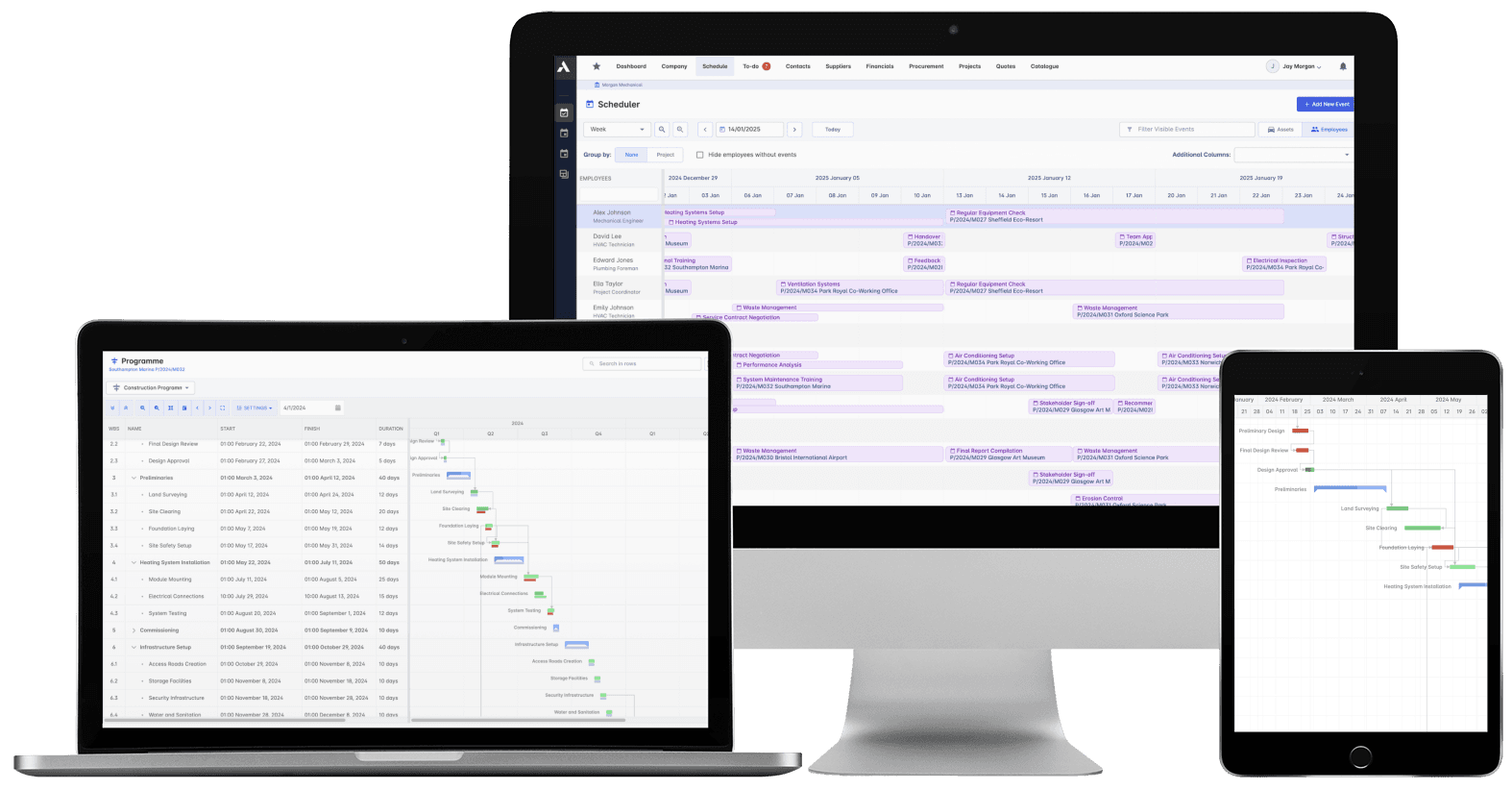
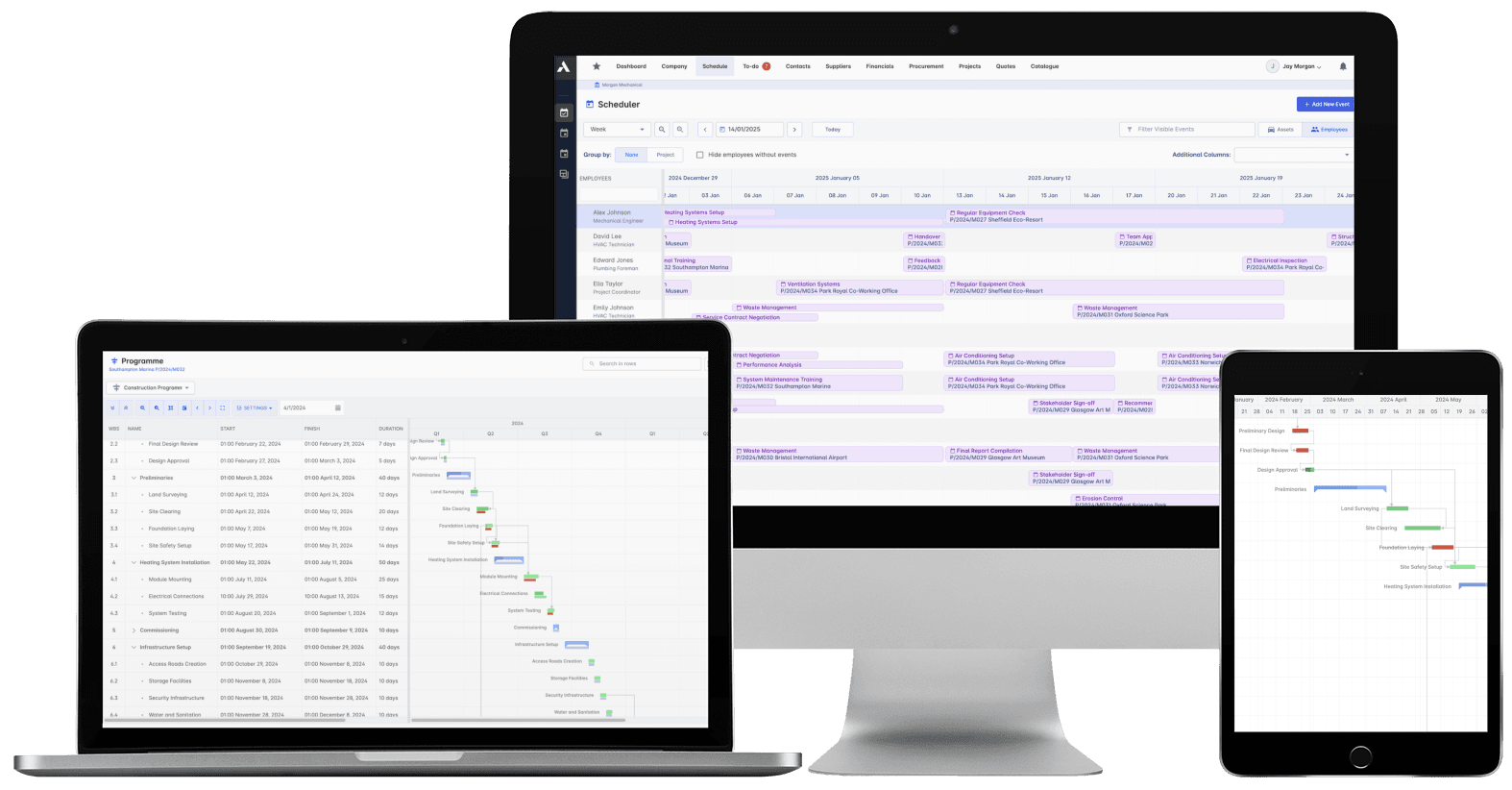
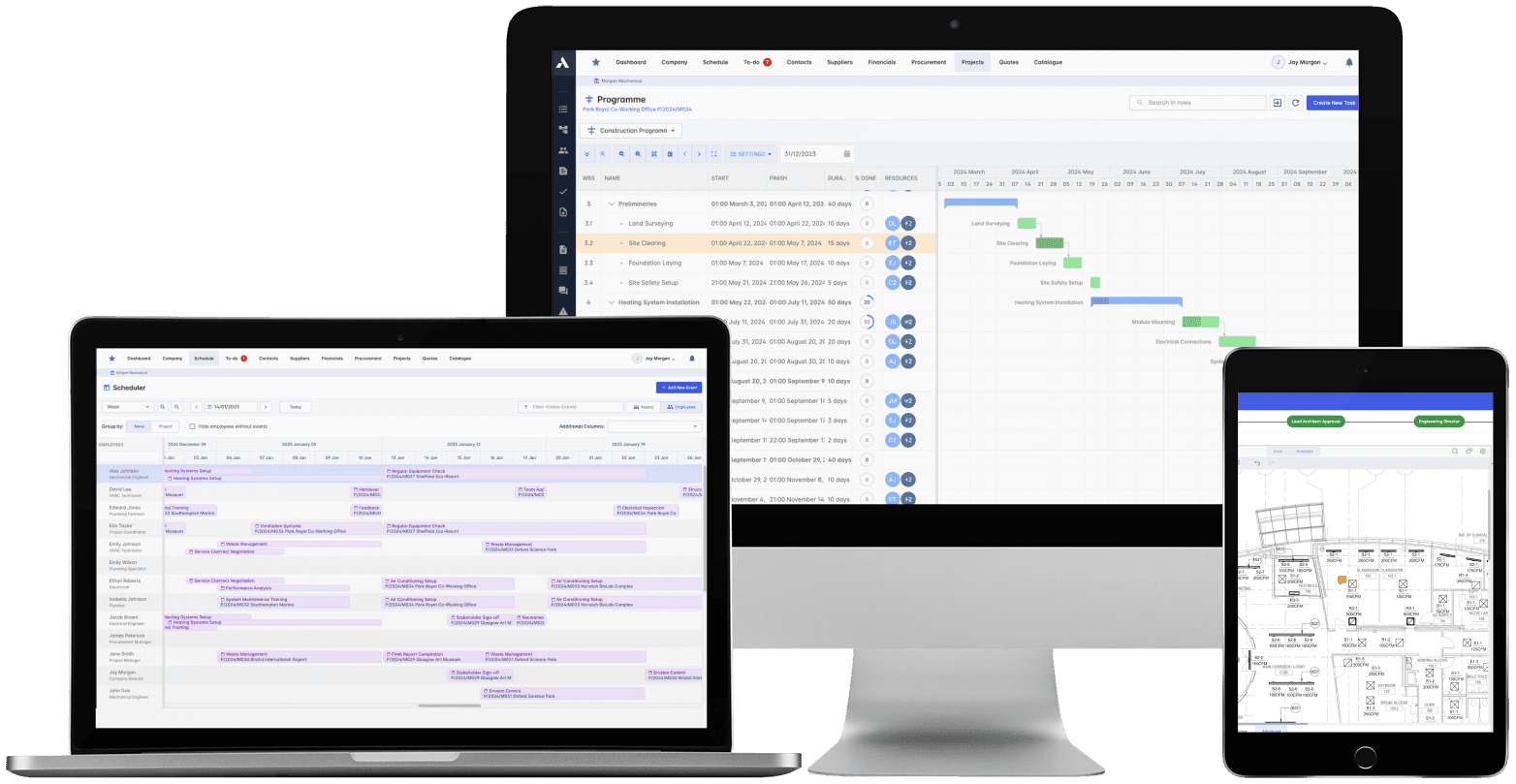
Openings, refits, rebrands and closures sit in one schedule, each against its trading deadline. Progress lands from every site daily, so you plan from where each project actually is, and a slipping site shows up the week it slips, not in next month's report.
Capex visible from the day it is committed
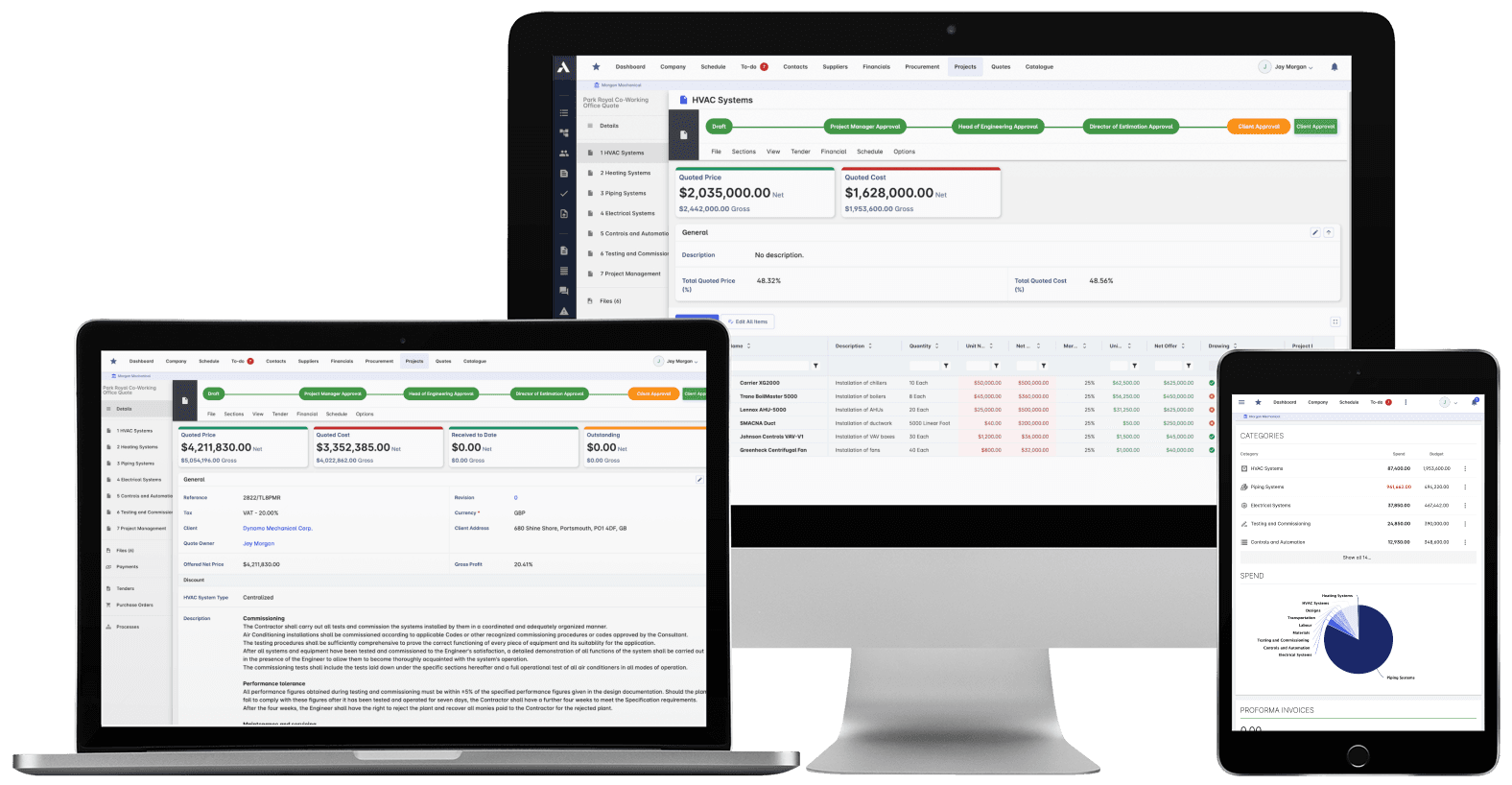
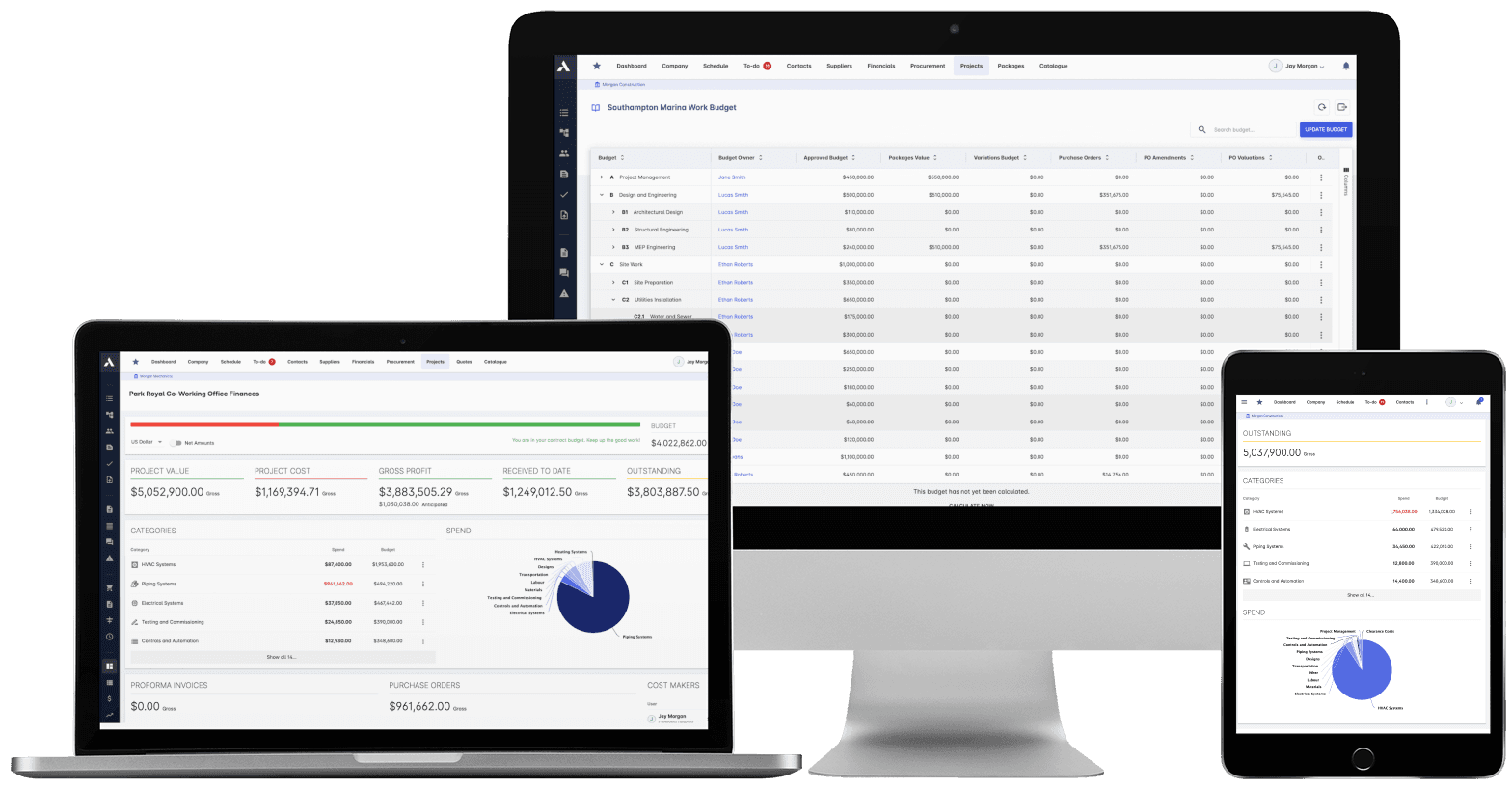
Every site opens against an approved budget. Contractor orders, FF&E and fees hit it as committed cost the moment they are raised, and forecast final cost rolls up from site to program, so you see which sites are drifting while there is still time to act.
Contractors held to the same standard
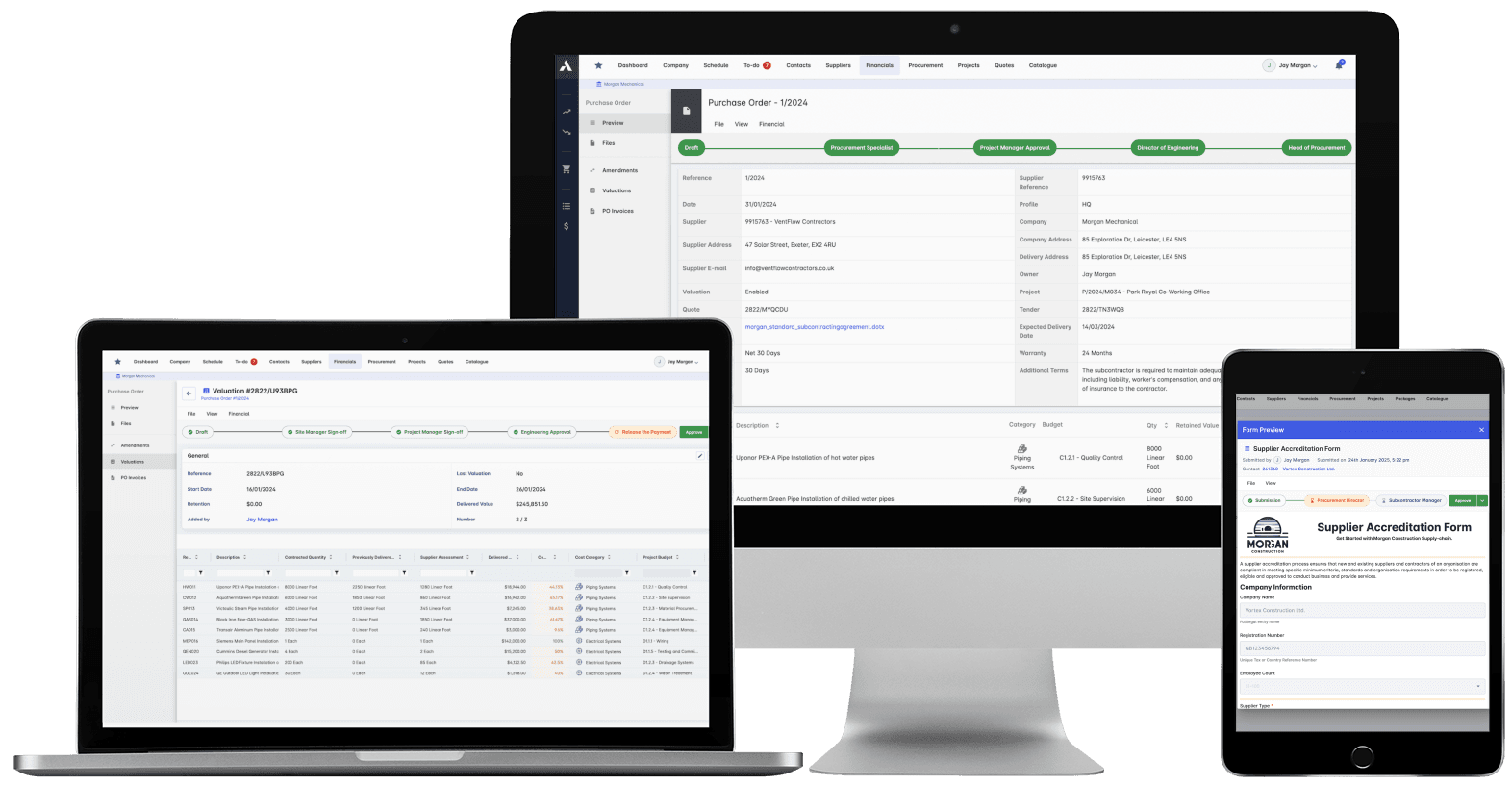
Put each site out to bid against the same scope, appoint against the budget, and certify pay applications from recorded progress, not claims. Every contractor's cost and delivery record builds across sites, so the next appointment is made on evidence.
One system for the whole estate
Archdesk is built for retail chains, banks, hospitality groups and other multi-site owners who run their own capital works: new openings, refits, rebrands and closures across an estate of owned and leased properties. Estate directors, project managers, cost managers and finance work from the same records, so every site opens against an approved budget, every contractor cost lands on the program the day it is committed, and the record of each property builds from the first survey to handover and beyond.
Working with delivery partners on your program? Archdesk also serves:
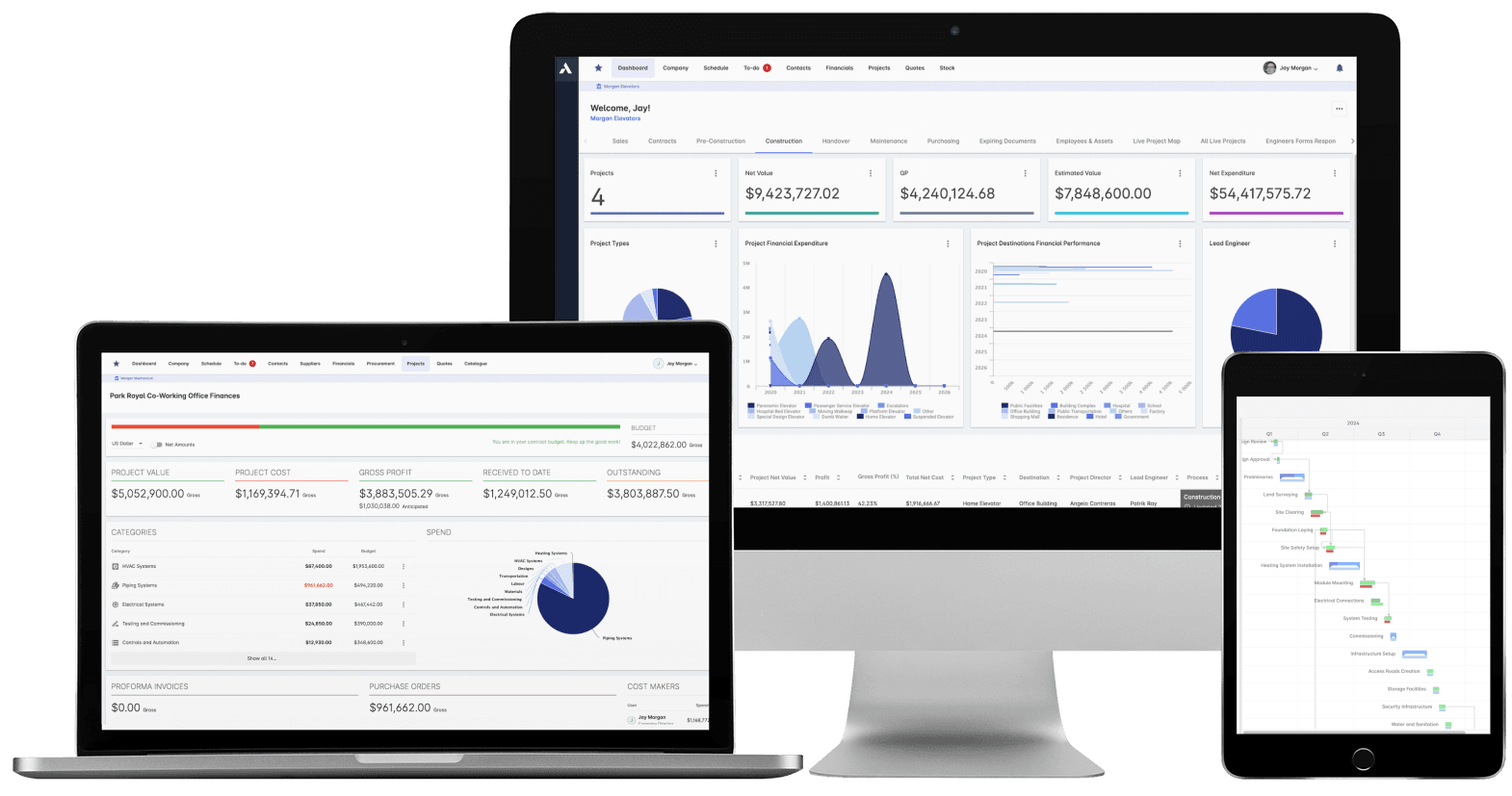
The whole program on one screen. Cost, progress and forecast roll up live from every site, so the board pack is a view you open, not a month-end assembly job.
One system from approval to opening day
The budget you approved and the cost you open with are the same record. Every stage in between writes to it.
1
Feasibility & approval
The site surveyed, scoped and budgeted, with the capex approval and its assumptions on the record.
2
Design & approvals
Your format applied to the site, with landlord and statutory approvals tracked against the dates that gate the program.
3
Bid & appoint
Contractors bid against the same scope, and the winning price becomes the budget the site is tracked against.
4
Fit-out & commissioning
Progress, cost and site records land daily against the opening date, with changes priced and approved before they are built.
5
Handover & opening
Punch items closed, certificates and warranties filed against the property, and the site handed to operations ready to trade.
6
Operate & decommission
The record stays with the asset through refits to lease end, so closures and dilapidations start from facts, not memory.
Solutions for a Modern Estate Team
Construction Job Costing
What you priced is what you track. The winning estimate becomes the budget, actuals land against it line by line, and what jobs really cost feeds the next bid.
The schedule connected to what it depends on: long-lead deliveries on the tasks they gate, crews planned across every live job, slippage shown with its cost.
Buy-out without the gaps: RFQs from your BOQ lines, bids back comparable, exclusions visible before award. Then every PO and subcontract lands on the budget the moment it's raised.
Committed at the PO, earned as work is delivered, invoiced months later. See all three stages against every budget line, so variance is a decision you make, not a number you explain.
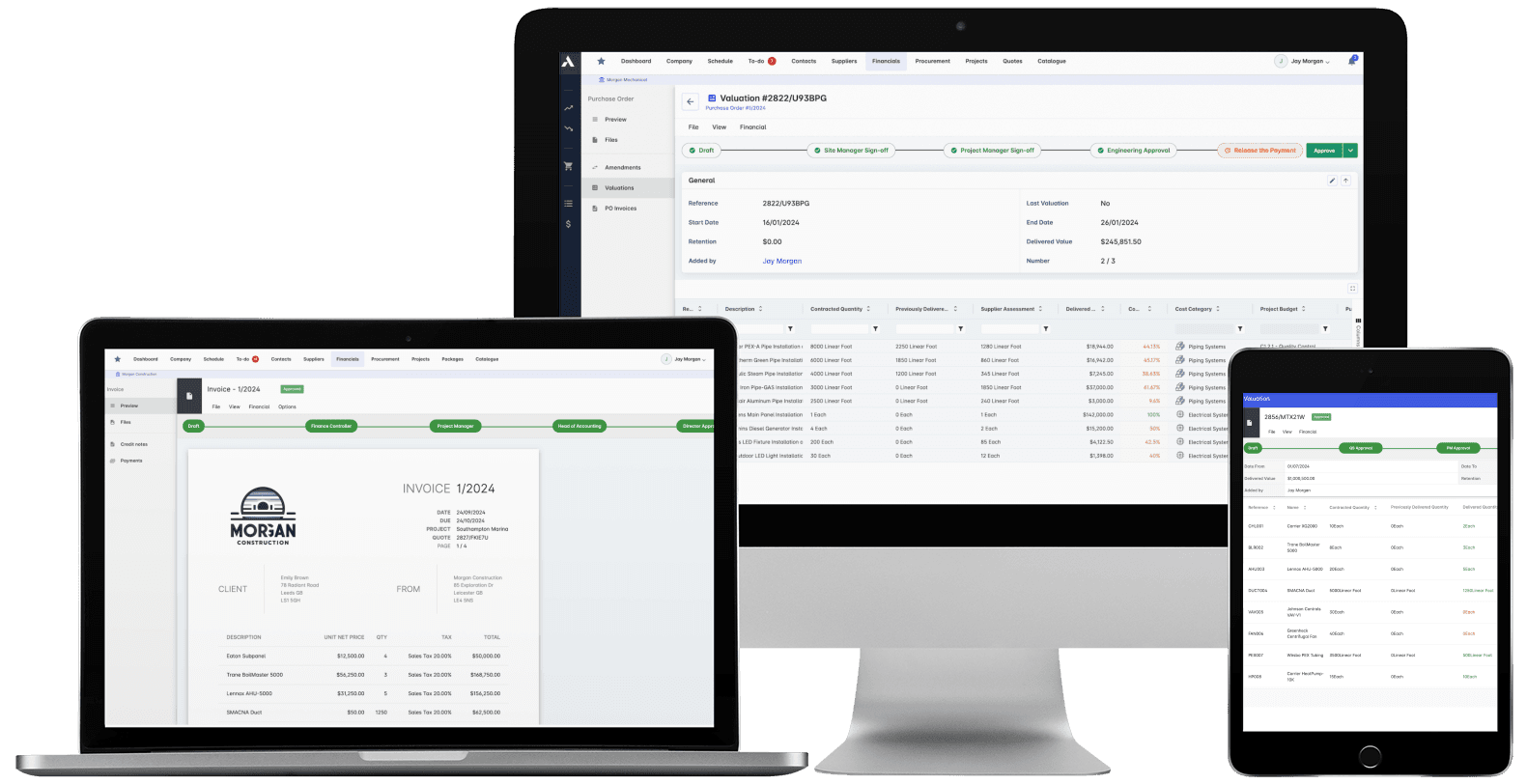
Certify subcontractor pay applications down, build client applications up, from the same records. Invoices, payment notices and retainage released on time, with the audit trail attached.
The schedule, the progress and the money in one system. When a task slips you see what it costs, and when scope changes you see what it does to the schedule. 'On track' means the Gantt chart and the bank account.
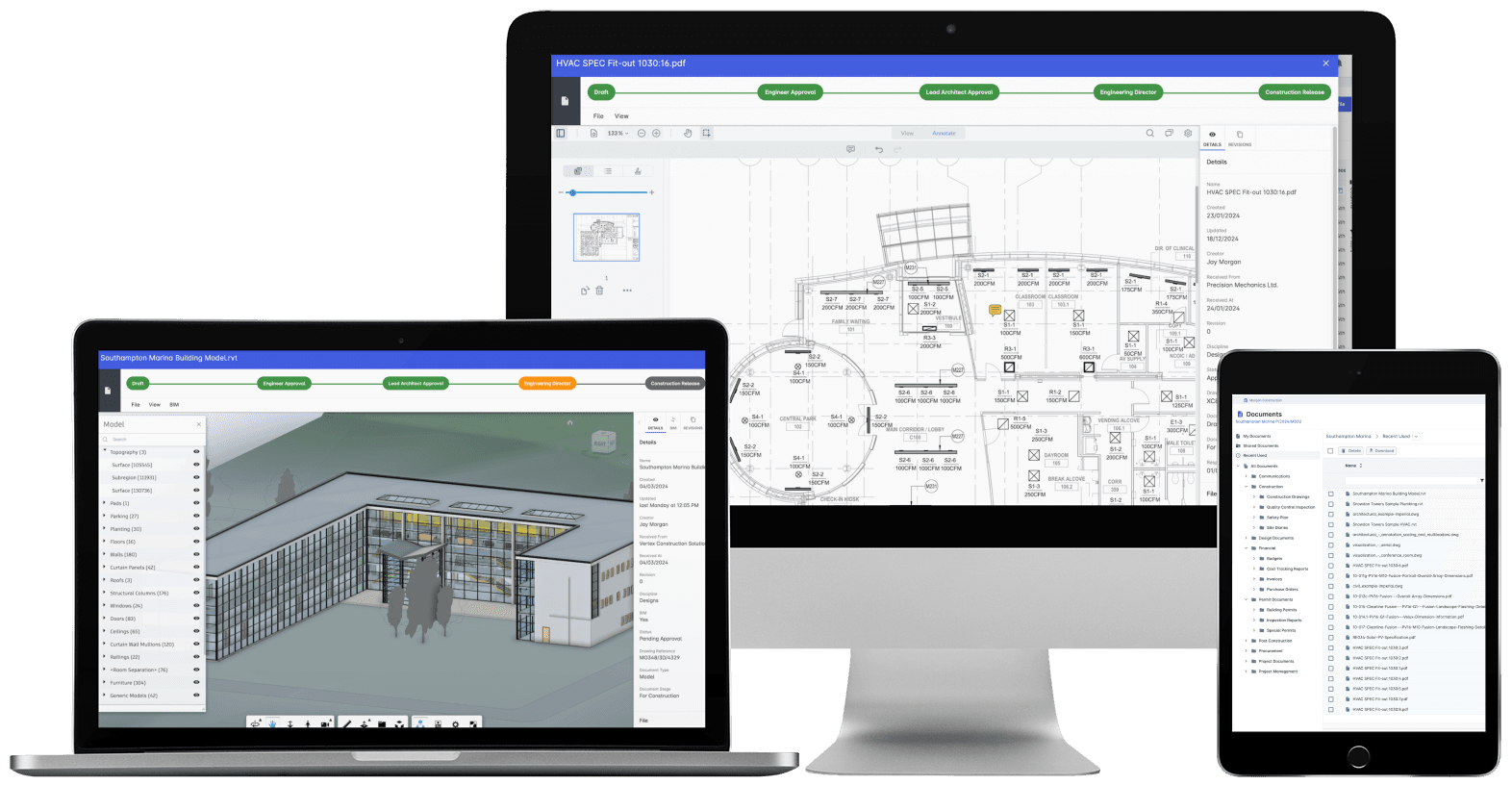
Nobody builds from a superseded drawing. Revision control, approvals and distribution with proof of who received what, when. The record that wins the dispute instead of losing it.
Every project's position, live, from the data that ran the work. Cost, schedule and cash agree with each other because they're the same records. There's nothing to assemble and nothing to reconcile.
Archdesk helps asset owners and estate teams manage capital works across their portfolio: new site openings, refits, rebrands, maintenance capex and closures, with budgets, contractor management, site records, handover documentation and asset registers in one connected platform.
Who is Archdesk for on the owner side?
Retail chains, banks, hospitality and leisure groups, and other organizations that own or lease a large estate and run their own capital works and CAPEX programs of work, whether delivery is through framework contractors, local contractors per site, or a mix of both.
Can Archdesk run many small projects at the same time?
Yes. Archdesk is built for programs, not single projects. Dozens or hundreds of concurrent sites each carry their own budget, schedule and records, and everything rolls up to program dashboards, so you see the whole estate and can still drill into any one site.
How does capex budget control work?
Each site opens against an approved budget. Contractor orders, FF&E and fees hit it as committed cost the moment they are raised, and forecast final cost rolls up from site to program, so you see which sites are drifting while there is still time to act, not at year end.
How does Archdesk help hit opening dates?
Every site sits in one schedule against its trading deadline, and progress from the field lands daily. When a site slips, you see it against the date that matters, the day it starts slipping, so the conversation with the contractor happens weeks earlier.
Can we manage external contractors through Archdesk?
Yes. You put packages out to bid, appoint contractors, certify their pay applications against recorded progress, and track retainage through to release. Every contractor's cost and delivery record builds across the sites they work on, so the next appointment is made on evidence.
Can we standardize how each site is delivered?
Yes. Budget structures, schedules, form checklists and document requirements are set up as templates and reused site after site, so a new opening starts from your playbook instead of a blank page, and every site reports in the same shape.
Does Archdesk handle decommissioning and closures?
Yes. Closures run as projects like openings do: scoped, budgeted and tracked, with asset recovery, dilapidations and the records the landlord will ask for captured against the property through to lease end.
Does the record stay with the property after handover?
Yes. Certificates, warranties, O&M documentation and the asset register live against each property, not in a project folder that goes cold. When something fails years later, or the site comes up for refit or disposal, the history is there.
Does Archdesk integrate with accounting software?
Yes. Archdesk integrates with Xero (as a certified partner), Sage, QuickBooks and other accounting systems, so commitments, invoices and payments flow between the estate team and finance without re-keying.
Looking for the software itself rather than the program view? See Archdesk's construction asset management software: every machine, vehicle and tool tracked, planned and costed to the job that used it.
See an estate program run end to end
In the demo we walk you through a fully worked program in Archdesk, from capex approval, through delivery on site, to handover and the asset record. Book a demo and see.
































-377x320.webp&w=3840&q=75&dpl=dpl_FCUZZkzYSdfpQAvksgqRjD2jj15f)
-377x320.webp&w=3840&q=75&dpl=dpl_FCUZZkzYSdfpQAvksgqRjD2jj15f)