Estimating Software for Canadian Contractors
Price the bid. Win it. Build against the same numbers.Canadian contractors build estimates from cost libraries and model takeoffs, with margin visible on every line before the bid goes out. Win the work and the estimate becomes the project budget in one click, so the numbers you bid are the numbers the job is measured against.
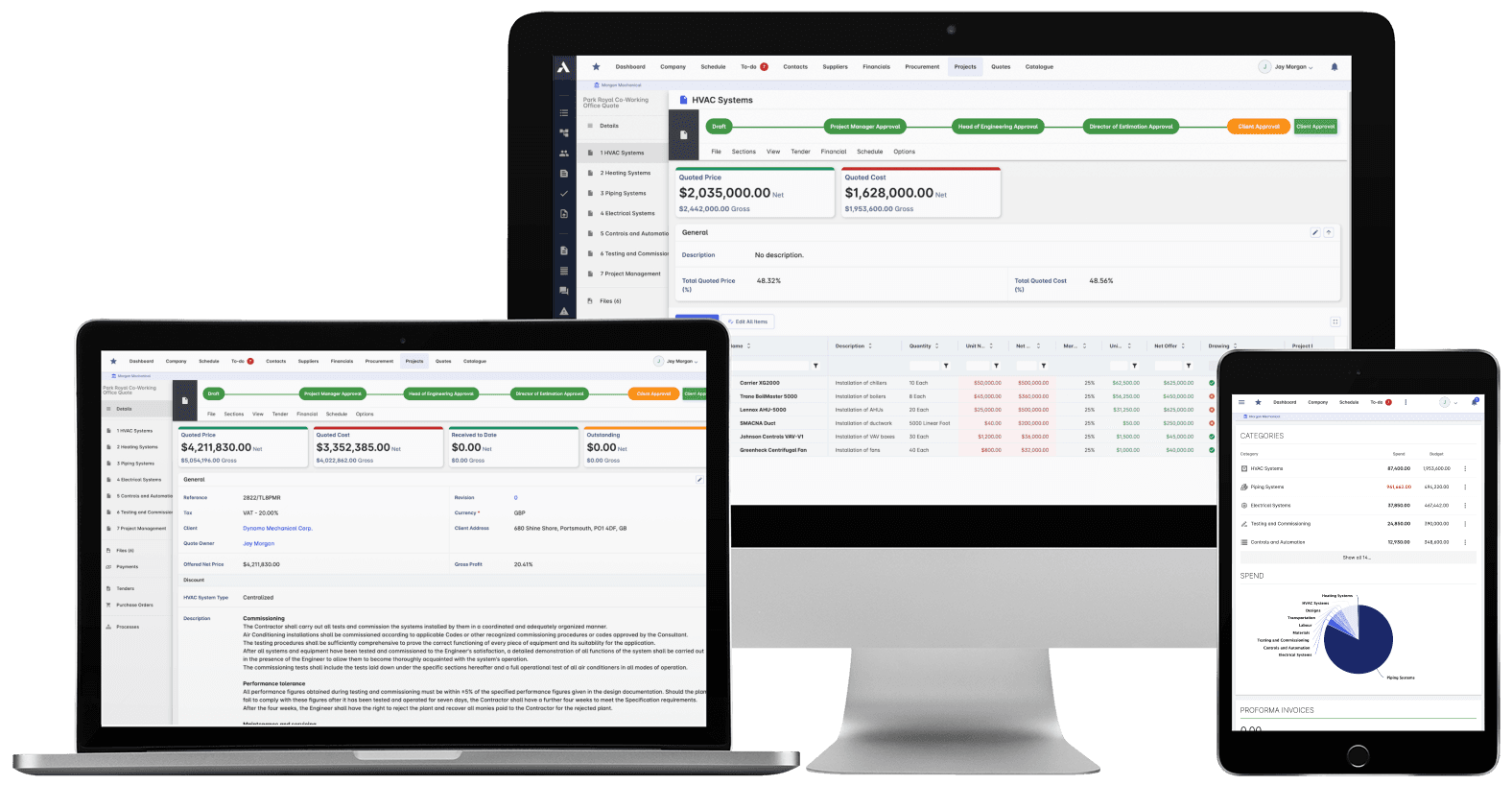
Trusted by construction companies of every size, worldwide


























The winning bid becomes the working budget, with nothing retyped
Estimating software for Canadian contractors keeps the bid and the budget on the same numbers. Archdesk prices bids from cost libraries of material, labour and equipment rates, with regional databases and supplier price integration keeping the numbers current, and shows margin on every line as the estimate takes shape. Digital takeoff reads quantities straight from the BIM model, subcontractor quotes sit side by side per package, and every bid revision stays on record. Win the job and the estimate converts directly into the project budget, so cost codes, budget versus actual and the forecast all trace back to the bid that won the work.

Prices that are current, not last year's
Cost libraries hold material, labour and equipment rates with regional price databases, supplier price integration and automatic updates, so the bid prices from current numbers, not last season’s.
The next bid learns from the last job
Historical cost analysis and win and loss tracking show how bid numbers ran against delivered reality, so every closed job sharpens the next bid.
Margin known before the bid goes out
Markup, overhead and allowance adjustments run as the bid is priced, so margin shows on every line before the number is committed, not after the contract is signed.
Quantities from the model, not the scale rule
Digital takeoff reads quantities and attributes straight from the BIM model and feeds the estimate directly, so nothing is measured twice or retyped between takeoff and bid.
From winning bid to working budget in one click
Win the job and the estimate converts directly into the project budget, with the schedule generated from the same estimate. Nothing is retyped between award and mobilization, so there is no drift between the bid you won and the budget the job runs on.

Bid Management
Run the bidding process from the estimate itself. Proposals generate automatically, subcontractor bids sit side by side, and every revision stays on record.
Proposals generated from the estimate
Bid levelling: subcontractor quotes side by side
RFQs managed in one place
Every bid revision tracked
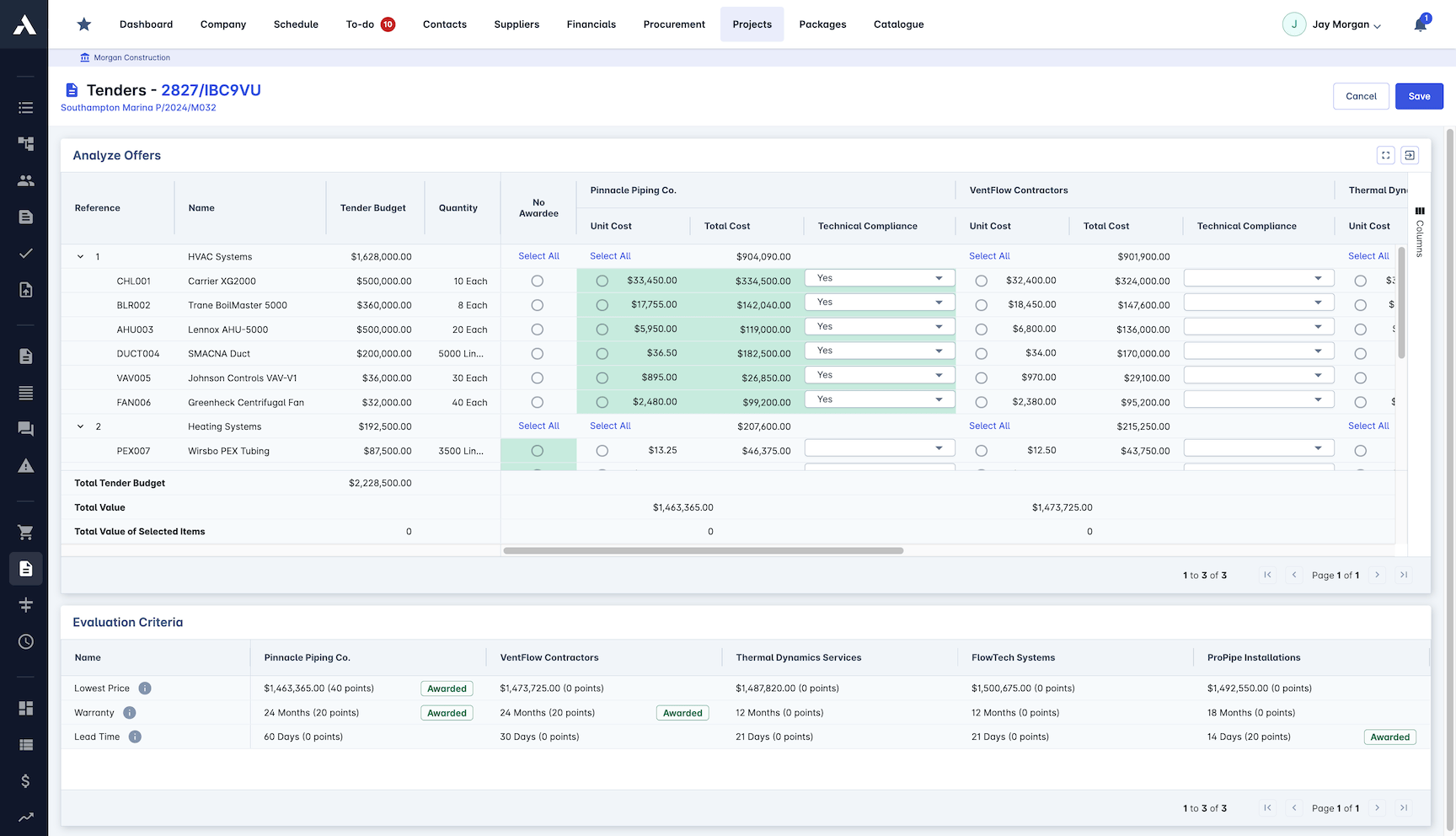
Estimate Analytics
See which estimates win, which lose, and how close the numbers ran to reality. Every delivered project sharpens the next bid.
Historical estimate analysis
Win and loss rates tracked
Estimate accuracy reporting
Bid and enquiries registry
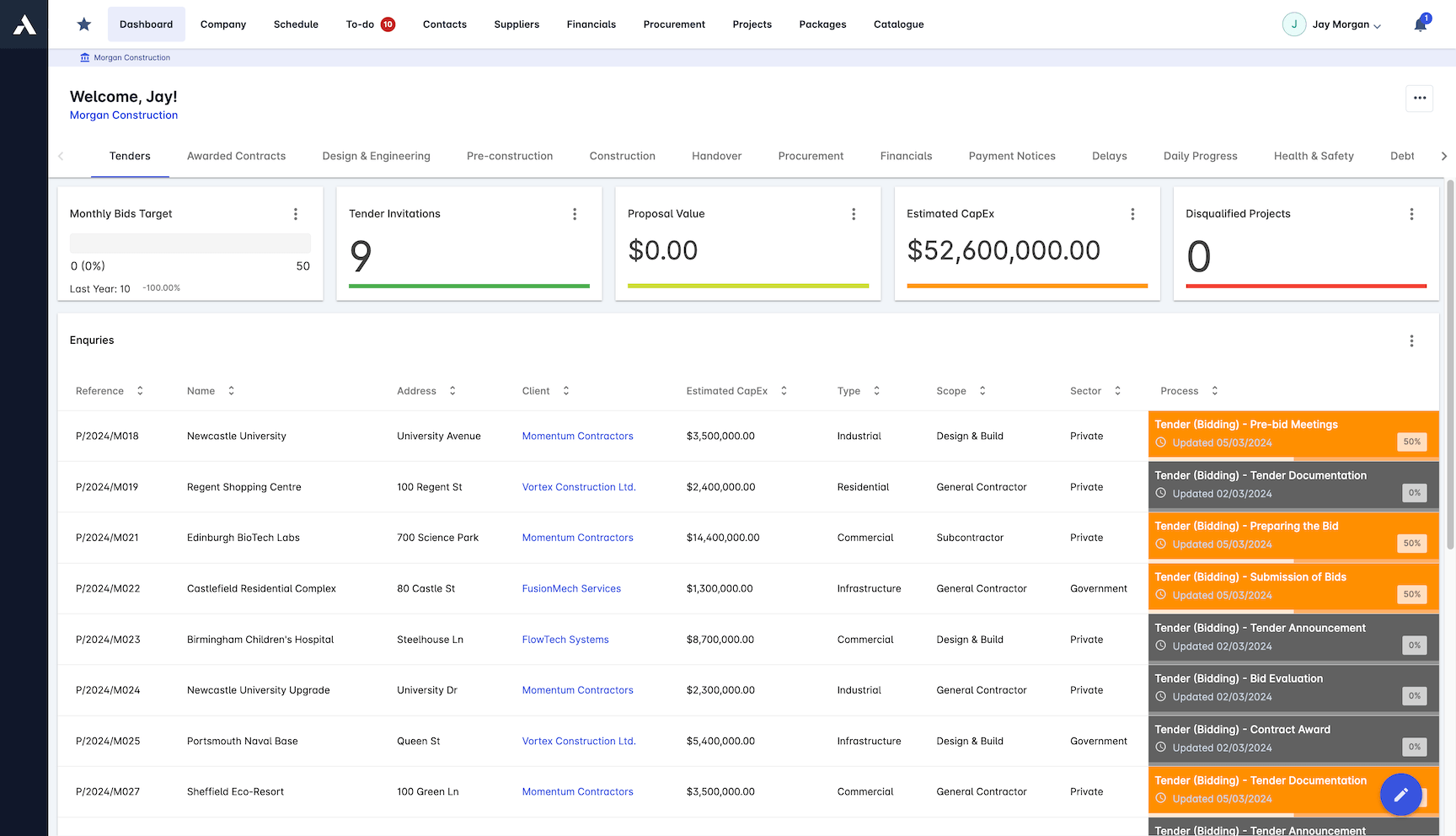
Cost Libraries
Price from libraries of materials, rates and equipment prices that stay current. Regional databases and supplier price integration keep the estimate honest without manual updating.
Regional price databases
Custom rate libraries
Supplier prices update automatically
Rate build-ups: assemble products from subproducts
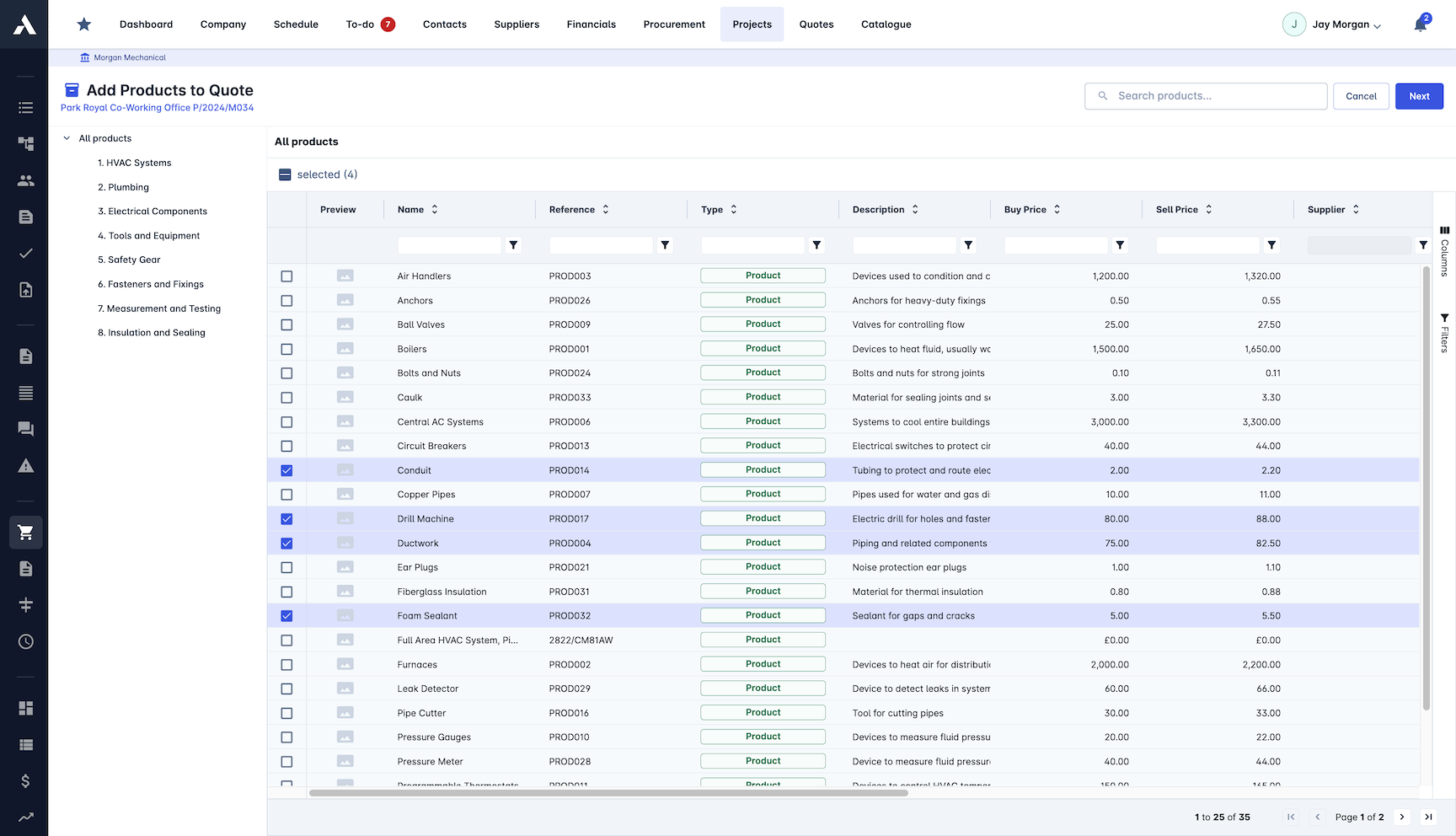
Digital Takeoff
Pull quantities straight from 3D models instead of measuring and retyping. Takeoff feeds the estimate directly, so the numbers start accurate.
Quantities calculated from the model
BIM model integration
Custom attributes read automatically
Build your own assemblies
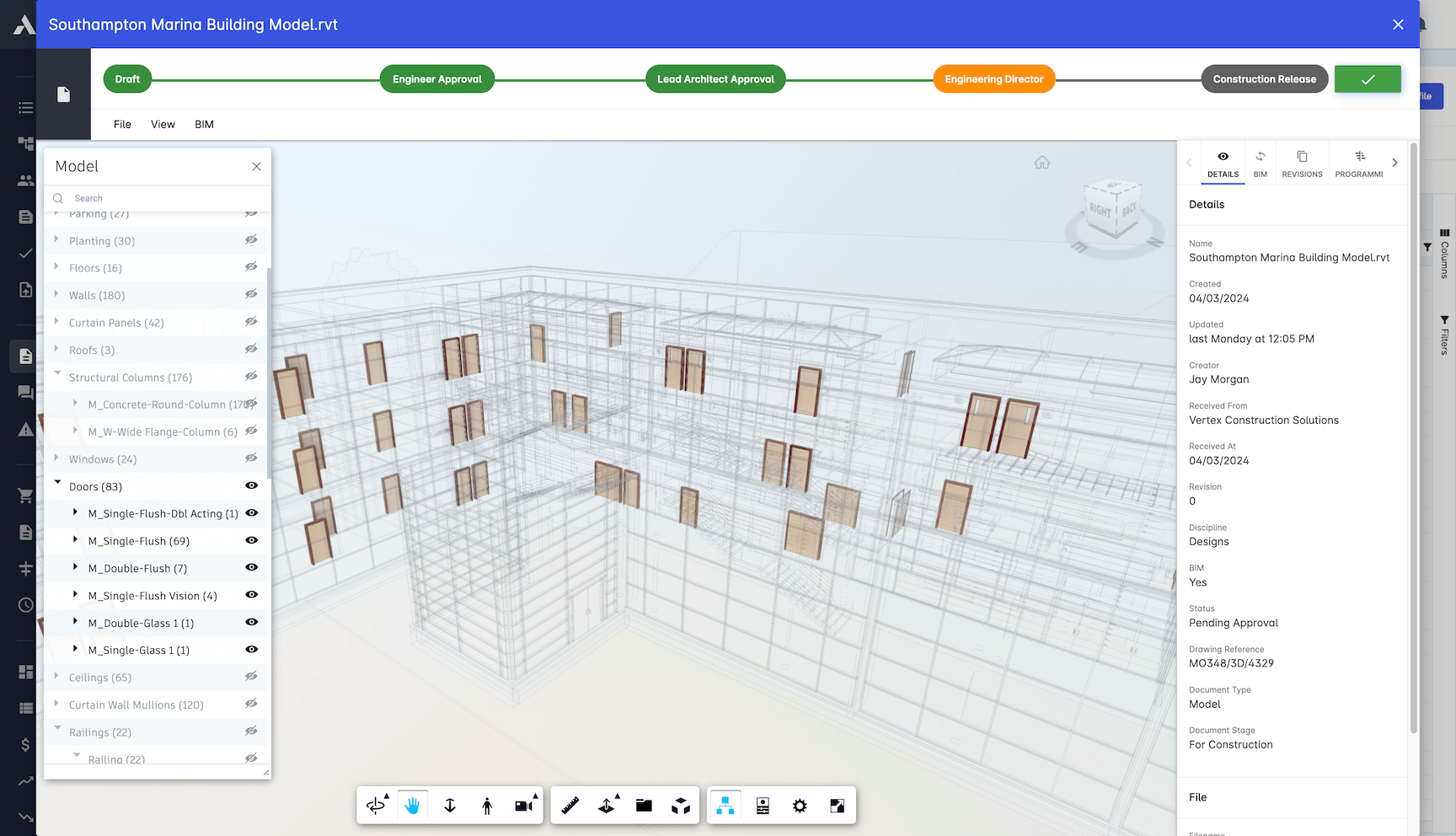
Cost Estimation
Build estimates with full breakdowns across materials, trades, equipment and overhead. Custom formulas handle the maths, so the numbers hold up when the QS checks them.
Material, trade and equipment rates
Markup, overhead and allowance adjustments
Custom formulas and calculations
Historical cost analysis built in
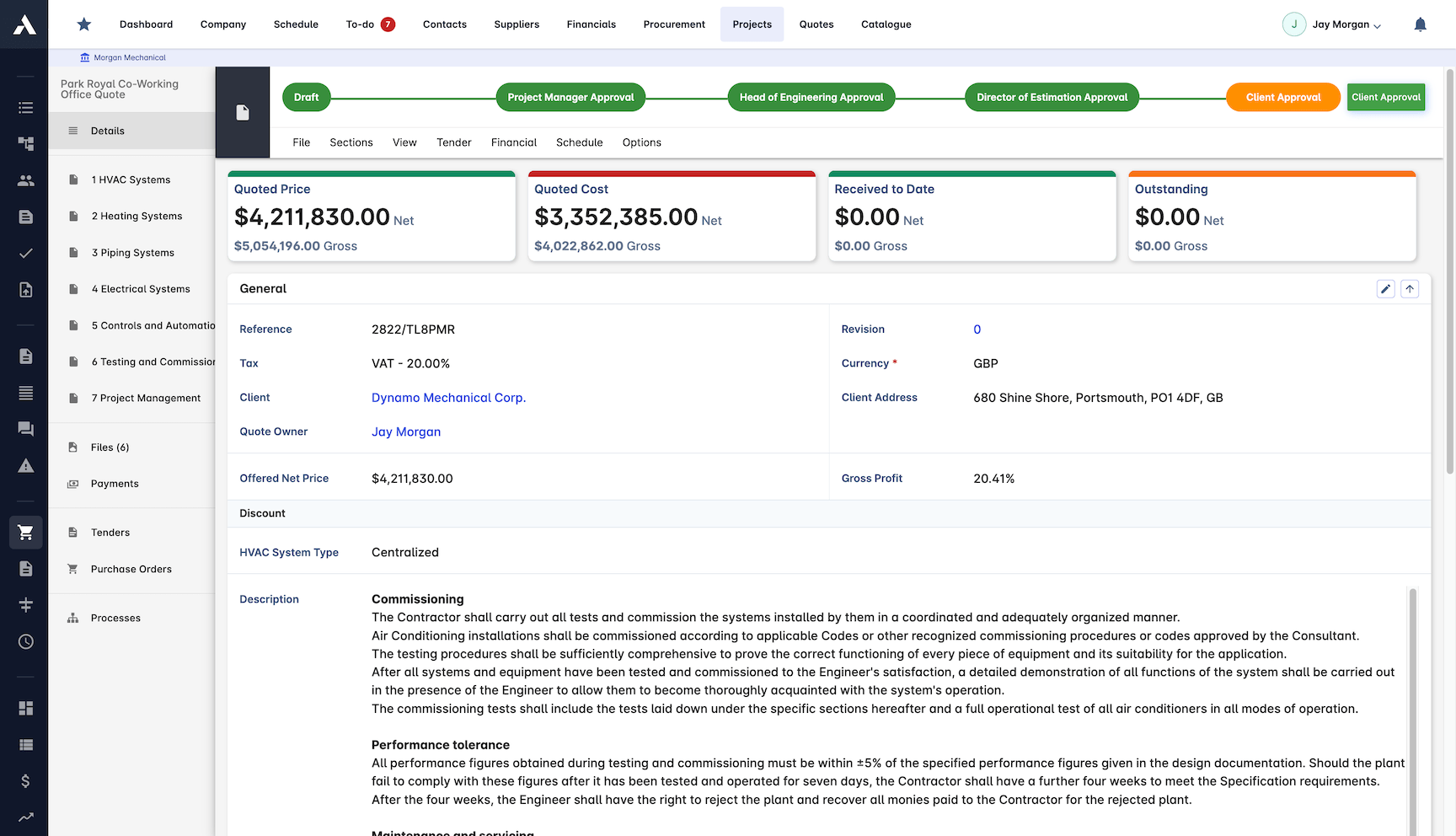
Cost Analysis
Break the estimate down and compare scenarios before you commit to a price. Margin sits on every line, so you know what the job makes before you win it.
Detailed takeoffs and BOMs
Full cost breakdown structure
Variance analysis between scenarios
Profit margin on every line
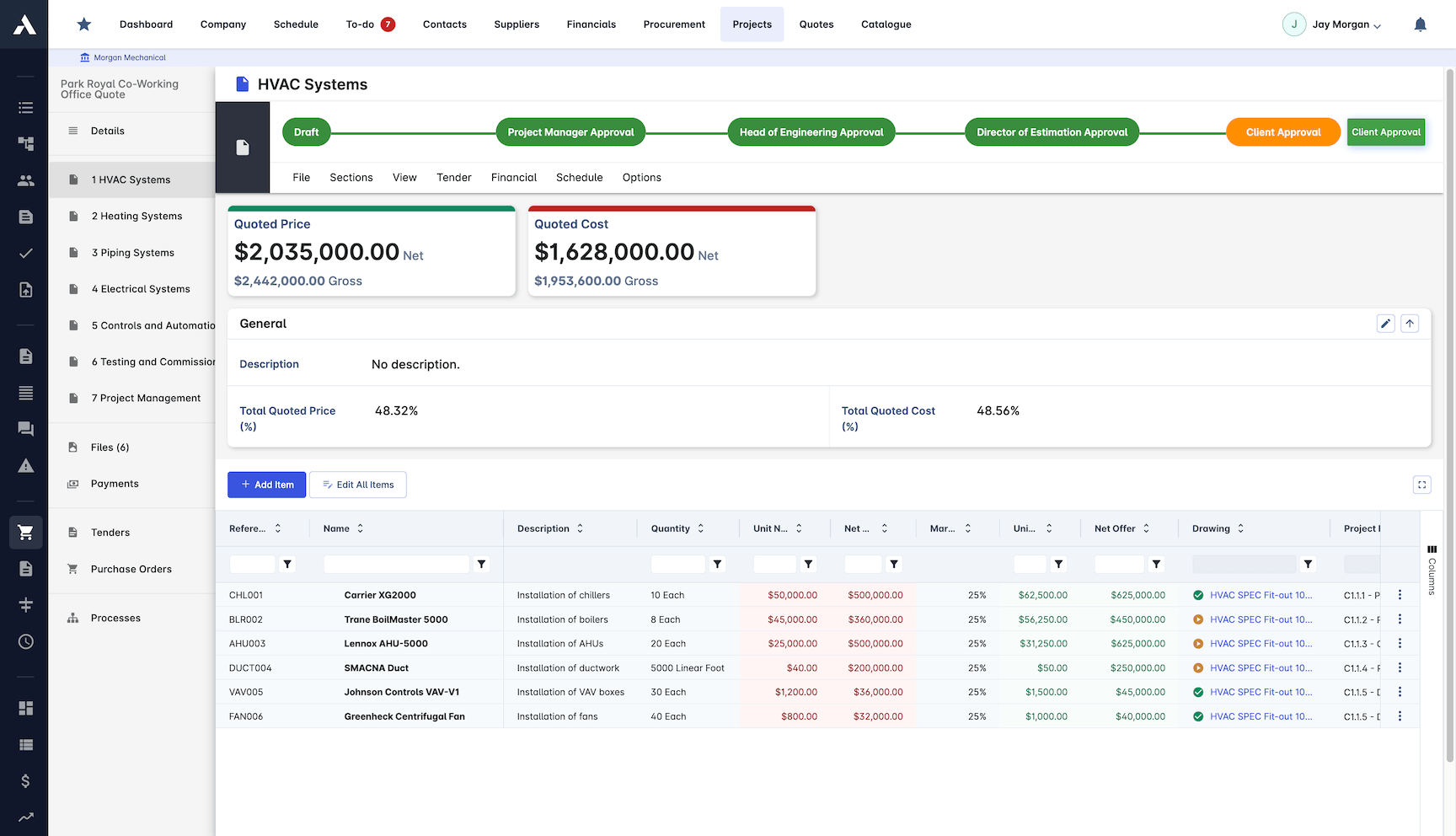
Resource Planning
Tie the estimate to real crew and equipment availability. The plan behind the price is one the site can actually deliver.
Resource availability tracked live
Equipment usage planned ahead
Crew composition per package
Resources loaded against the schedule
How to judge estimating software
Estimating tools differ less in how they total a takeoff than in everything around the arithmetic: where the rates come from, how quantities arrive, what the margin looks like while the price is still moving, and what survives the win. Five checks separate a pricing spreadsheet with a nicer interface from an estimating platform.
- 01
Rates from a maintained library
Estimates should price from cost libraries with regional databases, supplier price integration and rate build-ups that assemble composite rates from their components. A tool that starts every estimate from a blank sheet prices from memory.
- 02
Margin visible line by line
Markup, overhead and allowances should run live as the estimate takes shape, so the profit in the price is a known number before submission, not a figure reconstructed after award.
- 03
Quantities that arrive digitally
Takeoff should read quantities and attributes from the BIM model straight into the estimate. Every retyped quantity is a transcription risk priced into the job.
- 04
A bid process attached to the estimate
Proposals should generate from the estimate itself, subcontractor quotes should sit side by side against the same packages, and every revision should stay on record.
- 05
An estimate that outlives the win
The strongest test is what happens at award. In Archdesk the winning estimate converts into the project budget, with the schedule generated from the same estimate or takeoff. If the tool ends with an exported spreadsheet, the numbers fork on day one.
Frequently Asked Questions: Construction Estimating
What does construction estimating software do?
It prices the bid and delivers the project from the same data. Archdesk builds estimates from cost libraries and takeoffs with full breakdowns across materials, trades, equipment and overhead, shows profit margin on every line before the price goes out, and converts the winning estimate into the project budget without re-keying. External collaborators such as subcontractors pricing packages are free of charge, so widening the bid list adds no per-seat cost.
How does Archdesk keep estimate prices current?
Estimates price from cost libraries that stay current: regional price databases, custom rate libraries and supplier price integration with automatic updates. Rate build-ups assemble products from subproducts, so the estimate starts from real numbers instead of last year’s rates.
Can Archdesk take quantities from a BIM model?
Yes. Digital takeoff reads quantities and custom attributes straight from 3D models and feeds the estimate directly, with support for building your own assemblies. Nothing is measured twice or retyped, so the numbers start accurate.
What happens to the estimate after you win the job?
The won estimate converts directly into the project budget, and the schedule is generated from the same estimate or takeoff. There is no retyping between winning the work and starting it, and no drift between what you priced and what you deliver.
How does estimating accuracy improve over time?
Every delivered project feeds back into the next bid. Historical cost analysis shows how the numbers ran against reality, win and loss rates are tracked per bid in a bid and enquiries registry, and estimate accuracy reporting shows where pricing needs to sharpen.
How does bid levelling work in Archdesk?
Subcontractor quotes sit side by side per package, with RFQs managed in one place and every bid revision tracked. Scope gaps show up while there is still time to fix the number, and the quotes that make it into the bid stay on record through award.
Does Archdesk integrate with QuickBooks Online?
Yes. Archdesk integrates with QuickBooks Online, so when the winning bid becomes the project budget, estimate records and the ledger stay in step without double entry and finance keeps its own system.
Can subcontractors take part in bidding without extra licences?
Yes. External collaborators, including subcontractors pricing packages, clients and consultants, are free of charge in Archdesk, so the bid list can be as wide as the job needs without adding cost.
What happens to the estimate after award?
The winning estimate converts directly into the project budget, and delivery runs against the same cost codes the bid was priced on. Budget versus actual, forecasts and custom KPIs then read from the numbers that won the work, at project level and across the portfolio.
Once the work is won, what each job really costs against these priced numbers is tracked in the job costing module. The same estimate produces client proposals built from the estimate. Prices submitted to clients are tracked from first contact to award in the bid and tender pipeline.
Explore Related Solutions
Everything below runs in the same system, working from the same live data.
Bid Management
Streamline your bidding process and win more jobs
Change Order Management
Handle project changes efficiently and accurately
Client Proposals
Create professional client facing proposals
BIM Integration
3D take-off estimation
Job Costing
True cost per job, live against the estimate
Project Cost Controls
Monitor and compare your actuals with the estimate
Discover more
Explore the full range of solutions and find the right fit for your business.
See your next project on Archdesk
Book a demo and walk through a fully worked example project: one platform running everything from winning the work to closing it out.
Book a Demo