Scheduling Software for Canadian Contractors
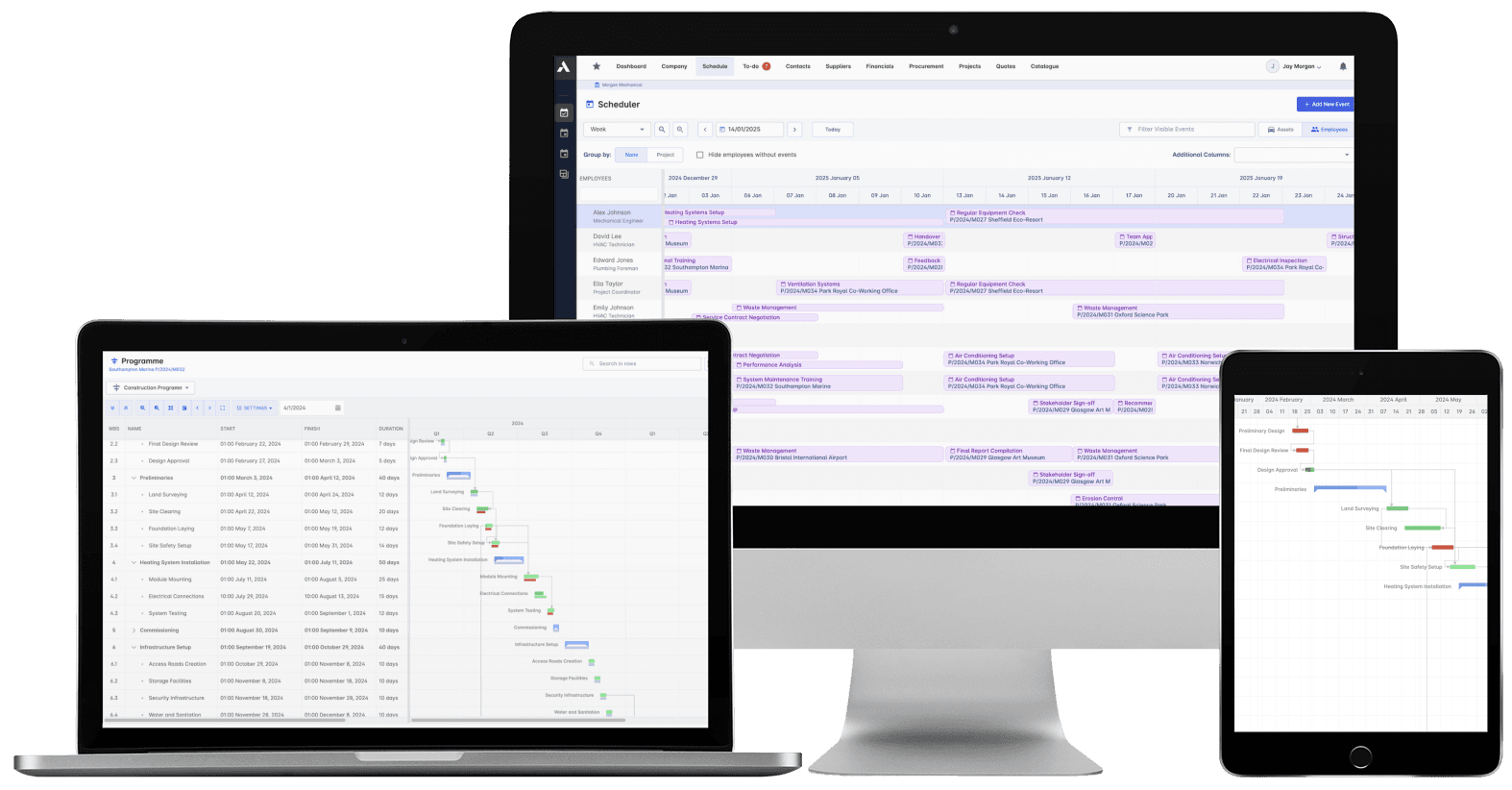
Every crew, every task, one schedule beside the numbers.Plan the schedule, assign people and equipment across every live project, and read it against reality: long-lead deliveries on the tasks they gate, slippage showing what it does to the finish date and to the money. Planners keep P6 or MS Project. The rest of the team finally sees the plan.
Trusted by construction companies of every size, worldwide


























One schedule, read beside the committed cost position
Construction scheduling software for Canadian contractors keeps the plan and the numbers within reach of each other. In Archdesk, Gantt charts, critical path analysis, baselines and resource allocation run from the same live data as your costs, so a slipping task shows what it does to the finish date and to the money, and the month-end WIP conversation starts from dates and numbers that live on the same records. People and equipment are planned from one pool across every live project, from a downtown high-rise to a job three provinces away, and conflict detection flags two tasks claiming the same crew. Planners keep Primavera P6 or MS Project, with two-way import and export, while site and office read the same schedule. Seasonal starts and weather windows move dates on Canadian jobs; baselines keep the plan you committed to visible while the working schedule adjusts, so the variance is a number, not a memory.

Slippage shows up in the numbers
Baselines compare planned against actual as work progresses, and because schedule progress feeds progress draws, a late task shows up in the money, not just on the timeline. The committed cost position sits on the same platform, so dates and numbers are read together.
The schedule builds itself
Win the job and generate the schedule straight from the estimate, so a new project starts with the plan in place and nothing retyped between bidding and breaking ground.
No double-booked crews
People and equipment are planned across every live project, and conflict detection raises an alert the moment two tasks claim the same crew, whether the jobs are across the street or across the country.
Long-lead items gate the right tasks
Procurement dates sit on the tasks they gate, so a delivery running late through a long supply chain moves the schedule visibly instead of surprising the site.
Planners keep P6. Everyone else reads the same schedule.
Two-way schedule import and export with MS Project and Oracle Primavera P6 keeps planners where they are productive, while site, commercial and leadership work from the same schedule in Archdesk, on the same platform as the budget and the committed cost position.

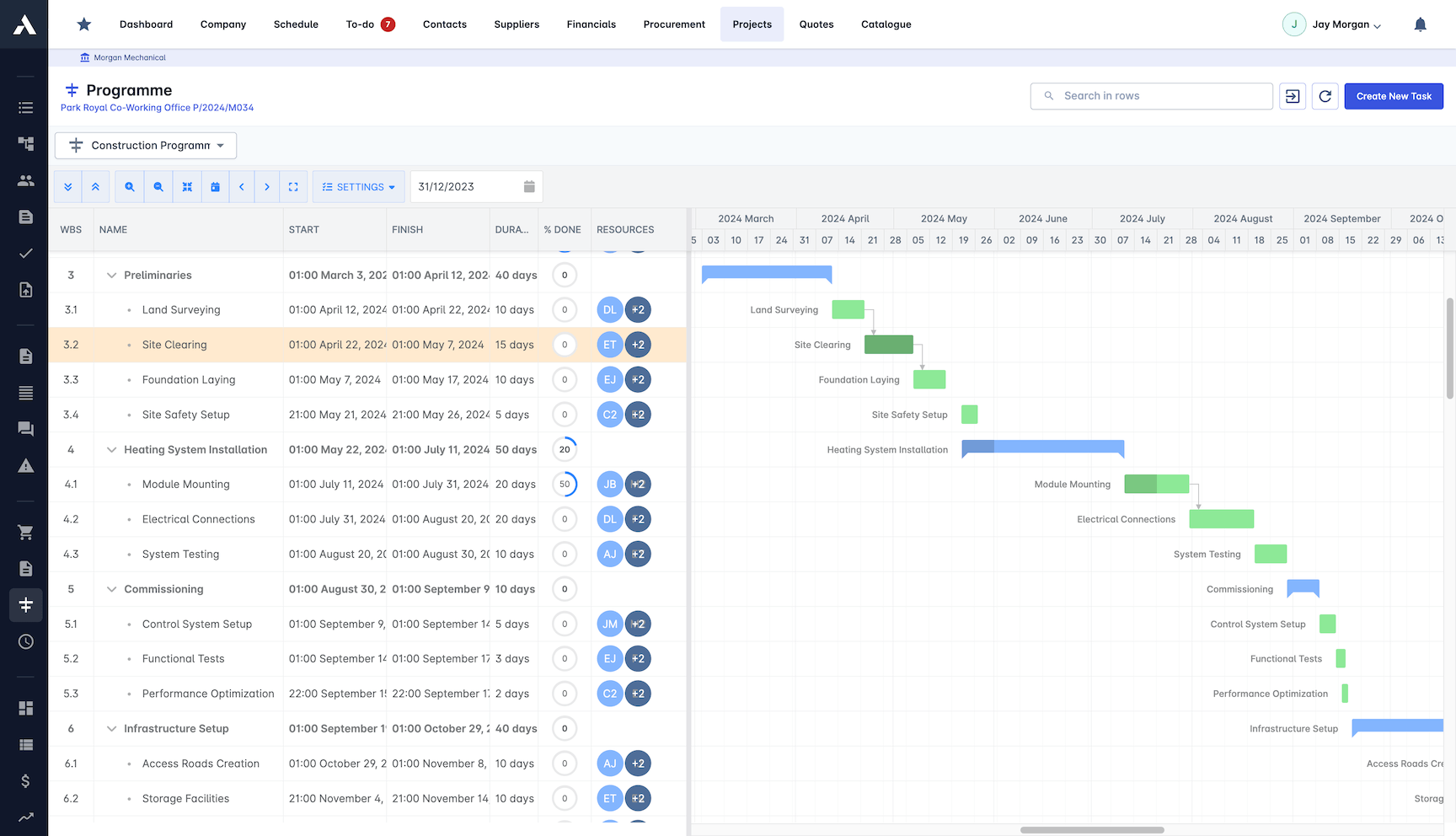
Construction Gantt Charts
Plan every phase on a Gantt chart the whole team can see. Tasks, deadlines and dependencies sit in one view, with progress updated as work happens on site.
Map task dependencies and spot knock-on delays
Progress tracked against the plan in real time
Live schedule shared with every stakeholder
Two-way MS Project and Primavera P6 schedule import and export
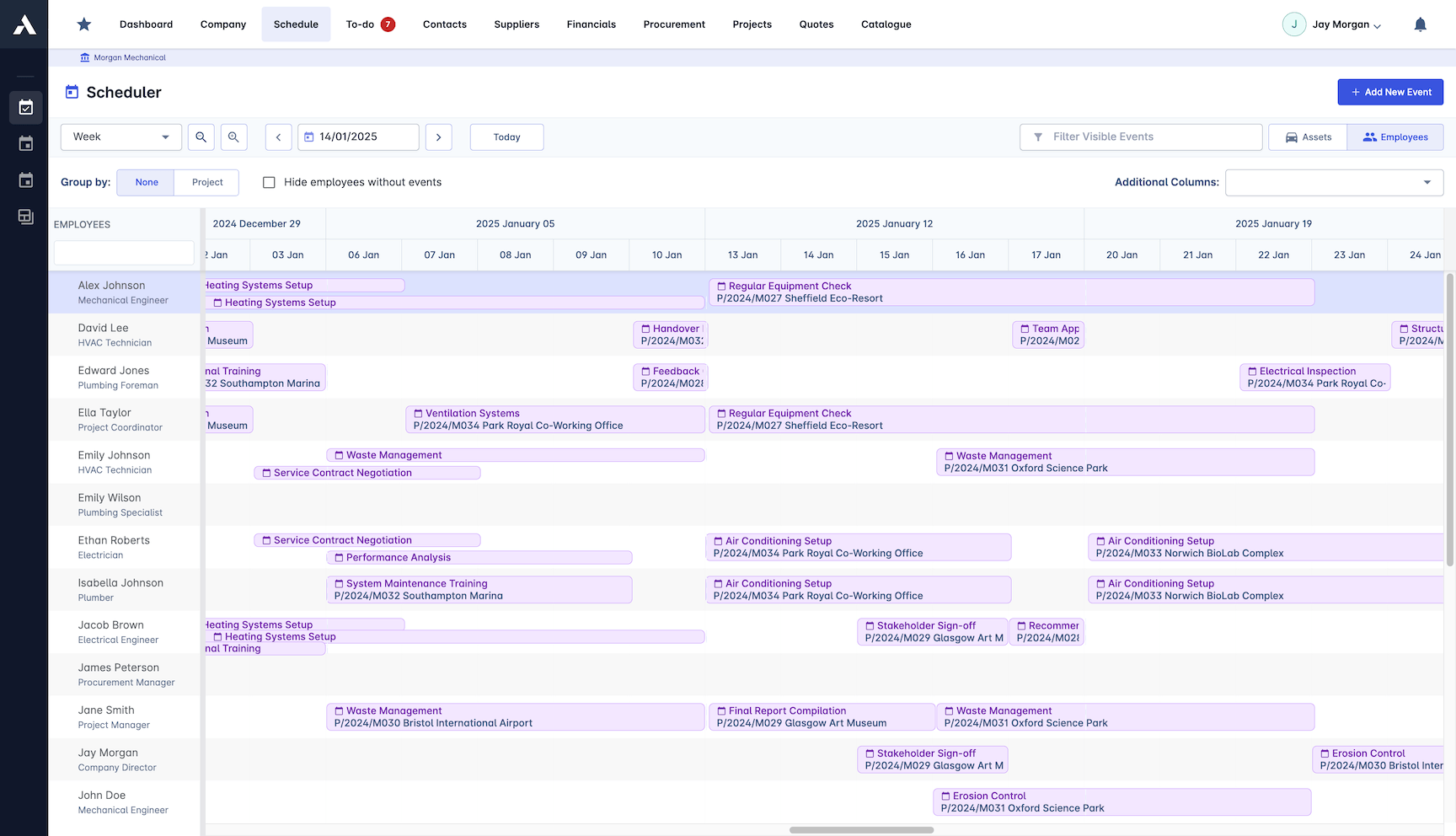
Resource Allocation
Assign people and machinery from one pool that covers every live project. Nothing sits idle, nobody is booked twice, and reallocating takes minutes when priorities change.
People and equipment planned in one system
Availability visible across the whole portfolio
Conflicts resolved before they reach site
Reallocate quickly when priorities change
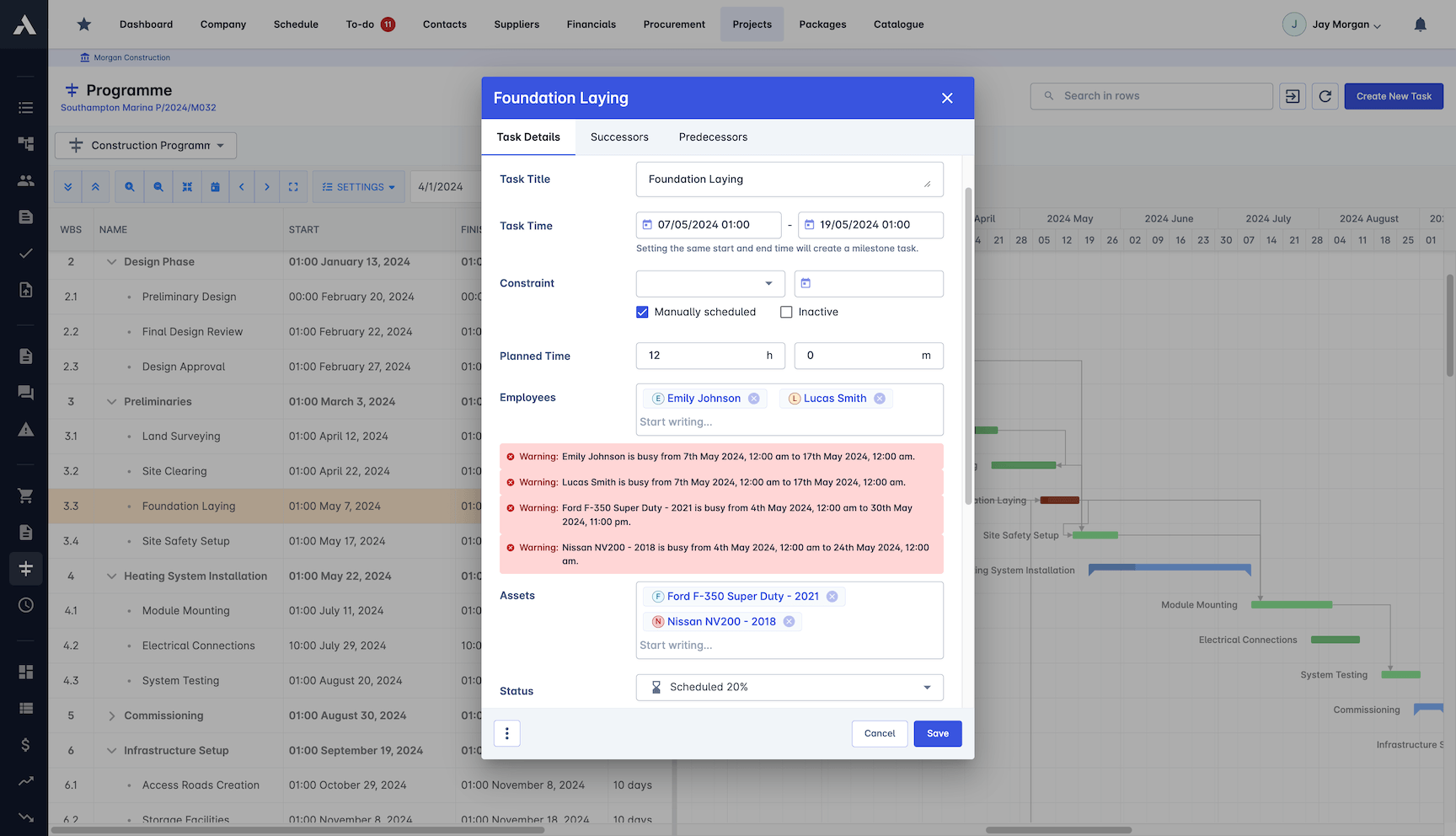
Conflict Detection
The schedule checks itself. Overlapping tasks, double-booked crews and timeline bottlenecks raise an alert the moment they appear, not the morning they happen.
Immediate alerts for schedule overlaps
Double-booked crews flagged automatically
Adjust tasks before clashes reach site
Clear visibility across projects and teams
Critical Path Analysis
See which tasks actually drive the finish date. The critical path updates as the schedule changes, so you know which delays matter and where to put your resources.
Critical sequence highlighted automatically
Real-time updates on key milestones
Resources moved to where they protect the date
Know which delays matter and which can wait
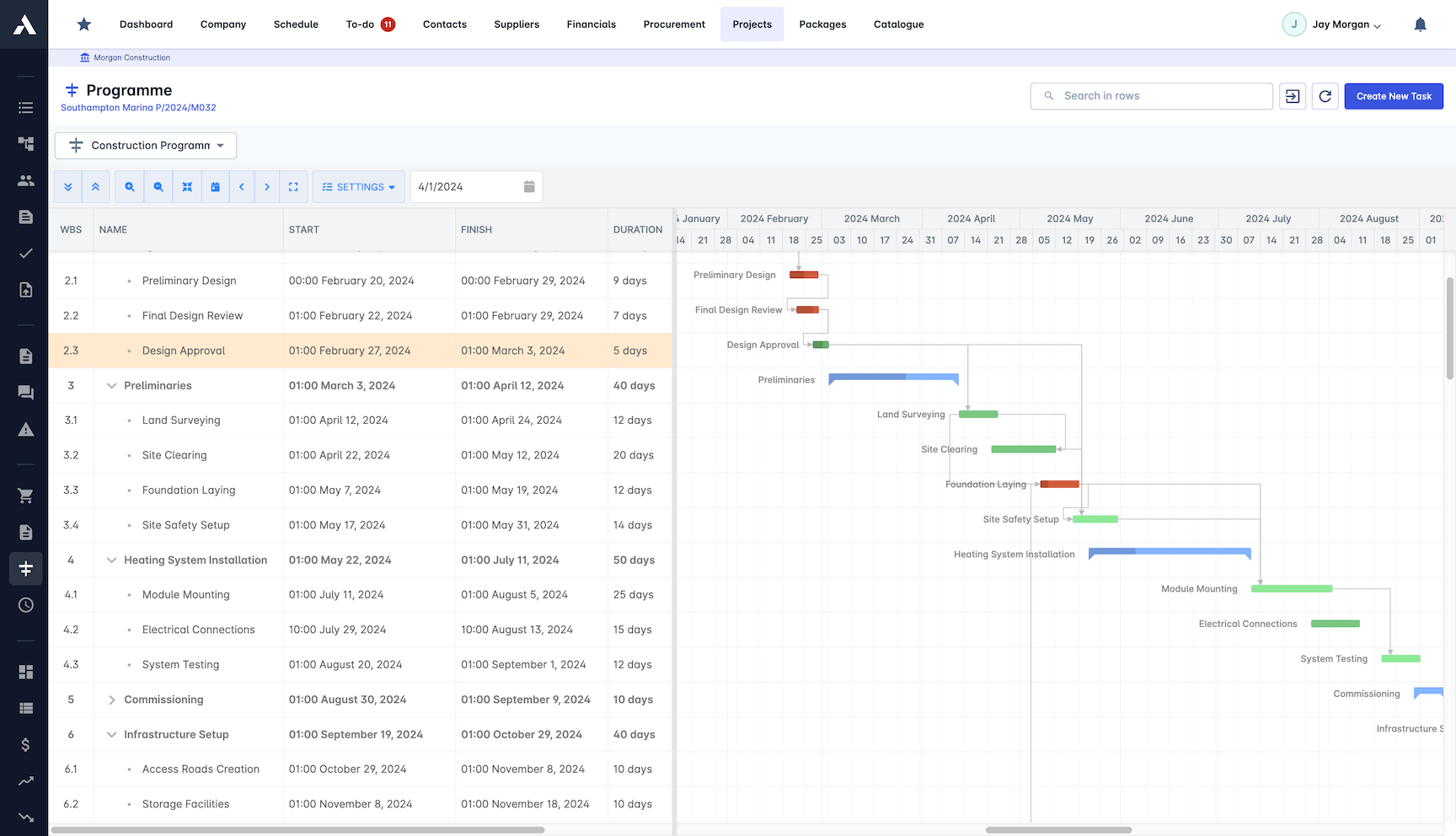
Baselines
Capture the plan you committed to and measure the live schedule against it. Slippage shows up as it develops, while there is still time to recover it.
Original plan captured as a reference point
Planned vs actual compared in real time
Delays caught before they escalate
Clear variance picture for stakeholders
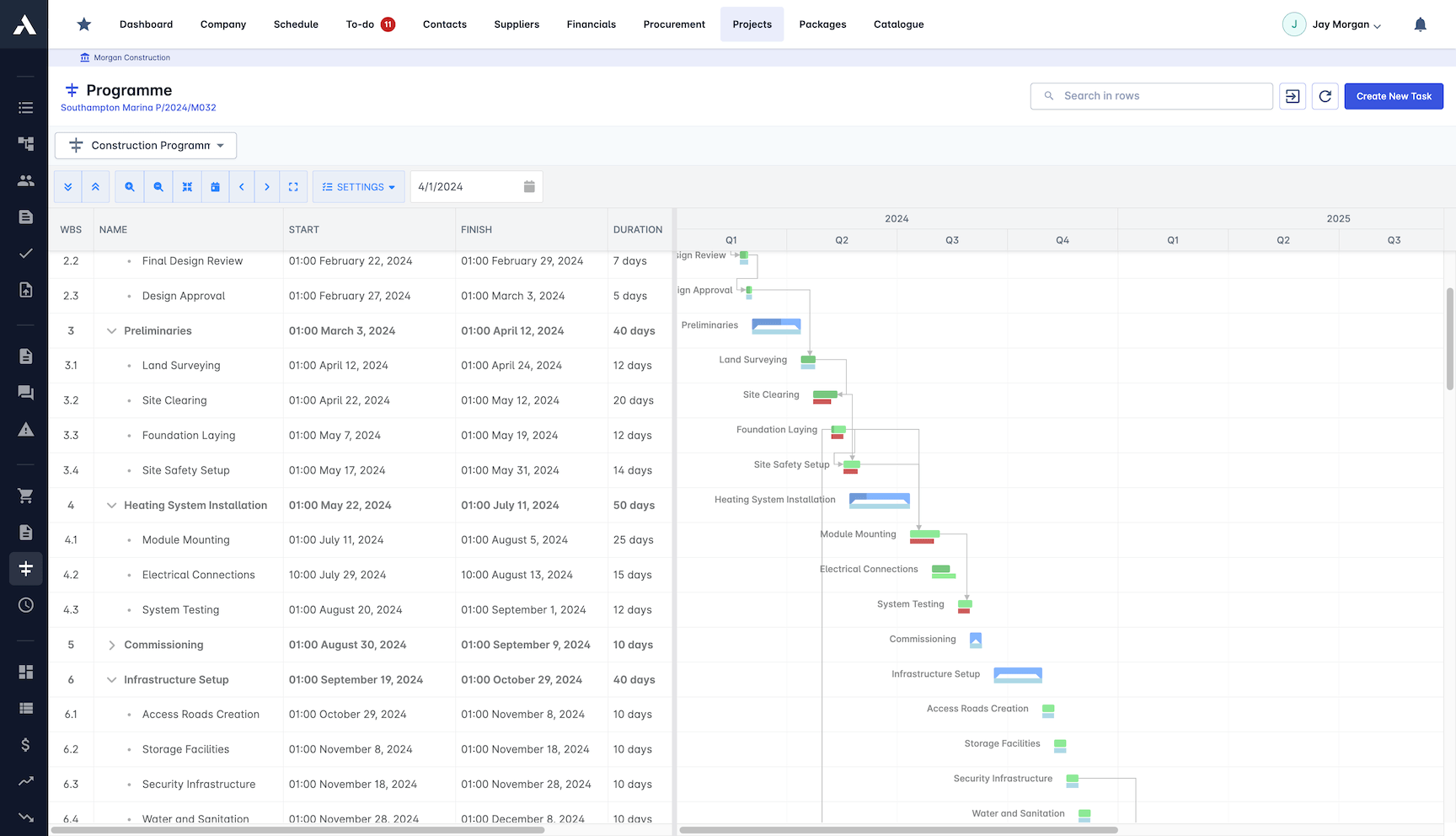
Automatic Scheduling
Win the job and the schedule builds itself. Generate the full task list directly from your estimate or takeoff, with no retyping between winning the work and starting it.
Schedule generated from the estimate or takeoff
No duplicate entry between quote and delivery
New projects launch with the plan in place
One source of truth from day one
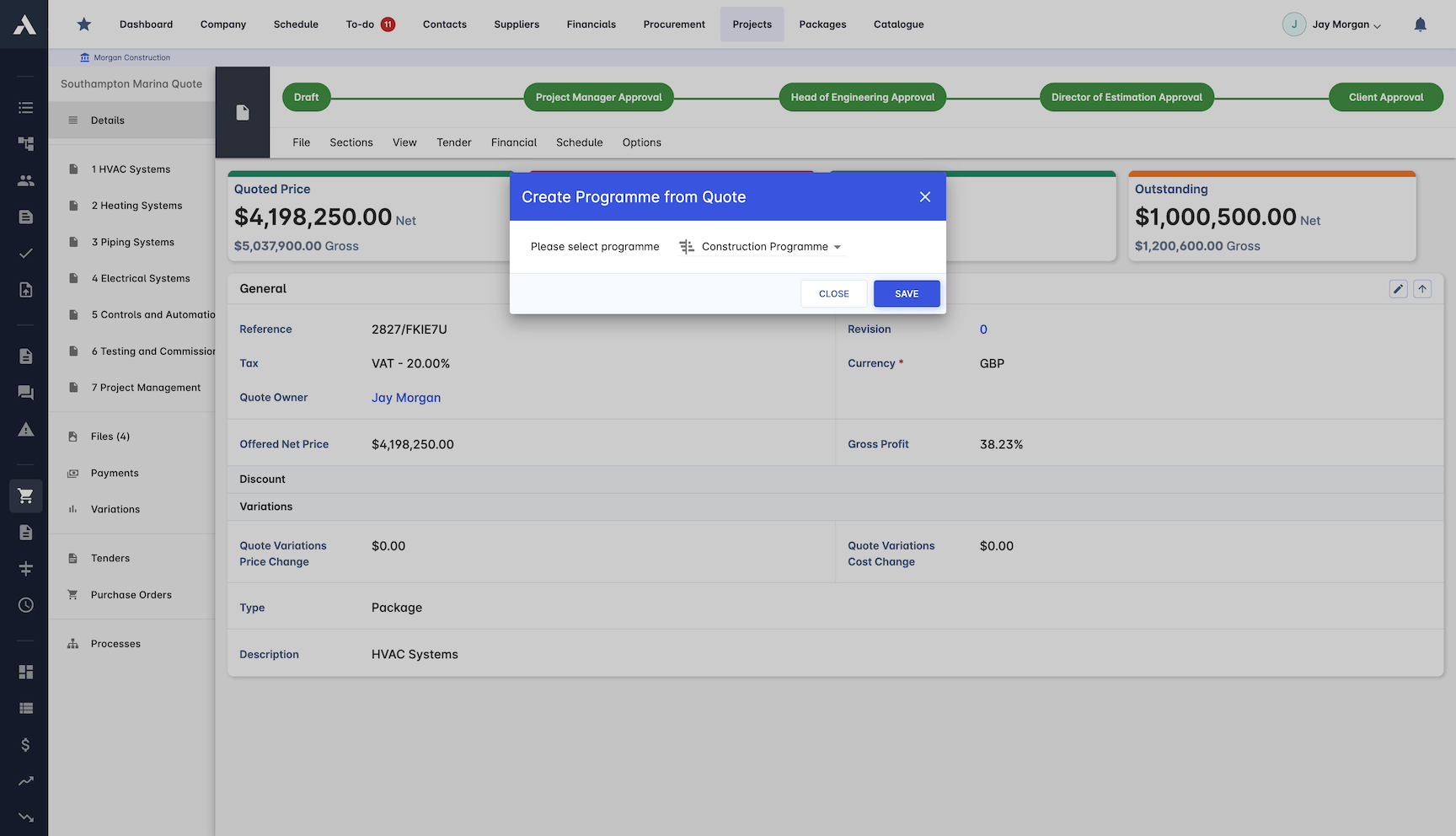
Integrations
Planners keep MS Project or Oracle Primavera P6. Schedules import into Archdesk and export back, both ways, so the rest of the business works from the same schedule without duplicate entry.
Two-way MS Project and Primavera P6 schedule import and export
No duplicate data entry between systems
Everyone works from the same live schedule
Schedule revisions move both ways, under your control
Want the background first? Browse all construction scheduling guides.
Bring schedules in from the planning tools you already use
Archdesk exchanges schedules with MS Project and Primavera P6 via two-way import and export, so planners keep their tool and the delivery team runs the job here.
Frequently Asked Questions: Construction Scheduling
What is construction scheduling software?
Construction scheduling software keeps tasks, people and progress aligned by running them in one schedule instead of three disconnected tools. In Archdesk, Gantt charts, critical path analysis, baselines and resource allocation work from the same live data as your costs, so a slipping task shows what it does to the finish date and to the money.
Does Archdesk work with MS Project and Primavera P6?
Yes. Archdesk imports schedules from MS Project and Oracle Primavera P6 and exports them back, in both directions, including P6 custom calendars and baselines. Planners keep working in the tool they know, and site, commercial and leadership teams work from the same schedule in Archdesk without duplicate data entry.
How does Archdesk prevent double-booked crews?
People and machinery are planned from one pool that covers every live project, so availability is visible across the whole portfolio. Conflict detection raises an alert the moment two tasks claim the same crew, so clashes are resolved before they reach site.
How do baselines show schedule slippage?
Archdesk captures the plan you committed to and compares the live schedule against it as work progresses, so slippage shows up while there is still time to recover it. Because schedule progress feeds progress draws, a late task shows up in the money, not just on the timeline.
Can Archdesk build the schedule from an estimate?
Yes. Win the job and the full task list generates directly from your estimate or takeoff, with no retyping between winning the work and starting it. New projects launch with the plan already in place.
How does the schedule relate to committed cost in Archdesk?
They live on one platform with one data model. The schedule runs from the same live records as budgets and committed cost, so a slipping task is read beside what the job is carrying, and the month-end WIP conversation starts from one set of records instead of two exports.
Can Archdesk schedule crews across multiple projects and regions?
Yes. People and equipment are planned from one pool that covers every live project, availability is visible across the whole portfolio, and conflict detection flags two tasks claiming the same crew before the clash reaches site.
Do planners have to leave Primavera P6 or MS Project?
No. Schedules import from MS Project and Oracle Primavera P6 and export back, in both directions, including P6 custom calendars and baselines, so planners keep their tool and the rest of the business reads the plan in Archdesk.
Can subcontractors and consultants see the schedule?
Yes. External collaborators, including subcontractors, clients and consultants, can be given access free of charge, so the trades working to the schedule read the same live version the office does.
Can crews and equipment be planned across several jobs at once?
Yes. People and equipment are planned from one pool that covers every live project, so availability is visible across the whole portfolio, whether the jobs share a city block or sit in different provinces. Conflict detection raises an alert the moment two tasks claim the same crew, and reallocating takes minutes when priorities change.
Explore Related Solutions
Everything below runs in the same system, working from the same live data.
Project Management
Streamline your project workflows from start to finish
Project Budgets
Control project finances and stay in budget
Risk Register
Identify and manage project risks
Real-time Reporting
Get instant updates across your project portfolio
Document Management
Centralize document handling and access
Project Cost Controls
Monitor and compare your actuals with the estimate
Site Forms
Digitize and streamline your site documentation processes
Site Diary & Daily Reports
Keep the daily site record structured and defensible
Work in Progress Reporting
Monitor completion costs across your whole project portfolio
Discover more
Explore the full range of solutions and find the right fit for your business.
See your next project on Archdesk
Book a demo and walk through a fully worked example project: one platform running everything from winning the work to closing it out.
Book a Demo